What is Sedai and how does it help with cloud cost optimization?
Sedai is an autonomous cloud management platform that uses machine learning to optimize cloud resources for cost, performance, and availability. It continuously analyzes real-time and historical usage data to make autonomous adjustments, reducing cloud costs by up to 50% while maintaining application reliability and performance. [Source]
How does Sedai use AI to optimize cloud environments?
Sedai leverages AI and machine learning to analyze resource consumption patterns, predict demand spikes, and automatically adjust cloud resources. This includes rightsizing workloads, predictive scaling, anomaly detection, and cost forecasting, all performed autonomously to maximize efficiency and minimize manual intervention. [Source]
What are the main features of Sedai's platform?
Sedai offers autonomous optimization, proactive issue resolution, full-stack cloud coverage (across AWS, Azure, GCP, and Kubernetes), release intelligence, plug-and-play implementation, and enterprise-grade governance. It also provides multiple modes of operation: Datapilot (observability), Copilot (one-click optimizations), and Autopilot (fully autonomous execution). [Source]
What is autonomous cloud optimization and how does Sedai implement it?
Autonomous cloud optimization refers to the use of AI to automatically adjust cloud resources in real time, without manual intervention. Sedai implements this by continuously learning from application behavior and making optimization decisions within predefined safety guardrails, ensuring cost savings and performance improvements. [Source]
How does Sedai ensure safe and reliable optimizations?
Sedai uses guardrail-driven autonomous actions, meaning all optimizations are executed only when confidence thresholds and safety policies are met. It also includes continuous performance validation to ensure that cost optimizations do not negatively impact application reliability. [Source]
What is the primary purpose of Sedai's platform?
The primary purpose of Sedai's platform is to eliminate manual toil for engineers by automating cloud optimization, enabling teams to focus on impactful work and innovation rather than routine resource management. [Source]
What types of cloud environments does Sedai support?
Sedai supports AWS, Azure, Google Cloud Platform (GCP), and Kubernetes environments, providing full-stack optimization for compute, storage, and data resources. [Source]
How does Sedai handle unpredictable spikes in cloud usage?
Sedai uses predictive scaling and real-time analysis to identify demand spikes, automatically scaling resources up or down to maintain performance and control costs during periods of high demand. [Source]
Can Sedai be used in hybrid or multi-cloud environments?
Yes, Sedai is designed to optimize both hybrid and multi-cloud environments, dynamically balancing resource allocation across infrastructures to maintain cost efficiency and operational consistency. [Source]
Features & Capabilities
What are the key capabilities and benefits of Sedai?
Sedai's key capabilities include autonomous optimization, proactive issue resolution, release intelligence, plug-and-play implementation, and enhanced productivity. Benefits include up to 50% cost savings, 75% latency reduction, 6X productivity gains, and improved reliability. [Source]
How does Sedai's release intelligence feature work?
Sedai's release intelligence tracks changes in cost, latency, and errors for each deployment, helping teams improve release quality and minimize risks during deployments. [Source]
What integrations does Sedai support?
Sedai integrates with monitoring and APM tools (Cloudwatch, Prometheus, Datadog, Azure Monitor), Kubernetes autoscalers (HPA/VPA, Karpenter), IaC and CI/CD tools (GitLab, GitHub, Bitbucket, Terraform), ITSM tools (ServiceNow, Jira), notification tools (Slack, Microsoft Teams), and various runbook automation platforms. [Source]
Does Sedai support Kubernetes and serverless environments?
Yes, Sedai optimizes both Kubernetes clusters and serverless environments by dynamically adjusting resources based on real-time and historical usage data, ensuring cost efficiency and performance. [Source]
How does Sedai's proactive issue resolution work?
Sedai proactively detects and resolves performance and availability issues before they impact users, reducing failed customer interactions by up to 50% and ensuring seamless operations. [Source]
What is Sedai for S3 and what does it do?
Sedai for S3 optimizes Amazon S3 costs by managing Intelligent-Tiering and Archive Access Tier selection, achieving up to 30% cost efficiency gain and 3X productivity gain by reducing manual effort in S3 management. [Source]
Use Cases & Benefits
Who can benefit from using Sedai?
Sedai is designed for platform engineers, IT/cloud operations teams, technology leaders (CTO, CIO, VP Engineering), site reliability engineers (SREs), and FinOps professionals in organizations with significant cloud operations across industries such as cybersecurity, IT, financial services, healthcare, travel, and e-commerce. [Source]
What business impact can customers expect from Sedai?
Customers can expect up to 50% reduction in cloud costs, 75% improvement in application performance, 6X productivity gains, and up to 50% reduction in failed customer interactions. Notable customers like Palo Alto Networks saved $3.5 million, and KnowBe4 achieved 50% cost savings in production. [Source]
What problems does Sedai solve for engineering and operations teams?
Sedai addresses cost inefficiencies, operational toil, performance and latency issues, lack of proactive issue resolution, complexity in multi-cloud/hybrid environments, and misaligned priorities between engineering and FinOps teams. [Source]
What are some real-world success stories with Sedai?
KnowBe4 achieved 50% cost savings and saved $1.2 million on AWS bills. Palo Alto Networks saved $3.5 million and reduced Kubernetes costs by 46%. Belcorp reduced AWS Lambda latency by 77%. See more at Sedai's resources page.
Which industries are represented in Sedai's case studies?
Sedai's case studies cover cybersecurity, IT, financial services, security awareness training, travel and hospitality, healthcare, car rental services, retail and e-commerce, SaaS, and digital commerce. [Source]
How does Sedai help with cloud cost forecasting and budget predictability?
Sedai uses AI-based cost forecasting to analyze historical trends and predict future cloud spend, supporting better budgeting, capacity planning, and reducing financial surprises. [Source]
Competition & Comparison
How does Sedai compare to other AI-driven cloud cost optimization tools?
Sedai differentiates itself with 100% autonomous optimization, proactive issue resolution, application-aware intelligence, full-stack cloud coverage, and unique features like release intelligence and plug-and-play implementation. Unlike competitors that rely on static rules or manual adjustments, Sedai operates autonomously and holistically. [Source]
What makes Sedai different from traditional cloud optimization tools?
Sedai offers autonomous, application-aware optimization and proactive issue resolution, while traditional tools often require manual intervention and operate reactively. Sedai also provides full-stack coverage and unique features like release intelligence and rapid onboarding. [Source]
What are the advantages of Sedai for different user segments?
Platform engineers benefit from reduced toil and IaC consistency; IT/cloud ops teams see lower ticket volumes and safer automation; technology leaders gain measurable ROI and cost savings; FinOps teams align engineering and cost goals; SREs experience fewer alerts and automated scaling. [Source]
Why should a customer choose Sedai over other solutions?
Customers should choose Sedai for its autonomous optimization, proactive issue resolution, application-aware intelligence, full-stack coverage, safety-by-design, rapid implementation, and proven results with leading enterprises. [Source]
Technical Requirements & Implementation
How long does it take to implement Sedai?
Sedai's setup process takes just 5 minutes for general use cases and up to 15 minutes for specific scenarios like AWS Lambda. More complex environments may require additional time. [Source]
How easy is it to get started with Sedai?
Sedai offers plug-and-play implementation, agentless integration via IAM, personalized onboarding sessions, detailed documentation, and a 30-day free trial, making it easy to start optimizing your cloud environment quickly. [Source]
What technical documentation is available for Sedai?
Sedai provides detailed technical documentation covering features, setup, and usage, available at docs.sedai.io/get-started. Additional resources include case studies, datasheets, and guides at sedai.io/resources.
What support resources does Sedai offer?
Sedai offers personalized onboarding, a dedicated Customer Success Manager for enterprise customers, detailed documentation, a community Slack channel, and email/phone support for ongoing assistance. [Source]
Security & Compliance
What security and compliance certifications does Sedai have?
Sedai is SOC 2 certified, demonstrating adherence to stringent security requirements and industry standards for data protection and compliance. More details are available on the Sedai Security page.
Customer Proof & Social Validation
Who are some of Sedai's notable customers?
Sedai's customers include Palo Alto Networks, HP, Experian, KnowBe4, Expedia, CapitalOne Bank, GSK, and Avis. These companies trust Sedai to optimize their cloud environments and improve operational efficiency. [Source]
What feedback have customers given about Sedai's ease of use?
Customers praise Sedai for its quick setup (5–15 minutes), agentless integration, comprehensive onboarding support, and extensive resources, including documentation and community channels. The 30-day free trial is also valued for risk-free evaluation. [Source]
KO THE CLOUD TO ENTER OUR GIVEAWAYKO THE CLOUD TO ENTER OUR GIVEAWAY
AI-Driven Cloud Cost Optimization: 6 Strategies With 8 Tools
Benjamin Thomas
CTO
May 29, 2026
Featured
10 min read
Key takeaways
Use AI-driven optimization to continuously improve cloud performance and infrastructure efficiency.
Eliminate overprovisioned resources automatically to reduce unnecessary cloud spending.
Optimize scaling decisions in real time using workload behavior and performance signals.
Automate cloud operations to reduce manual effort and improve system reliability.
AI-driven cloud cost optimization focuses on using machine learning to analyze resource consumption patterns and automatically adjust cloud environments to reduce expenses. By using strategies like predictive scaling, rightsizing, and anomaly detection, you can optimize cloud costs without sacrificing performance. AI tools simplify the process by forecasting usage spikes, detecting inefficiencies, and recommending cost-effective resource adjustments, all while aligning with workload demand.
Managing cloud costs becomes more difficult as environments scale and grow in complexity. Unpredictable workloads, shifting demand, and varied pricing models make cost drift common, particularly given that cloud services already account for roughly32% of global IT spend.
Manual monitoring and static, rule-based controls often fail to keep pace, leading to underutilized resources and unexpected usage spikes that increase costs.
AI-driven cloud cost optimization addresses this gap by continuously aligning resources with real-time demand, enabling teams to control spending while preserving performance and scalability.
In this blog, you’ll discover six proven strategies and explore eight powerful tools that can help you reduce cloud expenses while maintaining the performance and scalability your business needs.
What is Cloud Cost Optimization?
Cloud cost optimization refers to the ongoing practice of controlling and reducing cloud spending while keeping applications and infrastructure performant, stable, and reliable.
It focuses on aligning cloud resources with real-world usage patterns so teams avoid both over-provisioning and under-utilization.
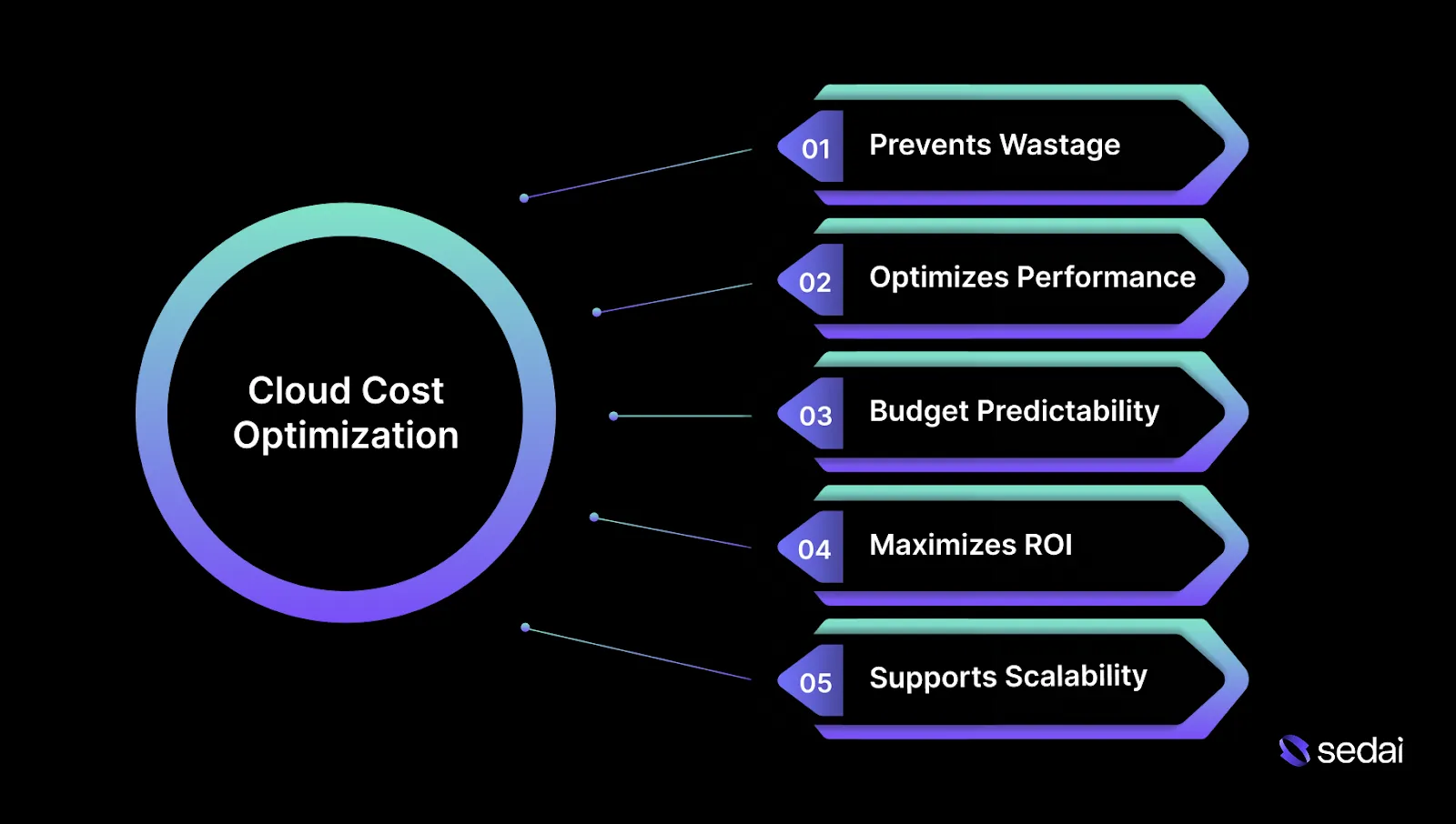
The goal of cloud cost optimization is to improve cost efficiency without compromising application performance, availability, or operational stability. Here’s why it matters:
Prevents Wastage: Helps eliminate unnecessary expenses by ensuring cloud resources are sized appropriately and allocated based on actual workload demand rather than assumptions.
Optimizes Performance: Ensures consistent application performance while controlling costs, enabling efficient resource use without impacting service levels or user experience.
Improves Budget Predictability: Enhances cost visibility across environments, enabling you to forecast cloud spending more accurately and reduce the risk of unexpected cost spikes.
Maximizes ROI on Cloud Investments: Ensures cloud spending directly supports business objectives by aligning resource allocation with real application requirements and usage patterns.
Supports Scalability: Allows you to scale workloads efficiently, minimizing the risk of over-provisioning during periods of growth or under-provisioning during demand spikes.
Once you understand what cloud cost optimization involves, it becomes easier to see how cloud architecture directly shapes those costs.
The Architecture Behind Cloud Costs
Cloud cost architecture describes how the different components of a cloud environment contribute to overall cloud spending. Understanding these cost drivers is critical for managing resources efficiently and preventing unexpected charges as environments scale and change.
Here are the key cloud cost drivers:
1.Compute Resources (VMs, Containers, and Serverless)
Compute is typically the largest contributor to cloud spend. For virtual machines (VMs), costs are driven by instance type, vCPU count, memory allocation, and uptime.
For containers and serverless functions, pricing is based on actual resource consumption, such as CPU execution time for services like AWS Lambda.
Optimization Tip: Use auto-scaling and serverless architectures for dynamic workloads to reduce over-provisioning and align costs with real usage.
2.Storage
Storage costs depend on data volume, storage type (such as S3, Blob Storage, or block storage), and access frequency across tiers like hot, cool, or archive.
Optimization Tip: Apply lifecycle management policies to move infrequently accessed data to lower-cost storage tiers and control long-term storage expenses.
3.Data Transfer and Networking
Cloud providers charge for data egress, which includes moving data out of the cloud to the internet or across regions. Costs vary based on the amount of data transferred and the destination.
Optimization Tip: Reduce cross-region data transfers and use content delivery networks (CDNs) to distribute content efficiently and control networking costs.
4.Licensing and Software
Certain services, such as Windows-based VMs or commercial databases, introduce additional licensing costs. These fees may be based on usage, instance type, or long-term reservation commitments.
Optimization Tip: Evaluate open-source alternatives where possible and use spot instances or non-licensed options for non-production workloads to limit licensing overhead.
5.Cloud Provider Pricing Models
Each cloud provider (AWS, Azure, and GCP) offers multiple pricing models, including on-demand, reserved instances, spot instances, and commitment-based plans.
For each model, the cost implications depend on workload predictability and usage patterns.
Optimization Tip: Use reserved instances or savings plans for predictable workloads, and leverage spot instances for non-critical workloads that can tolerate interruptions.
6.Managed Services and PaaS
Managed services, such as databases and Kubernetes platforms, reduce operational overhead but often cost more than self-managed infrastructure.
Optimization Tip: Adopt serverless or fully managed services when their operational and productivity benefits justify the added cost, especially for small or short-lived workloads.
7.Idle Resources
Idle resources, such as unused virtual machines or overprovisioned storage, are a common source of unnecessary cloud spend.
Ready to optimize your cloud costs with AI?
Book a Sedai demo to see how AI-driven optimization reduces cloud spend and improves efficiency.
Optimization Tip: Implement automated shutdown schedules for non-production environments and regularly audit cloud accounts to identify and remove orphaned or underutilized resources.
Once you understand how cloud architecture drives costs, it helps explain why AI is becoming essential for managing and optimizing them effectively.
AI-driven recommendations are only as good as the actions that follow. Book a demo to see how Sedai closes that loop, moving from insight to autonomous remediation.
Why AI Is Becoming Essential for Cloud Cost Optimization?
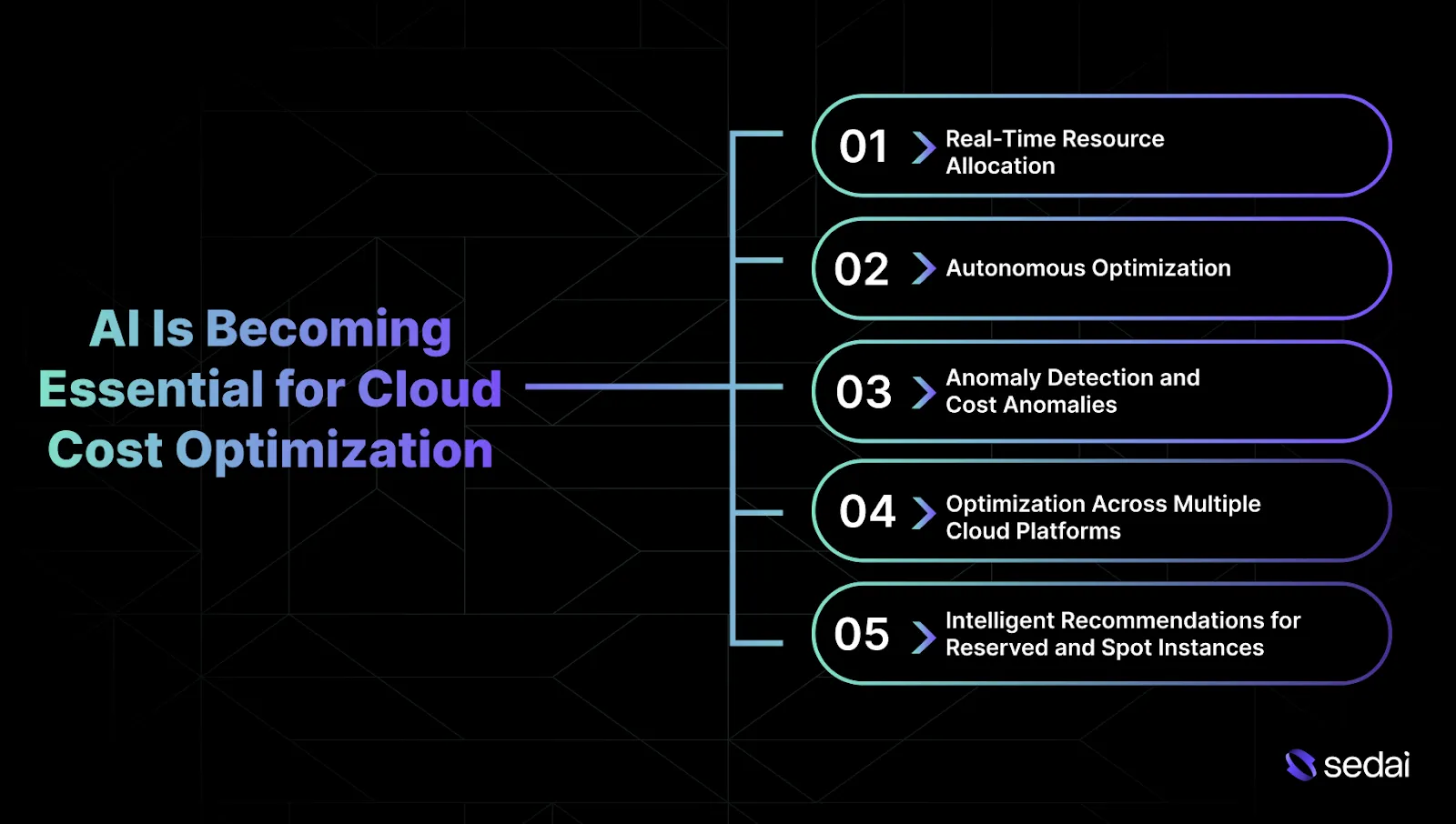
AI is becoming essential to cloud cost optimization because it dynamically optimizes cloud spending while maintaining performance and scalability across complex, multi-cloud environments. Here’s why AI is crucial for cloud cost optimization:
1.Real-Time Resource Allocation
Cloud environments change continuously, with workloads scaling, instances spinning up and down, and demand fluctuating. AI analyzes real-time resource usage and identifies demand, proactively adjusting resources to reduce overprovisioning.
Example: AI can automatically scale compute resources for an application based on usage patterns, ensuring only the required capacity is used without relying on manual intervention.
2.Autonomous Optimization
AI enables autonomous cloud optimization by learning from historical performance data and making real-time adjustments. This includes resizing VMs, reallocating workloads, and dynamically tuning storage and networking resources.
Example: AI platforms such asSedai use machine learning to automate optimization decisions, ensuring cloud environments operate at sustained cost efficiency.
3.Anomaly Detection and Cost Anomalies
AI detects anomalies in cloud usage patterns that traditional monitoring tools may overlook. This includes identifying sudden spikes in consumption or persistently underutilized resources, allowing teams to respond quickly and limit waste.
Example: AI can identify idle resources or misconfigured instances that might otherwise remain unnoticed, triggering alerts for immediate corrective action.
4.Optimization Across Multiple Cloud Platforms
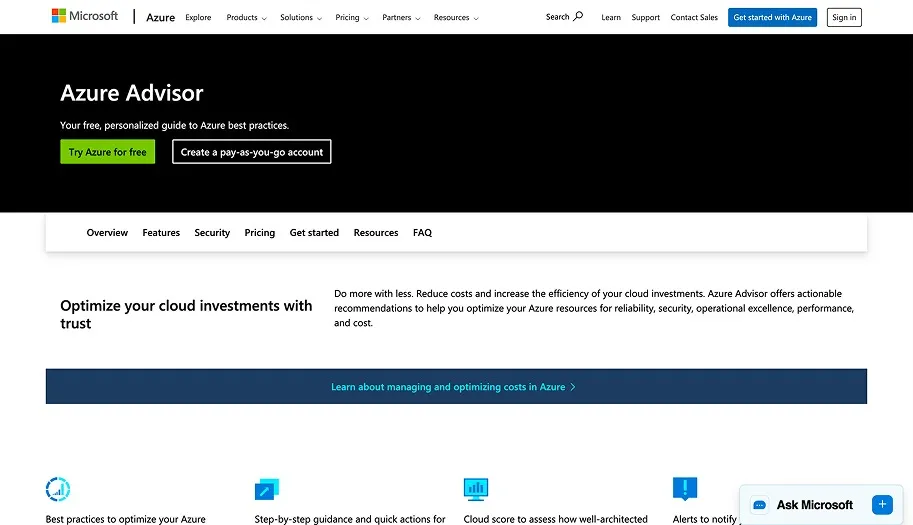
Many organizations operate across multiple cloud providers. AI supports cost optimization across platforms such as AWS, Azure, and Google Cloud by tailoring recommendations to each provider's pricing models and usage patterns.
Example: AI tools can recommend when to use spot instances, reserved instances, or serverless services based on real workload demand across different cloud environments.
5.Intelligent Recommendations for Reserved and Spot Instances
AI helps determine when to commit to reserved instances or rely on spot instances by forecasting cost savings from historical usage patterns. This allows teams to secure lower rates for stable workloads without overcommitting.
Example: AI algorithms analyze application behavior and recommend the most cost-efficient mix of on-demand and reserved instances based on usage forecasts.
As AI becomes central to cloud cost optimization, the practical strategies teams use to apply it start to take shape.
6 AI-Driven Cloud Cost Optimization Strategies
AI-driven cloud cost optimization strategies help automate resource management, predict usage patterns, and fine-tune cloud spending.
These strategies ensure cloud resources are allocated efficiently without impacting performance, allowing you to spend more time on higher-value, strategic work.
1.Rightsizing with AI-Driven Recommendations
AI-driven rightsizing continuously evaluates real usage patterns rather than relying on static thresholds or periodic reviews. By analyzing historical and real-time data, AI recommends instance sizes that better reflect actual workload needs. This reduces both over- and under-provisioning while automatically adapting as workloads evolve.
2.Predictive Scaling and Auto-Scaling
Predictive scaling uses AI to anticipate future demand based on trends and patterns, while auto-scaling responds to changes in real time. Together, they help ensure capacity is available before demand spikes occur and is reduced when demand falls. This combination improves performance during peaks and prevents waste during quieter periods.
3.Spot Instance Utilization with AI
AI enables smarter use of spot instances by identifying workloads that can safely tolerate interruptions. By predicting interruption risk, AI helps shift or reschedule workloads before disruption occurs. This allows teams to capture significant cost savings without compromising reliability for critical services.
4.AI-Driven Storage Optimization
AI-driven storage optimization automatically aligns data placement with access behavior. Frequently accessed data remains on high-performance storage, while infrequently used data is moved to lower-cost tiers. This continuous adjustment reduces long-term storage costs without requiring manual oversight.
Most cost visibility tools show you the problem. Book a demo to see how Sedai fixes it, taking autonomous action based on your actual workload behavior.
5.Anomaly Detection and Cost Alerts
AI-powered anomaly detection identifies unusual spikes or deviations in usage and spending that traditional thresholds often miss. Early detection allows teams to investigate inefficiencies, misconfigurations, or runaway workloads before costs escalate. This shifts cost management from reactive to proactive.
6.Cost Forecasting with AI
AI-based cost forecasting analyzes historical trends to predict future cloud spend more accurately. These forecasts support better budgeting, capacity planning, and decision-making. By comparing predictions with actual usage over time, teams can refine assumptions and reduce financial surprises.
After applying these strategies, it’s important to understand the features that make an AI-driven cloud cost optimization tool truly effective.
Key Features to Look for in an AI-Driven Cloud Cost Optimization Tool
When selecting an AI-driven cloud cost optimization tool, ensure it integrates smoothly with the existing cloud environment and delivers actionable insights.
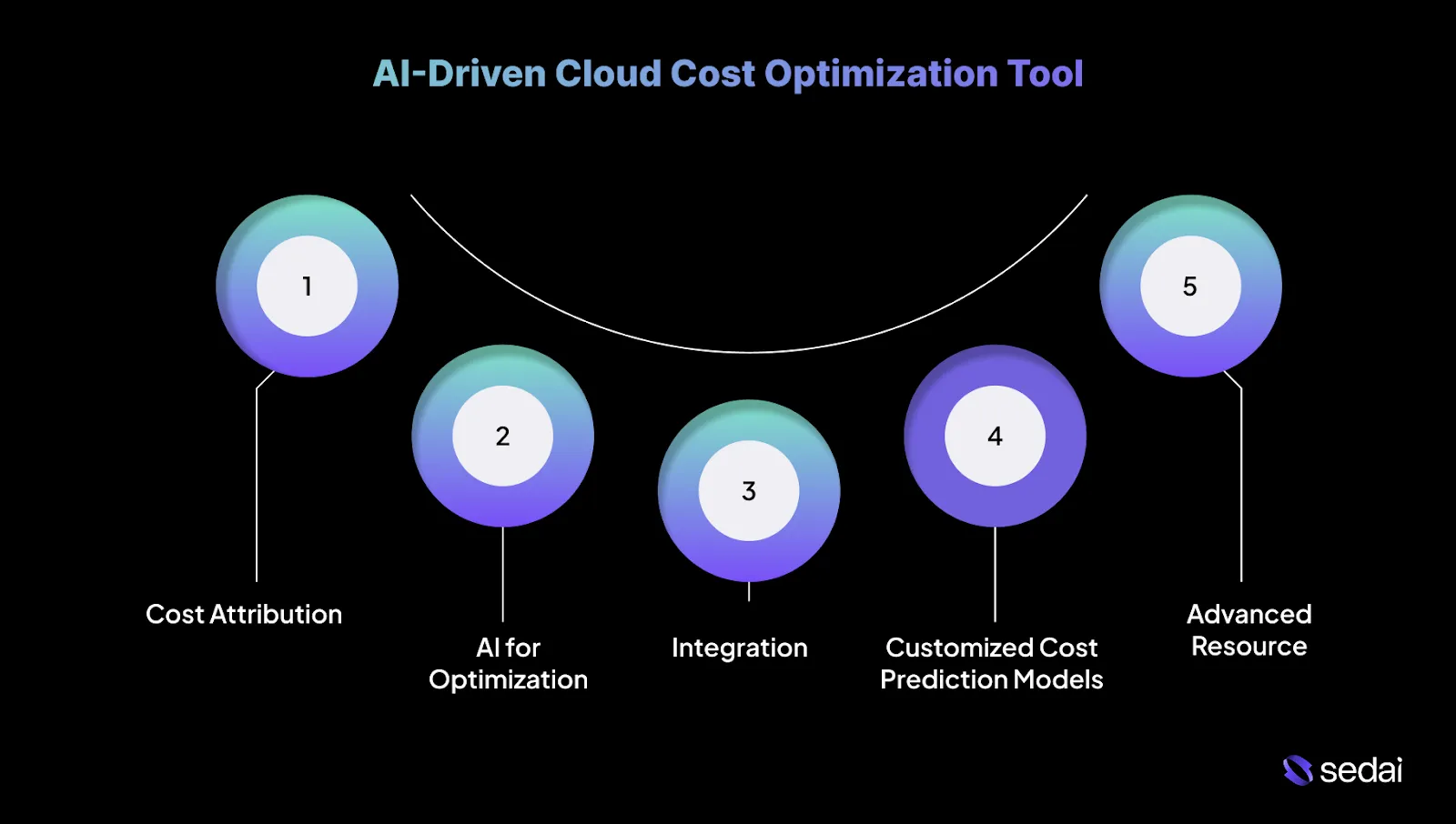
The right tool should enable you to automate decisions, track costs across multiple platforms, and optimize resources in real time without sacrificing control. Below are the key features to look for in an AI-driven cloud cost optimization tool.
1.Cost Attribution and Granular Tagging
Ensure the tool supports granular custom tagging, enabling detailed cost tracking and reporting. Look for integrations with existing cost management or billing platforms to maintain accurate tagging and cost allocation across projects, departments, and services.
2.AI for Optimization of Non-Critical Workloads
The tool should identify non-critical workloads and recommend using spot instances or low-priority VMs to reduce costs without affecting critical systems. It should also be able to dynamically shift workloads based on usage patterns and availability.
3.Integration with DevOps Toolchains
Ensure the AI tool integrates smoothly with existing DevOps workflows, including CI/CD pipelines, infrastructure-as-code (IaC) frameworks, and monitoring platforms. The tool should trigger optimization actions automatically in response to deployment or scaling events.
4.Customized Cost Prediction Models
Look for a solution that allows custom parameters to be defined for cost prediction across different workload types, such as machine learning, big data processing, and web applications. The tool should provide flexibility to refine predictions as usage patterns change.
5.Advanced Resource Allocation with AI
Use AI-driven tools that optimize Kubernetes cluster resource allocation by automatically adjusting pod counts based on usage or reallocating compute resources across services in line with demand forecasts.
Knowing which features matter most makes it easier to evaluate and compare the top AI-driven cloud cost optimization tools.
8 Top AI-Driven Cloud Cost Optimization Tools
AI cloud cost optimization tools use machine learning to analyze usage patterns, forecast future costs, and automate resource adjustments, ensuring strong cost efficiency. Below are the top AI cloud cost optimization tools.
1.Sedai
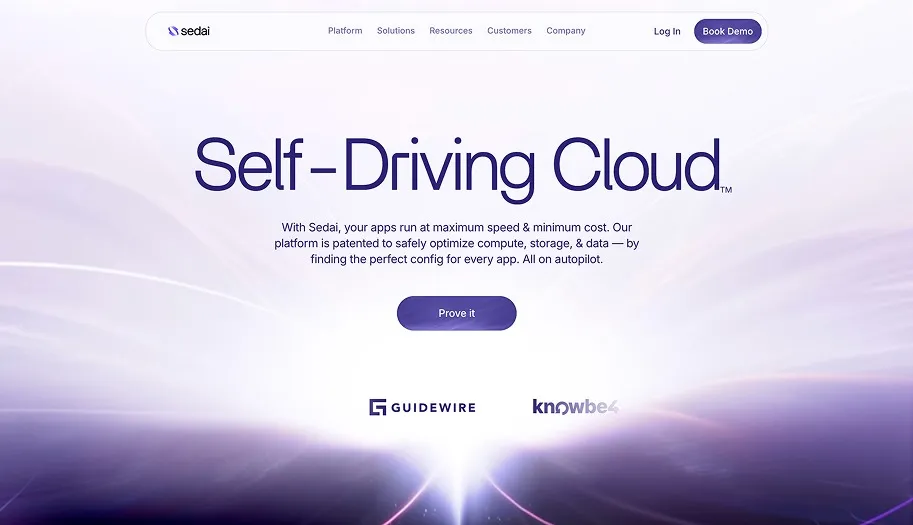
Sedai is a top AI-driven cloud optimization platform that lowers cloud costs while maintaining application performance and reliability across AWS, Azure, Google Cloud, and Kubernetes environments.
It operates as a behavior-aware optimization layer, using machine learning to understand how applications perform under real production conditions.
Sedai continuously evaluates cost and performance tradeoffs and applies autonomous actions only within clearly defined safety guardrails.
Key Features
ML-informed scaling optimization: Uses historical and real-time signals to improve scaling behavior, limiting over-provisioning while safeguarding service objectives.
Guardrail-driven autonomous actions: Execute optimization changes only when confidence thresholds and predefined safety policies are met.
Cost-aware optimization decisions: Considers cloud pricing models and workload characteristics without embedding rigid tradeoffs into the architecture.
Behavior-based resource rightsizing: Analyzes real workload usage patterns to recommend or apply compute and memory adjustments, avoiding reliance on static sizing assumptions.
Continuous performance validation: Monitors latency, error rates, and utilization to ensure cost optimizations do not impact application reliability.
Kubernetes and cloud-native support: Optimizes containerized workloads and cloud resources based on supported services and configurations.
Adaptive optimization models: Continuously update learning models as workloads, traffic patterns, and deployment characteristics change over time.
How Sedai Delivers Value:
Metric
Key Details
30%+ Reduced Cloud Costs
Sedai lowers cloud spend by optimizing resources based on real-time usage data.
75% Improved App Performance
Dynamic resource adjustments help improve latency, throughput, and overall user experience.
70% Fewer Failed Customer Interactions (FCIs)
Proactive detection and remediation reduce downtime and help maintain service availability.
6X Greater Productivity
Automated cloud optimizations allow engineering teams to focus on higher-impact work.
$3B+ Cloud Spend Managed
Sedai manages more than $3 billion in cloud spend, delivering measurable optimization and savings for customers such as Palo Alto Networks.
Best For: Engineers and platform teams managing cloud-native or Kubernetes-based environments who need AI-driven cost optimization that respects performance constraints and maintains architectural control.
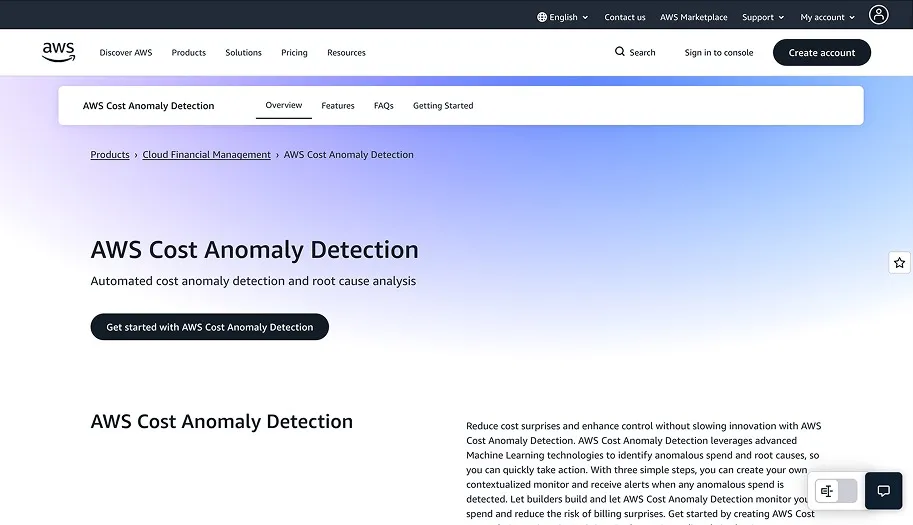
AWS Cost Anomaly Detection uses machine learning to continuously track AWS usage and billing data. It identifies unusual spending patterns and unexpected cost spikes early, alerting teams before they grow into larger issues.
This helps organizations maintain tighter control over cloud spending through timely visibility.
Key Features:
Machine Learning–Powered Alerts: Automatically flags unexpected increases in cloud costs.
Customizable Alert Thresholds: Allows teams to define anomaly criteria based on business needs.
Root Cause Analysis: Pinpoints the source of cost anomalies to speed up investigation and resolution.
Smooth Integration: Works alongside AWS Budgets for a unified cost monitoring experience.
Best For: Engineering teams using AWS that want proactive cost monitoring with automated alerts and clear insights into unexpected spending.
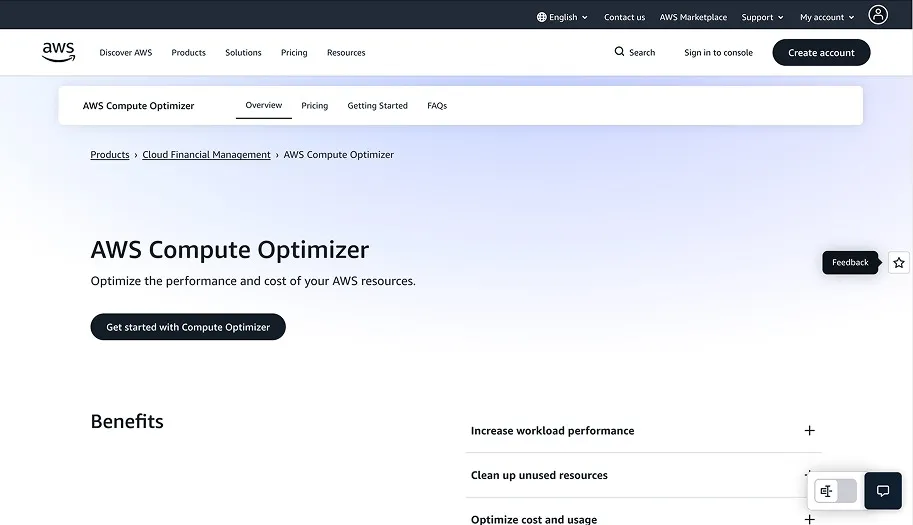
AWS Compute Optimizer focuses on improving the efficiency of compute resources such as EC2 instances, Lambda functions, and Auto Scaling groups.
By analyzing historical usage patterns with machine learning, it delivers practical recommendations that reduce costs while maintaining application performance.
Key Features:
Lambda Memory Optimization: Suggests appropriate memory settings to control Lambda costs.
Auto Scaling Insights: Helps refine scaling configurations for better resource efficiency.
Performance and Cost Balance: Ensures recommendations support performance requirements.
Cost Explorer Integration: Aligns optimization insights with broader cost visibility.
Best For: Engineering teams managing EC2 and Lambda workloads who want continuous, data-driven resource optimization without manual tuning.
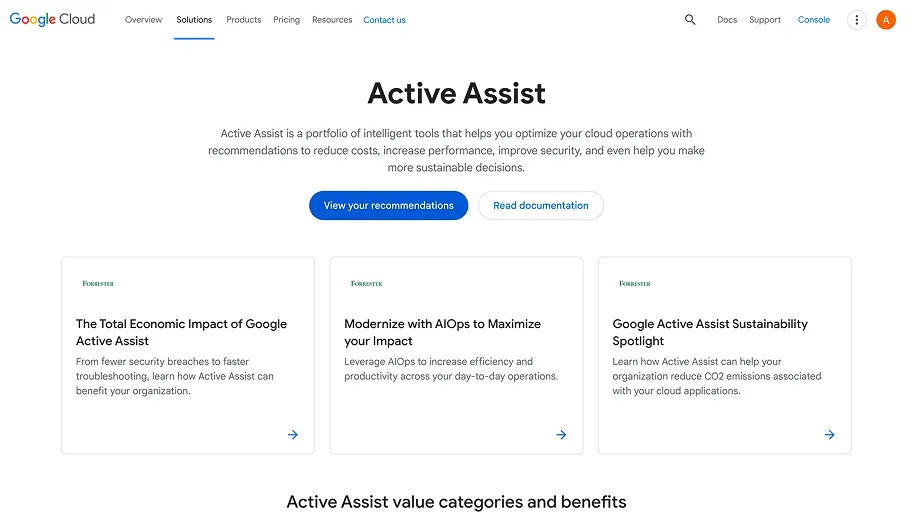
Google Cloud Active Assist applies AI to deliver real-time cost optimization across Google Cloud environments. It analyzes usage patterns to recommend resource adjustments that improve efficiency without affecting performance.
Key Features:
AI-Based Rightsizing: Suggests instance sizes based on actual workload demands.
Predictive Cost Insights: Forecasts future spending to support proactive planning.
Configuration Recommendations: Adjust resources to match changing workloads.
Billing Integration: Connects with Google Cloud Billing for clear cost visibility.
Best For: Engineering teams on Google Cloud looking for intelligent, automated recommendations to manage and reduce cloud costs effectively.
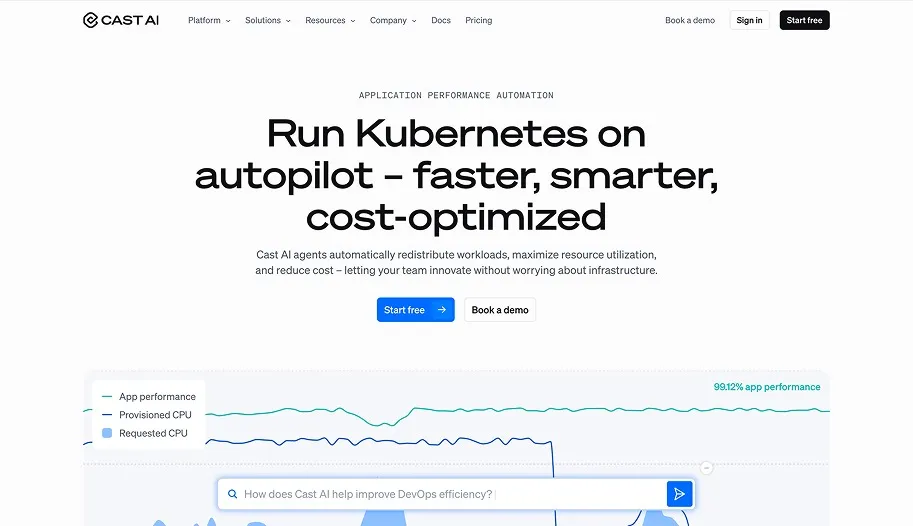
Cast AI focuses on optimizing Kubernetes costs through AI-driven automation. It dynamically manages resource allocation, node sizing, and Spot instance usage across AWS, GCP, and Azure to reduce overhead without impacting reliability.
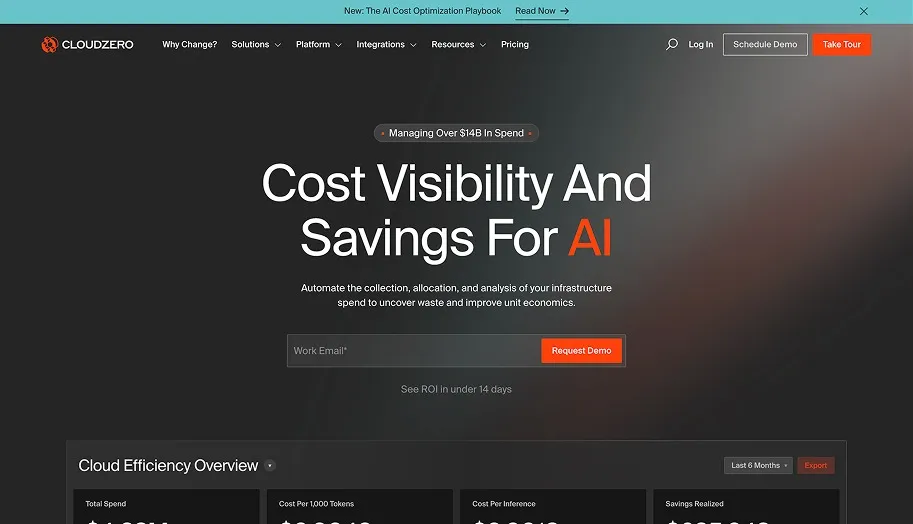
CloudZero provides detailed cloud cost intelligence by linking infrastructure spending to business dimensions such as features, teams, or customers. Its unit economics approach helps engineering teams understand how cloud costs impact product and business outcomes.
Key Features:
Unit Economics Modeling: Connects cloud costs to customer or product-level metrics.
Anomaly Detection: Identifies unusual cost behavior in real time.
Actionable Optimization Insights: Highlights opportunities based on real usage data.
Multi-Cloud Support: Works across AWS, GCP, and Azure environments.
Best For: Engineering teams that need detailed cost attribution and business-aligned insights to guide optimization decisions.
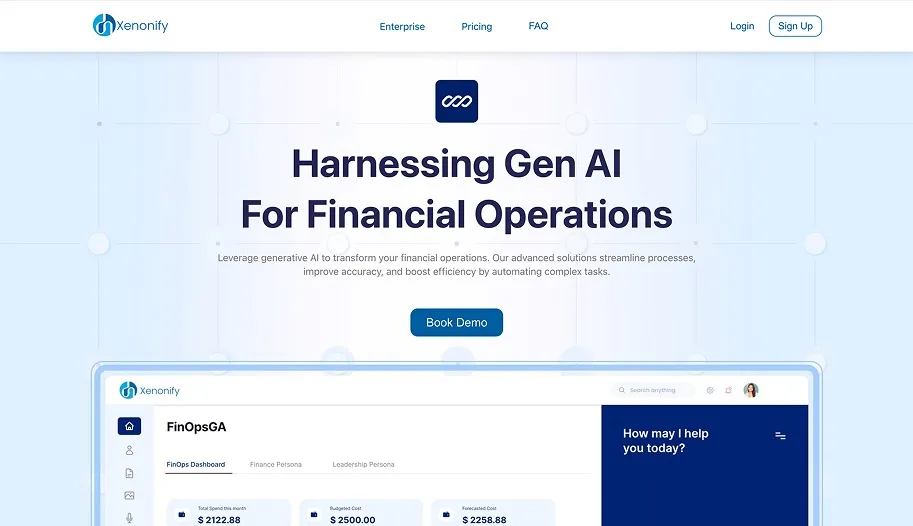
Xenonify.ai is an AI-powered FinOps automation platform that optimizes cloud costs across AWS, Azure, and GCP. It delivers real-time visibility and automated recommendations that help reduce waste and improve financial governance.
Cloud cost optimization is an ongoing discipline that depends on continuous monitoring, regular adjustments, and informed decision-making. As cloud environments scale and become more complex, manual optimization approaches become increasingly inefficient and difficult to sustain.
High-performing teams rely on AI-driven tools to automate rightsizing, scaling, and cost forecasting. Platforms such asSedai enable engineering teams to dynamically adjust resource allocation based on actual demand, reducing waste while maintaining a stable, high-performing environment.
By offloading routine optimization work to AI, you gain better cost predictability, improved operational efficiency, and more time to focus on innovation and system improvements.
Ready to see how AI-driven optimization can reduce your cloud costs?Start automating now and optimize your resources efficiently.
FAQs
How does AI-driven cloud cost optimization handle unpredictable spikes in cloud usage?
AI-driven tools continuously analyze real-time signals along with historical usage patterns to identify demand spikes. Using predictive scaling and autonomous resource adjustments, they proactively scale resources up or down during high-demand periods, reducing cost inefficiencies while maintaining performance.
Can AI-driven cloud cost optimization be used across hybrid cloud environments?
Yes, AI-driven cloud cost optimization tools are designed to work across hybrid environments, optimizing both on-premises and cloud-based workloads. They dynamically balance resource allocation across infrastructures to maintain cost efficiency and operational consistency.
How can AI optimize cloud costs for serverless architectures?
AI optimizes serverless environments by analyzing function execution behavior and usage trends. By aligning resource allocation with actual demand, it reduces over-provisioning and underutilization, keeping serverless applications cost-efficient without impacting performance.
What’s the impact of using AI for cloud cost optimization in multi-cloud environments?
In multi-cloud setups, AI-driven tools optimize costs across providers such as AWS, Azure, and GCP. They evaluate pricing models like reserved and spot instances for each platform and adjust resource usage to minimize waste and improve overall cost efficiency.
Is AI-based cloud cost optimization suitable for all cloud applications?
AI-based optimization delivers the most value for applications with variable workloads or unpredictable usage. While most cloud applications can benefit, it is especially effective for cloud-native architectures, microservices, and dynamically scaled environments such as Kubernetes.
Similar Resources
Top 12 Cloud Cost Management Tools Compared
We analyzed and ranked the best tools for managing cloud costs. Start tracking and reducing spending across your cloud stack.
Explore the best cloud storage options for 2026, comparing AWS S3, Azure Blob, Google Cloud Storage, and key features to help you choose the right solution.
Sedai Expands Its Self-Driving Cloud to Power Autonomous Enterprise Infrastructure with $20M Series B
Sedai raises $20 million in Series B funding for its self-driving cloud. Fortune 500 companies use Sedai's patented AI to manage and optimize the cloud.
.webp%3Fv%3D2026-04-09T18%253A41%253A05.143Z&w=3840&q=75)