How much did KnowBe4 save on AWS cloud costs using Sedai?
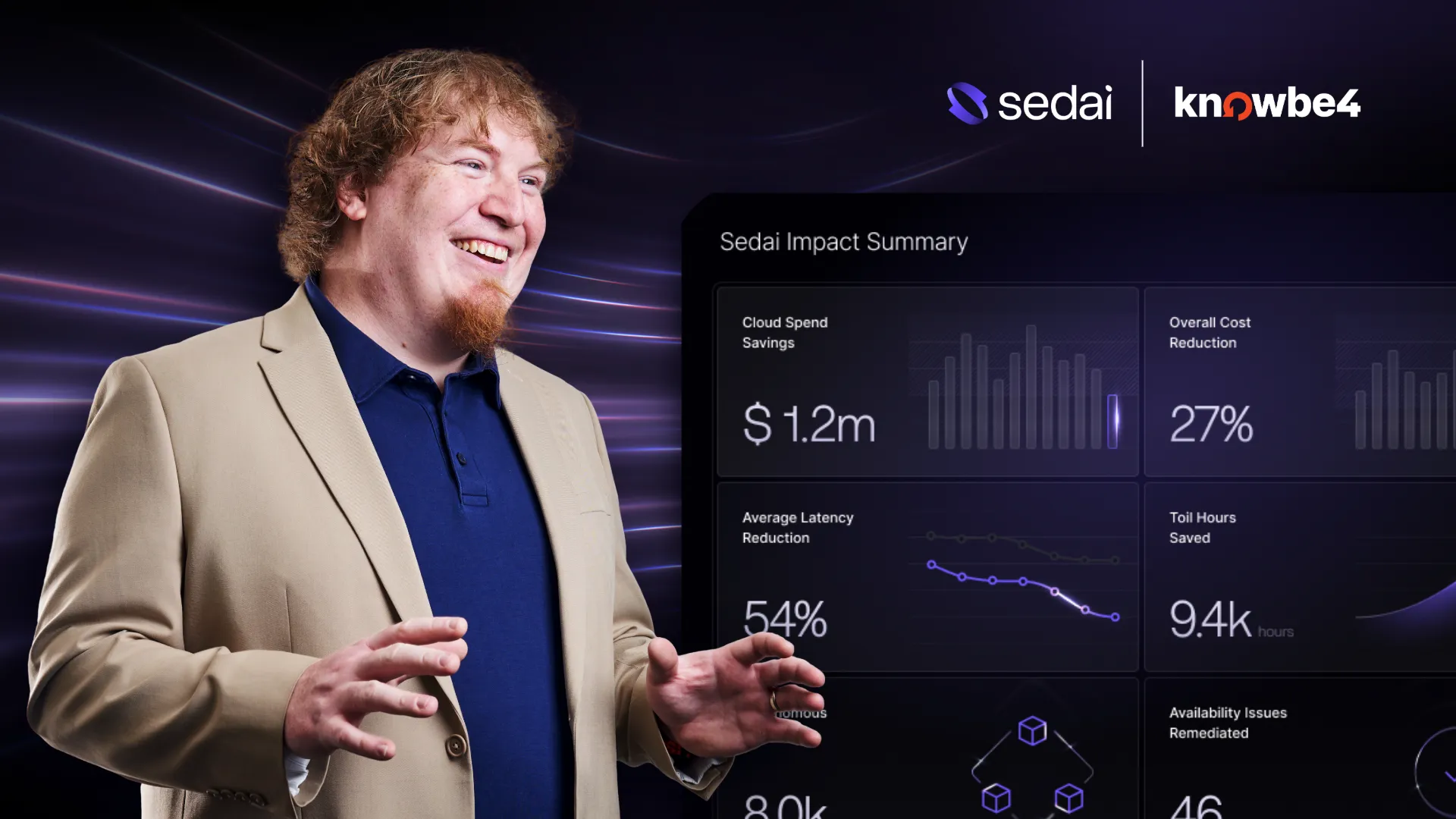
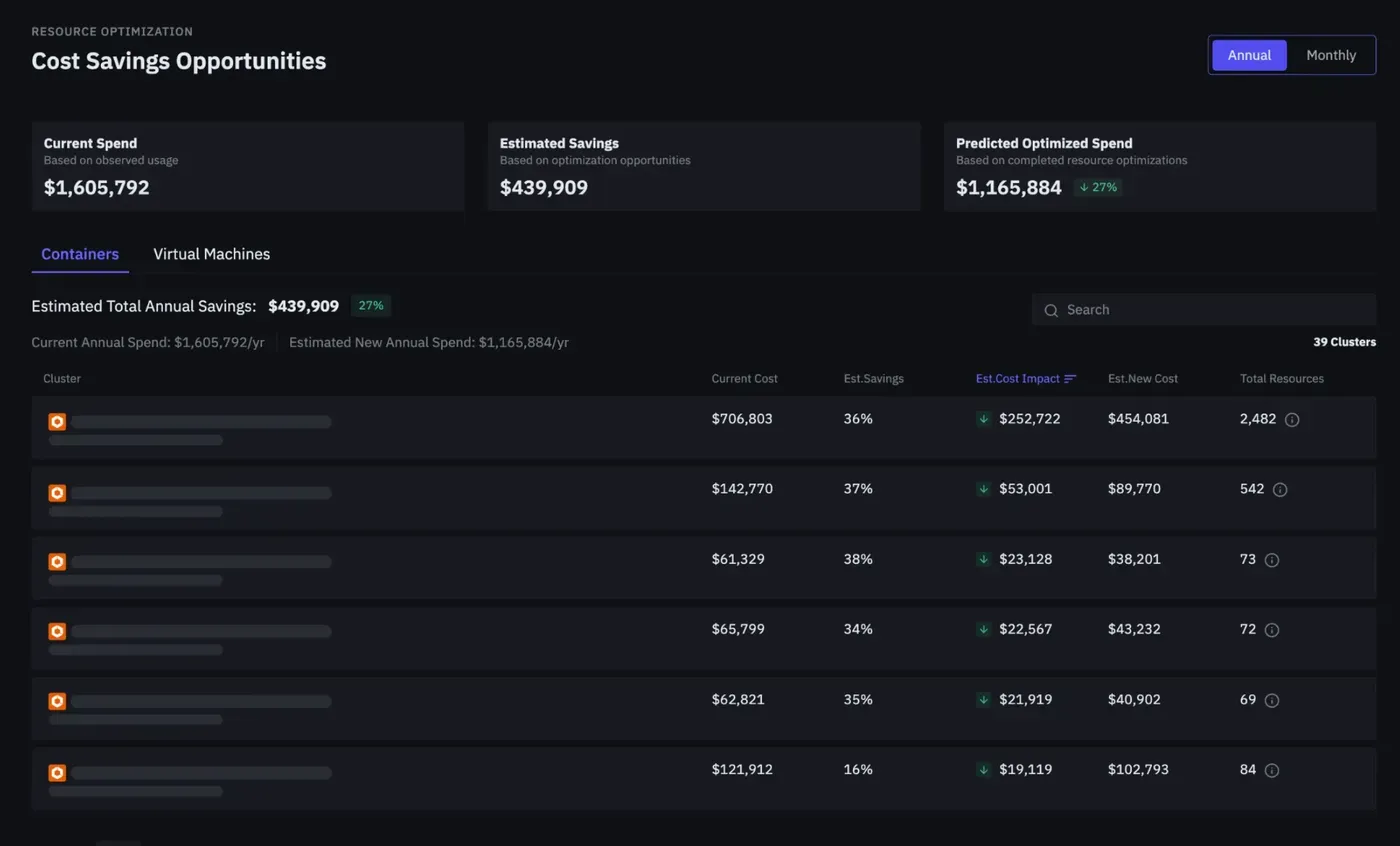
KnowBe4 saved over $1.2 million in AWS cloud costs after adopting Sedai's autonomous optimization platform. This included a 27% overall reduction in cloud compute costs, with an average monthly savings of $81,000. In some ECS services, cost reductions reached up to 87% in development and up to 50% in production. [Source]
What performance improvements did KnowBe4 experience with Sedai?
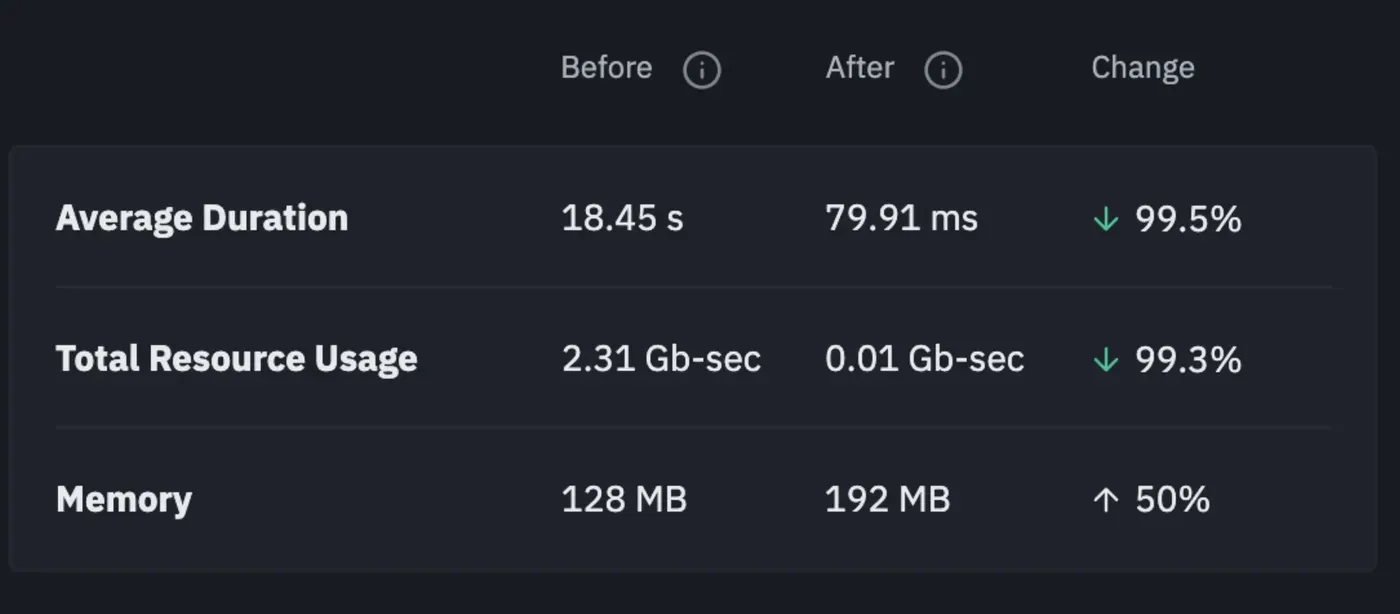
KnowBe4 achieved up to 99.5% latency reduction on AWS Lambda functions, with execution times dropping from 18.5 seconds to approximately 80 milliseconds. Overall, the team eliminated over 10,000 days of latency and saw up to 80% faster processing. [Source]
How did Sedai impact KnowBe4's engineering workload?
Sedai significantly reduced manual toil for KnowBe4's engineering team. 98% of approximately 9,500 services were running autonomously, and over 1,100 autonomous actions were executed in the first three months. This allowed engineers to focus on high-value work instead of repetitive optimization tasks. [Source]
Did Sedai cause any incidents or outages at KnowBe4?
No, Sedai executed millions of autonomous actions at KnowBe4 with zero incidents or outages. The platform's safety-by-design approach and phased implementation ensured production stability. [Source]
How quickly did KnowBe4 achieve ROI after implementing Sedai?
KnowBe4 achieved return on investment (ROI) in just five months after deploying Sedai's autonomous optimization platform. [Source]
What was KnowBe4's approach to implementing Sedai?
KnowBe4 used a 'Crawl-Walk-Run' framework for implementation: starting with low-risk services, analyzing early results, and then scaling to all services and AWS accounts. This phased approach ensured safety and predictability. [Source]
How did Sedai integrate with KnowBe4's CI/CD and IaC workflows?
Sedai was integrated into KnowBe4's CI/CD and GitOps workflows, ensuring that frequent deployments did not overwrite autonomous optimizations. This preserved Infrastructure as Code (IaC) as the source of truth while allowing Sedai to maintain optimizations automatically. [Source]
What AWS services did Sedai optimize for KnowBe4?
Sedai optimized KnowBe4's AWS ECS Fargate and AWS Lambda environments, focusing on service right-sizing, dynamic scaling, and application-aware optimization based on real workload behavior and latency. [Source]
How did Sedai help KnowBe4 balance cost efficiency and performance?
Sedai's autonomous optimization allowed KnowBe4 to balance cost efficiency and performance by dynamically tuning resources, scaling to meet demand, and optimizing configurations based on real application behavior, all without risking production stability. [Source]
What was the impact of Sedai on KnowBe4's Lambda function costs and latency?
KnowBe4 saw up to 99.3% cost savings on individual Lambda functions, with a 31% cost decrease and 54% latency decrease for production Lambda functions. Execution times dropped from 18.5 seconds to about 80 milliseconds. [Source]
How did Sedai affect KnowBe4's engineering team's focus?
Sedai enabled KnowBe4's engineers to focus on high-value, innovative work by automating low-value, repetitive optimization tasks. This widened the impact of each SRE and allowed developers to concentrate on building new features. [Source]
What concerns did KnowBe4 have about autonomous optimization, and how were they addressed?
KnowBe4's engineering leaders were initially concerned about letting a system make changes in production without human intervention, fearing potential outages. These concerns were addressed by Sedai's phased implementation, safety-by-design approach, and a short but rigorous test trial period, which resulted in zero incidents. [Source]
How did Sedai help KnowBe4 scale its AWS environment?
Sedai enabled KnowBe4 to scale its AWS environment efficiently by automating resource optimization across thousands of ECS services and Lambda functions, handling massive traffic volumes and frequent releases without manual intervention. [Source]
What is the 'Crawl-Walk-Run' framework used by KnowBe4 for Sedai implementation?
The 'Crawl-Walk-Run' framework is a phased approach where KnowBe4 started with low-risk services (Crawl), analyzed results and expanded to flagship products (Walk), and then rolled out autonomous optimization across all infrastructure (Run). This ensured safe and predictable adoption. [Source]
How did Sedai's optimizations persist through KnowBe4's frequent deployments?
By integrating with KnowBe4's CI/CD and GitOps workflows, Sedai ensured that its autonomous optimizations were preserved and not overwritten during frequent deployments, maintaining continuous cost and performance improvements. [Source]
What specific AWS metrics did KnowBe4 improve with Sedai?
KnowBe4 improved several AWS metrics with Sedai, including 58% year-over-year ECS growth, 422% year-over-year Lambda growth, and 250 million+ daily Lambda invocations, all while reducing costs and latency. [Source]
How did Sedai help KnowBe4's SRE team?
Sedai allowed KnowBe4's SRE team to scale their impact by automating optimization tasks, reducing manual intervention, and enabling them to focus on higher-value engineering work. [Source]
What was the impact of Sedai on KnowBe4's development and production environments?
In KnowBe4's development environment, Sedai delivered up to 87% cost reduction on some ECS services and an average reduction of ~35%, equating to about $390,000 annually. In production, ECS services saw up to 50% cost savings. [Source]
How did Sedai's autonomous actions scale at KnowBe4?
Within the first three months, Sedai executed over 1,100 autonomous actions at KnowBe4, with 98% of approximately 9,500 services running autonomously, demonstrating large-scale operational efficiency. [Source]
Features & Capabilities
What is Sedai's autonomous cloud management platform?
Sedai's autonomous cloud management platform uses machine learning to optimize cloud resources for cost, performance, and availability without manual intervention. It covers compute, storage, and data across AWS, Azure, GCP, and Kubernetes environments. [Source]
What are the key features of Sedai?
Key features include autonomous optimization, proactive issue resolution, full-stack cloud coverage, smart SLOs, release intelligence, plug-and-play implementation, multiple modes of operation (Datapilot, Copilot, Autopilot), enhanced productivity, and safety-by-design. [Source]
Does Sedai support integration with existing tools and workflows?
Yes, Sedai integrates with monitoring tools (Cloudwatch, Prometheus, Datadog, Azure Monitor), Kubernetes autoscalers, IaC and CI/CD tools (GitLab, GitHub, Bitbucket, Terraform), ITSM (ServiceNow, Jira), notification tools (Slack, Microsoft Teams), and runbook automation platforms. [Source]
What modes of operation does Sedai offer?
Sedai offers three modes: Datapilot (observability), Copilot (one-click optimizations), and Autopilot (fully autonomous execution), allowing organizations to choose the level of automation that fits their needs. [Source]
How does Sedai ensure safe and auditable changes?
Sedai integrates with Infrastructure as Code (IaC), IT Service Management (ITSM), and compliance workflows, ensuring all changes are safe, validated, and auditable. The platform is also SOC 2 certified. [Source]
Use Cases & Benefits
Who can benefit from using Sedai?
Sedai is designed for platform engineers, IT/cloud operations, technology leaders, site reliability engineers (SREs), and FinOps professionals in organizations with significant cloud operations across industries such as cybersecurity, IT, financial services, healthcare, travel, and e-commerce. [Source]
What problems does Sedai solve for cloud teams?
Sedai addresses cost inefficiencies, operational toil, performance and latency issues, lack of proactive issue resolution, complexity in multi-cloud environments, and misaligned priorities between engineering and FinOps teams. [Source]
What business impact can customers expect from Sedai?
Customers can expect up to 50% cloud cost savings, up to 75% latency reduction, up to 6X productivity gains, reduced failed customer interactions by up to 50%, and improved release quality and reliability. [Source]
What industries are represented in Sedai's case studies?
Sedai's case studies cover cybersecurity (Palo Alto Networks), IT (HP), financial services (Experian, CapitalOne Bank), security awareness training (KnowBe4), travel (Expedia), healthcare (GSK), car rental (Avis), retail/e-commerce (Belcorp), SaaS (Freshworks), and digital commerce (Campspot). [Source]
Implementation & Support
How long does it take to implement Sedai?
Sedai's setup process takes just 5 minutes for general use cases and up to 15 minutes for specific scenarios like AWS Lambda. More complex environments may vary. [Source]
How easy is it to get started with Sedai?
Sedai offers plug-and-play implementation, agentless integration via IAM, personalized onboarding sessions, detailed documentation, a community Slack channel, and a 30-day free trial. [Source]
What support resources does Sedai provide?
Sedai provides detailed technical documentation, onboarding support, a dedicated Customer Success Manager for enterprise customers, a community Slack channel, and email/phone support. [Source]
Security & Compliance
Is Sedai SOC 2 certified?
Yes, Sedai is SOC 2 certified, demonstrating adherence to stringent security and compliance standards for data protection. [Source]
Competition & Differentiation
How does Sedai differ from other cloud optimization tools?
Sedai offers 100% autonomous optimization, proactive issue resolution, application-aware intelligence, full-stack cloud coverage, release intelligence, and rapid plug-and-play implementation. Unlike competitors, Sedai operates autonomously and optimizes based on real application behavior. [Source]
What unique features set Sedai apart from competitors?
Unique features include 100% autonomous optimization, proactive issue resolution before user impact, application-aware intelligence, release intelligence, and a quick setup process (5–15 minutes). [Source]
KnowBe4 is the global leader in Human and AI Risk Management. More than 70,000 organizations use its platform, which is built entirely on AWS.
The Challenge
Explosive growth drove massive cloud scale, making manual optimization unsustainable.
The Solution
KnowBe4 moved from manual optimization to Sedai’s safe, autonomous optimization in production.
The Results
$1.2M+ cloud costs saved
Up to 99.5% latency reduction
Zero incidents caused by Sedai
The Challenge: KnowBe4’s Success Created Operational Chaos
When it came to the cloud, KnowBe4 was a victim of its own success.
As the global leader in Human and AI Risk Management, the company saw its customer base grow rapidly to more than 70,000 organizations. But that success brought unprecedented scaling challenges in its AWS environment.
Matt Duren, VP of Engineering at KnowBe4, was leading the team bringing new services to market every single month and handling massive traffic volumes. At this point, he saw that scaling was non-negotiable.
Cloud costs and performance do not manage themselves. Book a demo to see how Sedai takes continuous autonomous action across your entire environment.
“We're seeing tons of growth right now,” said Matt. “Just from our day-to-day, we peak out at thousands and thousands of requests per second."
Running entirely on AWS with the bulk of infrastructure on Lambda and Fargate ECS, the KnowBe4 Engineering teams were operating at a level they could no longer manage manually:
58% YoY ECS growth across 3,000+ services with 2,000–4,000+ peak tasks
422% YoY Lambda growth across 2,500+ functions
250M+ daily Lambda invocations
Software releases every ~20 minutes
How AWS’ Complexity Impacted KnowBe4’s Engineering Team
The frequent releases and high performance required for real-time cybersecurity delivery put immense pressure on the engineering team to optimize resources continually.
“My team doesn’t really have the luxury of spending time doing toil,” said Matt. “They can’t wait for a production release to see how it responds, and then wait for another team to optimize the service for them,” said Matt.
For Nate Singletary, Staff Site Reliability Engineer at KnowBe4, it was impossible to know whether ECS services were truly optimized. Engineers were stuck monitoring metrics & alerts while balancing under- & over-provisioning.
“If a service was running too low on memory or CPU, we’d see performance issues,” explained Nate. “But if it was running too rich, we were missing out on maybe hundreds or thousands of dollars of cost savings across several services.”
The Risk of Autonomous Optimization in Production
Needing a solution for continuous optimization, Sedai was an obvious solution. As an autonomous optimization platform, Sedai reduces cloud costs, boosts performance, and improves availability. Its patented ML models learn real app behavior to make safe, production-aware optimizations.
To date, Sedai has executed millions of autonomous actions with zero incidents, making it a strong fit for teams struggling to keep up with growth.
But Matt had real concerns about letting a system make changes in production without human intervention.
“We needed something that we could take out of the hands of developers and put into the hands of an agent that would allow us to continue to scale our engineering teams,” said Matt. “Which is terrifying.”
That fear was real. Because availability is critical to KnowBe4’s platform, Matt’s engineers worried one bad optimization could immediately impact customers.
But building a team solely dedicated to optimization wasn’t viable. There was simply no way to scale the SRE team fast enough to keep up with KnowBe4’s growth.
Although initially skeptical about autonomous optimization, Sedai’s measured approach to implementation assured Matt it was a safe solution.
“We took a big bet that Sedai wouldn’t cause problems after a short but rigorous test trial period. And really, the proof is in the pudding there. We never had a major outage, that’s for sure.”
The Solution: Sedai’s Autonomous Optimization
The Crawl-Walk-Run Implementation Framework
With the decision to adopt Sedai, KnowBe4 wanted to ensure engineering could optimize safely with clear guardrails and without putting customers at risk.
As part of the plan, the team intentionally wanted to validate real production traffic through Sedai so they could understand how Sedai behaved in real-world conditions.
To do this, the team took a phased approach to adopting full autonomy, allowing them to prove it was safe, predictable, and trustworthy before scaling further.
This approach became its “Crawl, Walk, Run” framework:
Crawl
Connect Sedai to the AWS environment
Establish cost-saving goals
Enable autonomous optimization on low-risk services
Walk
Analyze early results
Expand to include flagship products
Set service-specific cost and performance goals
Run
Roll out autonomous optimization across infrastructure
All services are autonomously optimized by default
Integrate Sedai across all AWS accounts & regions
This strategy proved KnowBe4 could balance cost efficiency & performance across its environments, without risking production.
Scale AWS Without Toil
Cut your cloud costs. Boost performance. Let your engineers build.
How Sedai Optimized AWS ECS Fargate and Lambda
Sedai was deployed across KnowBe4’s two primary compute layers: ECS Fargate and AWS Lambda.
Its key optimization areas included:
Service right-sizing: Automatically tunes CPU, memory, and task counts as traffic and releases change
Dynamic scaling: Adjusts horizontal & vertical scaling to handle peak traffic without over-provisioning
Application-aware optimization: Optimizes instance types & configurations based on real workload behavior & latency
Closing the Loop with CI/CD and IaC
With releases happening every ~20 minutes, the team wanted to ensure the frequent deployments did not overwrite the autonomous optimizations. To do that, KnowBe4 integrated Sedai into its existing CI/CD and GitOps workflows.
This approach preserved the IaC as the source of truth, while allowing Sedai to safely make and maintain optimizations. Engineers no longer had to manually update configs or worry about reverting optimizations during deployments.
“We have a full autonomous feedback loop,” said Nate.
The Results
With Sedai fully implemented, the optimization results were staggering.
“We achieved ROI in just five months. And Finance is very pleased about that,” said Matt. “If you look back in our savings history, it’s gone up by hundreds of thousands of dollars a year, even when we added new resources, accounts, services, and products.”
AWS Cloud Cost Savings
For cloud costs alone, the team was able to save 27% with Sedai’s autonomous optimization.
Overall Results
27% overall cloud compute cost savings
$1.2M+ total cumulative savings since adopting Sedai
$81K average monthly savings
Development Environment Results
Up to 87% cost reduction on some ECS services
~35% average reduction, equating to ~$390K annually
Production Environment Results
Up to 50% cost savings across ECS services
AWS Lambda Cost & Performance Improvements
For Lambda functions specifically, the cost & performance improvements shot up to nearly 100%.
Overall Results
Up to 99.3% cost savings on individual Lambda functions
Production Lambda function:
31% cost decrease
54% latency decrease
Performance & Latency Improvements
The performance impact was equally impressive. For one Lambda function serving real customer traffic, execution time dropped from 18.5 seconds to ~80 milliseconds (a 99.5% duration reduction) after Sedai autonomously adjusted memory allocation.
“By having Sedai in place, we’re not just saving money. We’re preventing would-be customer problems, before they become an issue,” said Matt.
Overall Results
10,000+ days of latency eliminated
Up to 99.5% latency reduction
~80% faster processing
Autonomous Operational Efficiency at Scale
Operational efficiency saw a massive boost, and engineers didn’t need to constantly tune services by hand anymore.
“Most of the engineering team probably doesn’t know what Sedai is at all. And I think that’s pretty great,” Matt explained. “They expect that optimization just happens for them because it does.”
Overall Results
98% of ~9,500 services running autonomously
1,100+ autonomous actions executed in first 3 months
Continuous optimization with no manual intervention
Reducing Engineering Toil
This high level of autonomy significantly reduced the manual workload on the engineering team and enabled them to focus on work that matters.
“We've been able to widen the impact that each individual SRE has by not having to focus on that low-value work,” said Matt.
Why Autonomous Cloud Optimization Works
By adopting safe and autonomous cloud management with Sedai, KnowBe4 optimized its operations and laid the groundwork for future growth.
But beyond the day-to-day cost savings, one of the biggest value drivers was giving Matt’s developers the freedom to build and innovate.
“Builders want to focus on building,” Matt said. “What Sedai really lets us do is keep people focused on high-value work that they’re passionate about, while being a really good cost-saving tool.”
KnowBe4's Crawl, Walk, Run adoption approach built the trust necessary to scale autonomous optimization to 98% of their services. Book a demo to see how that same phased approach applies to your environment.