Multi-cloud cost management is the practice of tracking, optimizing, and controlling cloud spending across multiple platforms such as AWS, Azure, and Google Cloud. It consolidates data from various providers into a unified view, enabling teams to understand usage patterns, identify inefficiencies, and maintain control over overall cloud spend.
Why is cost visibility important in a multi-cloud environment?
Cost visibility is crucial because each cloud provider uses different billing and reporting models, making it difficult to form a consolidated view of cloud spend. Without unified visibility, teams risk overspending, missing optimization opportunities, and facing unpredictable expenses.
What are the hidden costs of managing multi-cloud environments?
Hidden costs include data transfer and egress fees, management complexity, inconsistent pricing models, and additional security and compliance costs. These factors can lead to unexpected spend and require engineers to optimize data flow, align pricing models, and maintain governance across platforms.
What key metrics should I track to manage multi-cloud costs effectively?
Key metrics include cost per service or workload, resource utilization rates, cost anomalies and sudden spikes, and reserved and savings plan utilization. Tracking these metrics helps connect spend to usage and value.
How do I ensure my multi-cloud cost management strategy scales with business growth?
Build cost management into your operating model by continuously monitoring usage trends, revisiting budgets, and updating policies as workloads grow. Predictive forecasting tools help anticipate demand and prevent cost surprises as your business scales.
How do multi-cloud cost management tools improve team collaboration?
These tools use tagging, chargeback, and shared dashboards to create transparency across engineering, finance, and product teams. This visibility helps teams collaborate more effectively on optimization and stay aligned with budget goals.
How do I handle unexpected cost spikes in a multi-cloud environment?
Use automated alerts and anomaly detection to catch spikes early. Combine this with autoscaling policies and regular optimization cycles to reduce risk. Predictive budgeting and trend analysis further help prevent recurring cost surprises as workloads change.
What are the main challenges in multi-cloud cost management?
Main challenges include fragmented cost visibility, resource sprawl, inconsistent pricing models, complexity in managing security and compliance, unclear cost allocation, and difficulty forecasting costs across providers.
How can I optimize data transfer costs in a multi-cloud setup?
Optimize data movement through thoughtful architecture and efficient networking to reduce unnecessary transfers and lower egress costs. This is especially important for data-intensive workloads where transfer fees can be significant.
What strategies help optimize multi-cloud costs?
Effective strategies include continuous resource optimization, using reserved instances and savings plans, automating scaling and workload placement, standardizing cost allocation and tagging, consolidating cloud spend, regularly reviewing commitments, optimizing storage, using forecasting tools, and promoting a FinOps culture.
Features & Capabilities of Sedai
What is Sedai and how does it help with multi-cloud cost management?
Sedai is an AI/ML-powered autonomous cloud optimization platform that manages cost, performance, and resource efficiency across AWS, Azure, Google Cloud, and Kubernetes. It continuously learns from real-time workload behavior, making data-driven optimization decisions to align resources with cost control, performance reliability, and operational efficiency goals.
What are the key features of Sedai for multi-cloud environments?
Sedai offers autonomous cloud resource rightsizing, predictive autoscaling, cost-aware purchasing optimization, autonomous anomaly detection and remediation, comprehensive cost attribution, multi-cloud and multi-region optimization, continuous behavior model adaptation, and performance and reliability monitoring.
How does Sedai optimize cloud resources autonomously?
Sedai continuously monitors cloud services across AWS, Azure, and Google Cloud, automatically adjusting compute, memory, instance types, and capacity based on real-time workload demand. This eliminates manual intervention and ensures resources are always aligned with actual usage.
Does Sedai support predictive autoscaling?
Yes, Sedai analyzes historical usage patterns alongside real-time demand signals to identify traffic spikes and proactively scale cloud services. This prevents excess capacity while maintaining application performance during fluctuating workloads.
How does Sedai handle cost attribution and governance?
Sedai provides detailed visibility into cloud costs across services, regions, and individual resources. This supports stronger cost governance and enables engineering teams to make informed decisions around optimization and spend control.
What integrations does Sedai offer?
Sedai integrates with monitoring and APM tools (Cloudwatch, Prometheus, Datadog, Azure Monitor), Kubernetes autoscalers (HPA/VPA, Karpenter), IaC and CI/CD tools (GitLab, GitHub, Bitbucket, Terraform), ITSM tools (ServiceNow, Jira), notification tools (Slack, Microsoft Teams), and various runbook automation platforms.
What modes of operation does Sedai provide?
Sedai offers three modes: Datapilot (observability), Copilot (one-click optimizations), and Autopilot (fully autonomous execution). This flexibility allows organizations to choose the level of automation that fits their operational needs.
How does Sedai ensure security and compliance?
Sedai is SOC 2 certified, demonstrating adherence to stringent security requirements and industry standards for data protection and compliance. More details are available on the Sedai Security page.
How does Sedai support Kubernetes and container cost optimization?
Sedai provides Kubernetes and container cost correlation by integrating with Prometheus, CloudWatch, and container metrics APIs. This links infrastructure costs to container workloads for better optimization and visibility.
Use Cases & Business Impact
Who can benefit most from using Sedai?
Sedai is best suited for senior engineers managing large-scale, multi-cloud, cloud-native, and Kubernetes environments who require continuous cost and performance optimization with minimal manual effort. It is also valuable for platform engineering, IT/cloud ops, technology leadership, SREs, and FinOps teams in organizations with significant cloud operations.
What business impact can Sedai deliver?
Sedai can reduce cloud costs by up to 50%, improve application performance by reducing latency up to 75%, and deliver up to 6x greater engineering productivity. For example, Palo Alto Networks saved $3.5 million and KnowBe4 achieved 50% cost savings in production using Sedai.
What are some real-world success stories with Sedai?
KnowBe4 achieved up to 50% cost savings and saved $1.2 million on their AWS bill. Palo Alto Networks saved $3.5 million, reduced Kubernetes costs by 46%, and saved 7,500 engineering hours. Belcorp reduced AWS Lambda latency by 77%. More case studies are available on the Sedai resources page.
What industries does Sedai serve?
Sedai serves industries including cybersecurity, IT, financial services, healthcare, travel, e-commerce, car rental, SaaS, and digital commerce. Customers include Palo Alto Networks, HP, Experian, KnowBe4, Expedia, CapitalOne Bank, GSK, and Avis.
How does Sedai help with operational efficiency?
Sedai automates routine tasks like capacity tweaks, scaling policies, and configuration management, delivering up to 6x productivity gains and freeing engineering teams to focus on high-value work.
How does Sedai improve release quality?
Sedai's release intelligence tracks changes in cost, latency, and errors for each deployment, ensuring smoother releases and minimizing risks. Companies like Freshworks have benefited from this feature.
How does Sedai address common pain points in cloud management?
Sedai addresses pain points such as cost inefficiencies, operational toil, performance and latency issues, lack of proactive issue resolution, complexity in multi-cloud environments, and misaligned priorities between engineering and FinOps teams through autonomous optimization and actionable insights.
What is the typical implementation time for Sedai?
Sedai's setup process takes just 5 minutes for general use cases and up to 15 minutes for specific scenarios like AWS Lambda. For complex environments, timelines may vary, and personalized onboarding support is available.
How easy is it to get started with Sedai?
Sedai offers plug-and-play implementation, agentless integration via IAM, comprehensive onboarding support, detailed documentation, a community Slack channel, and a 30-day free trial to experience the platform's value risk-free.
Competition & Comparison
How does Sedai compare to other multi-cloud cost management tools?
Sedai differentiates itself with 100% autonomous optimization, proactive issue resolution, application-aware intelligence, and full-stack cloud coverage. Unlike competitors that rely on static rules or manual adjustments, Sedai operates autonomously and optimizes based on real application behavior, reducing costs by up to 50% and improving performance by up to 75%.
What are the advantages of Sedai for different user segments?
Platform engineers benefit from reduced toil and IaC consistency; IT/cloud ops teams see lower ticket volumes and safe automation; technology leaders gain measurable ROI and reduced spend; FinOps teams get actionable savings and multi-cloud simplicity; SREs experience fewer alerts and automated scaling.
How does Sedai's autonomous optimization differ from traditional tools?
Traditional tools often rely on static rules or manual adjustments, while Sedai uses machine learning to optimize resources based on real application behavior, ensuring continuous improvement and eliminating the need for manual intervention.
What makes Sedai's release intelligence unique?
Sedai's release intelligence tracks changes in cost, latency, and errors for each deployment, providing insights that improve release quality and minimize risks. This feature is not commonly found in other solutions.
How does Sedai support a FinOps culture?
Sedai aligns engineering, finance, and operations by providing actionable insights, unified dashboards, and autonomous optimization, making cloud cost responsibility a shared goal across teams.
Support, Documentation & Getting Started
What technical documentation is available for Sedai?
Sedai provides detailed technical documentation covering features, setup, and usage. Access it at docs.sedai.io/get-started. Additional resources, including case studies and datasheets, are available at sedai.io/resources.
What support options does Sedai offer?
Sedai offers personalized onboarding sessions, a dedicated Customer Success Manager for enterprise customers, a community Slack channel, and email/phone support. These resources ensure smooth adoption and ongoing assistance.
Is there a free trial available for Sedai?
Yes, Sedai offers a 30-day free trial, allowing you to experience the platform's value firsthand without any financial commitment. Sign up at app.sedai.io/signup.
What feedback have customers shared about Sedai's ease of use?
Customers highlight Sedai's quick setup (5–15 minutes), agentless integration, comprehensive onboarding support, and extensive resources. The risk-free trial and dedicated support contribute to positive feedback regarding ease of use.
Effectively managing multi-cloud costs requires understanding the unique pricing models across AWS, Azure, and Google Cloud. From data transfer fees to varying service costs, each platform brings its own challenges. By implementing strategies like resource rightsizing, automated scaling, and predictive forecasting, you can control costs without compromising performance. Tools like Sedai simplify this process by continuously optimizing resources in real time, ensuring cost efficiency and reducing waste.
Managing cloud costs across multiple providers can quickly become complex as workloads scale and environments grow. Without the right strategies, teams risk overspending, underutilizing resources, and missing critical optimization opportunities.
In fact, only39% of organizations can accurately track unified spend across all cloud platforms, leaving most teams without full cost visibility.
Ready to maximize multi-cloud savings?
Book a Sedai demo to uncover cost-saving opportunities and automate cloud optimization
This lack of transparency often results in fragmented billing, operational inefficiencies, and unpredictable expenses across AWS, Azure, Google Cloud, and other providers.
To remain cost-efficient in a multi-cloud environment, you need more than basic cost tracking. It requires proactive, data-driven strategies that continuously optimize resource usage.
In this blog, you’ll explore the top 10 multi-cloud cost management strategies and tools that can help simplify, optimize, and control cloud spending.
What Is Multi-Cloud Cost Management?
Multi-cloud cost management is the practice of tracking, optimizing, and controlling cloud spending across multiple platforms such as AWS, Azure, and Google Cloud.
It combines tools, policies, and operational practices to ensure resources are used efficiently, avoiding both overspending and underutilization across environments.
Because costs are spread across different providers, effective multi-cloud cost management requires consolidating data from multiple sources into a single, unified view. This makes it easier to understand usage patterns, identify inefficiencies, and maintain control over overall cloud spend.
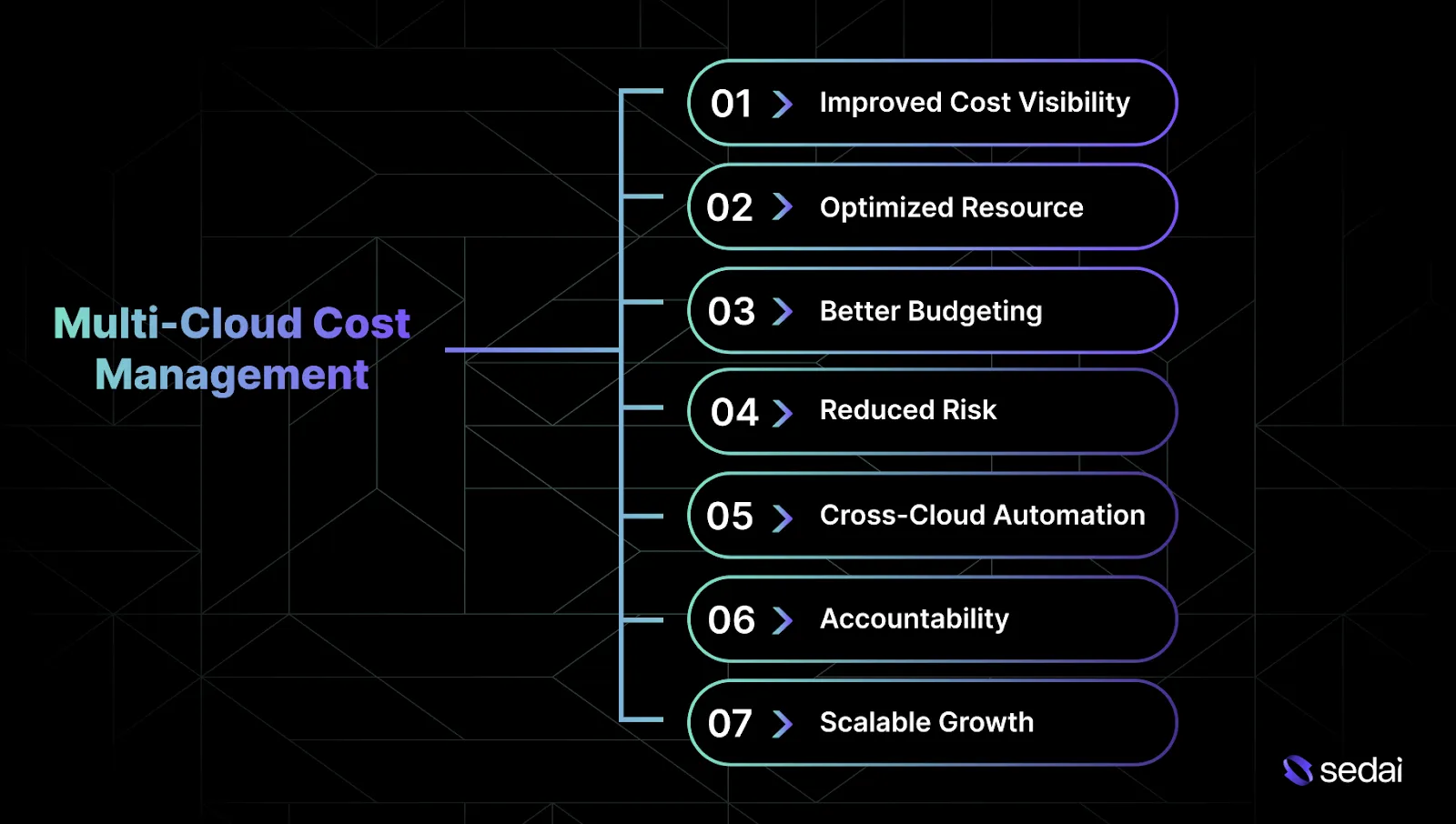
Here’s how multi-cloud cost management helps:
1.Improved Cost Visibility Across Clouds
Tracking spend across multiple cloud platforms is a common challenge for engineering teams and often leads to unexpected costs and inefficiencies. Multi-cloud cost management brings usage and billing data from AWS, Azure, Google Cloud, and other providers into a single view, making total cloud spend easier to understand.
2.Optimized Resource Utilization
Over-provisioning is one of the most frequent sources of wasted cloud spend in multi-cloud environments. Fragmented dashboards and billing chaos across AWS, Azure, and GCP compound fast. Book a demo to see how Sedai gives you a unified optimization layer across all three. Cost management tools help address this by analyzing actual usage and supporting rightsizing and scaling decisions across platforms.
This ensures resources are allocated based on real demand, reducing idle capacity while maintaining performance and reliability.
3.Better Budgeting and Forecasting
Budgeting in a multi-cloud setup is inherently more complex, especially when usage patterns vary across providers. Multi-cloud cost management tools use historical and real-time usage data to forecast future spend with greater accuracy.
This allows your teams to build more reliable budgets, identify growth-related costs, and avoid sudden billing spikes as workloads scale.
4.Reduced Risk of Vendor Lock-In
Relying heavily on a single cloud provider can limit flexibility and make cost optimization more difficult. Multi-cloud cost management enables teams to compare costs and performance across providers and place workloads where they are most efficient.
This flexibility reduces dependency on any one vendor and helps ensure pricing and performance remain competitive over time.
5.Cross-Cloud Automation
Manually managing resources across multiple clouds introduces operational overhead and increases the risk of errors. Multi-cloud cost management supports automated adjustments to resource allocation, scaling, and optimization policies across platforms.
This reduces the need for constant manual intervention while keeping environments aligned with workload demand.
6.Improved Cost Allocation and Accountability
As cloud usage expands across teams and projects, tracking spend ownership becomes more important. Cost management tools use tagging and allocation policies to break down costs by team, application, or department.
This level of detail improves accountability and helps your team identify where optimization efforts will have the most impact.
7.Scalable Growth With Cost Control
Scaling infrastructure across multiple clouds can quickly drive up costs if usage is not monitored closely. Multi-cloud cost management ensures scaling decisions are tied to real demand, adjusting resources dynamically as workloads grow or shrink. This allows teams to scale confidently while keeping cloud spend predictable and under control.
Knowing how multi-cloud cost management works makes it easier to spot the hidden costs that often come with multi-cloud environments.
Fragmented dashboards and billing chaos across AWS, Azure, and GCP compound fast. Book a demo to see how Sedai gives you a unified optimization layer across all three.
The Hidden Costs of Multi-Cloud Environments
Managing a multi-cloud environment introduces several less-visible cost drivers that you need to account for to avoid unexpected spend and budget overruns. Below are the hidden costs of multi-cloud environments.
Hidden Cost
Description
Impact on Engineers
Data Transfer and Egress Fees
Moving data between clouds incurs fees, especially with large volumes.
Engineers must optimize data flow to minimize costs.
Management Complexity
Different cloud tools and interfaces increase operational overhead.
More time and resources are needed to manage multiple platforms.
Inconsistent Pricing Models
Varying pricing models across providers make cost forecasting difficult.
Engineers must navigate and align different pricing models for accurate budgeting.
Security and Compliance Costs
Each cloud has its own security and compliance tools, leading to extra overhead.
Engineers need additional tools and audits to maintain governance across platforms.
Recognizing the hidden costs in multi-cloud environments brings more clarity to the challenges of managing them and the solutions that address them.
Key Challenges in Multi-Cloud Cost Management & Its Effective Solutions
Managing costs across multiple cloud platforms introduces additional complexity, making cloud spending harder to control. Addressing these challenges is essential to keeping costs predictable and ensuring resources are used efficiently.
1.Cost Visibility Across Multiple Providers
Each cloud provider uses its own billing and reporting model, which makes it difficult to form a consolidated view of cloud spend. Fragmented cost data often results in missed optimization opportunities and weaker budget control.
Solution:
Multi-cloud cost management platforms centralize spend data across AWS, Azure, Google Cloud, and other providers.
By presenting usage and billing information in a unified dashboard, these tools give you real-time visibility into total cloud costs and make it easier to understand where money is being spent.
2.Resource Sprawl and Inefficient Allocation
To maintain availability and performance, engineering teams often duplicate resources across providers. Over time, this leads to over-provisioning, idle infrastructure, and unnecessary cloud spend.
Solution:
Automated optimization tools continuously monitor usage and adjust resources in response to actual demand. Solutions such asSedai or native cloud auto-scaling services help rightsize compute and services in real time, reducing waste while maintaining application performance.
3.Inconsistent Pricing Models
Each cloud provider applies different pricing structures, including on-demand, reserved, and spot pricing. This variability makes cost planning and comparison across platforms more complex.
Solution:
Cost forecasting tools that span multiple cloud providers help model expenses across pricing options.
Your team can combine savings plans and reserved instances for predictable workloads while using pricing calculators to evaluate trade-offs and reduce reliance on higher-cost on-demand resources.
4.Complexity in Managing Security and Compliance
Maintaining consistent security and compliance standards across multiple cloud environments increases operational overhead. Each provider has its own controls, policies, and tooling, which can create gaps when managed manually.
Solution:
Cross-cloud security and compliance platforms help enforce policies consistently across providers. Automated monitoring, compliance checks, and regular audits reduce risk while simplifying governance at scale.
5.Cost Allocation and Accountability
When resources are distributed across multiple clouds, assigning costs to teams, applications, or projects becomes more difficult. This often results in unclear ownership and reduced accountability.
Solution:
Consistent tagging and cost allocation strategies across all providers make it easier to attribute spend accurately. Multi-cloud reporting tools can then break down costs by department or project, giving engineers clear insight into where to focus optimization efforts.
6.Forecasting Multi-Cloud Costs
Multi-cloud environments are dynamic, and cost patterns change as workloads scale or new services are introduced. Multi-cloud cost visibility is just the starting point. Book a demo to see how Sedai takes the next step — continuous autonomous optimization across all your cloud environments. Predicting future spend across providers is therefore more complex.
Solution:
Predictive cost modeling tools use historical usage data and workload trends to forecast future costs.
Integrated into multi-cloud cost management platforms, these capabilities allow engineers to evaluate the financial impact of scaling decisions and adjust infrastructure before costs grow unexpectedly.
Understanding the challenges and solutions in multi-cloud cost management helps clarify what to look for in cost visibility tools.
What to Look for in Multi-Cloud Cost Visibility Tools?
When evaluating a multi-cloud cost visibility tool, prioritize capabilities that enable effective cost management, optimization, and forecasting across cloud platforms. Key areas to consider include:
Capability
What It Enables
What to Look For
Unified Cost Data Model
Consolidates costs across AWS, Azure, and GCP for better optimization.
Support for AWS CUR, Azure EA, GCP Billing Export, and automatic currency handling.
Business Context Mapping
Aligns costs with teams or projects for accountability.
Tagging, account grouping, and dynamic mapping.
Real-Time Insights & Anomaly Detection
Detects spending anomalies in real-time to prevent overspend.
Frequent refreshes and machine-learning alerts.
Cross-Cloud Forecasting & Budgeting
Predicts costs and helps with cross-cloud budgeting.
Models that include discounts, commitments, and growth trends.
Commitment & Discount Awareness
Tracks savings from Reserved Instances and discounts.
Recognizes overlapping commitments and calculates effective rates.
Kubernetes & Container Cost Correlation
Links infrastructure costs to container workloads for better optimization.
Integrations with Prometheus, CloudWatch, and container metrics APIs.
Integrations & Automation
Embeds cost visibility into existing workflows for reporting and governance.
Connectors for Jira, Slack, BI tools, and automated reports.
Once the key features are clear, exploring the top multi-cloud cost visibility tools becomes simpler.
Effective multi-cloud cost control requires visibility tools that provide accurate, real-time insights across AWS, Azure, and Google Cloud.
These tools consolidate billing data into a unified view, identify cost anomalies early, and support predictive forecasting, enabling teams to make proactive, informed cost decisions.
1.Sedai
Sedai is an AI/ML-powered cloud optimization platform that autonomously manages cost, performance, and resource efficiency across AWS, Azure, Google Cloud, and Kubernetes environments.
By continuously learning from real-time workload behavior, Sedai makes data-driven optimization decisions that align cloud resources with cost control, performance reliability, and operational efficiency goals.
This autonomous approach significantly reduces the need for manual intervention, enabling your teams to focus on higher-value work while maintaining consistent and predictable cloud cost optimization.
Key Features:
Autonomous Cloud Resource Rightsizing: Sedai continuously monitors cloud services across AWS, Azure, and Google Cloud, automatically adjusting compute, memory, instance types, and capacity based on real-time workload demand.
Predictive Autoscaling: By analyzing historical usage patterns alongside real-time demand signals, Sedai identifies traffic spikes and proactively scales cloud services. This approach prevents excess capacity while maintaining application performance during fluctuating workloads.
Cost-Aware Purchasing Optimization: Sedai recommends the most cost-efficient combination of on-demand, reserved, and spot instances based on workload behavior and governance policies.
Autonomous Anomaly Detection and Remediation: The platform automatically detects issues such as memory leaks, resource saturation, and elevated error rates, applying corrective actions in real time. This helps maintain service stability with minimal manual oversight.
Comprehensive Cost Attribution: Sedai provides detailed visibility into cloud costs across services, regions, and individual resources. This supports stronger cost governance and enables engineering teams to make informed decisions around optimization and spend control.
Multi-Cloud and Multi-Region Optimization: Sedai delivers consistent optimization across AWS, Azure, Google Cloud, and Kubernetes, allowing organizations to manage complex multi-cloud and multi-region environments from a unified optimization framework.
Continuous Behavior Model Adaptation: As workloads evolve, Sedai continuously updates its optimization models to ensure resource decisions remain aligned with changing application behavior, business requirements, and governance objectives.
Performance and Reliability Monitoring: Sedai tracks critical metrics such as latency, error rates, and resource utilization, ensuring that optimization decisions continue to meet performance and reliability targets alongside cost objectives.
How Sedai Delivers Value:
Metric
Key Details
30%+ Reduced Cloud Costs
Optimizes resources continuously based on real-time usage patterns.
75% Improved Application Performance
Improves latency, throughput, and overall user experience through intelligent resource allocation.
70% Fewer Failed Customer Interactions (FCIs)
Proactive issue detection and remediation reduce downtime and service disruptions.
6x Greater Engineering Productivity
Automation reduces operational overhead, allowing teams to focus on higher-priority initiatives.
$3B+ Cloud Spend Managed
Manages over $3 billion in cloud spend for enterprises, including Palo Alto Networks.
Best For: Well-suited for senior engineers managing large-scale, multi-cloud, cloud-native, and Kubernetes environments who require continuous cost and performance optimization with minimal manual effort.
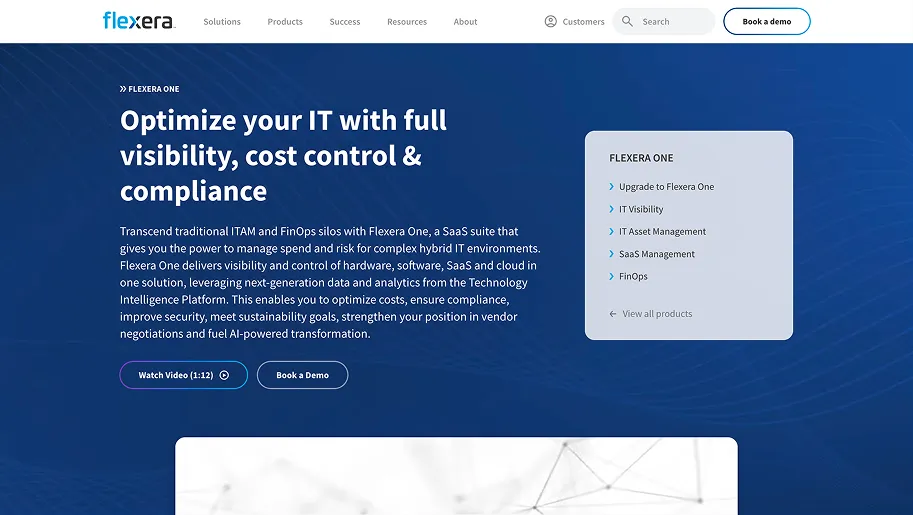
Flexera One is a cloud cost management platform that delivers multi-cloud cost visibility and optimization across AWS, Azure, GCP, and on-prem environments.
It enables organizations to track and manage cloud spending, optimize resource usage, and strengthen financial accountability through centralized cost insights and analytics.
Key Features:
Comprehensive Cost Visibility: A centralized dashboard that provides a unified view of cost data across all cloud environments.
Automated Optimization: AI-driven recommendations that help optimize cloud resource usage and reduce unnecessary spend.
Cost Allocation and Tagging: Flexible tagging and account grouping to clearly allocate costs by team, project, or department.
Cost Forecasting: Predictive analytics to forecast future cloud spending and help prevent budget overruns.
Best For: Enterprises and large organizations that need broad visibility into multi-cloud spending, along with advanced capabilities for cost optimization, budgeting, and forecasting.
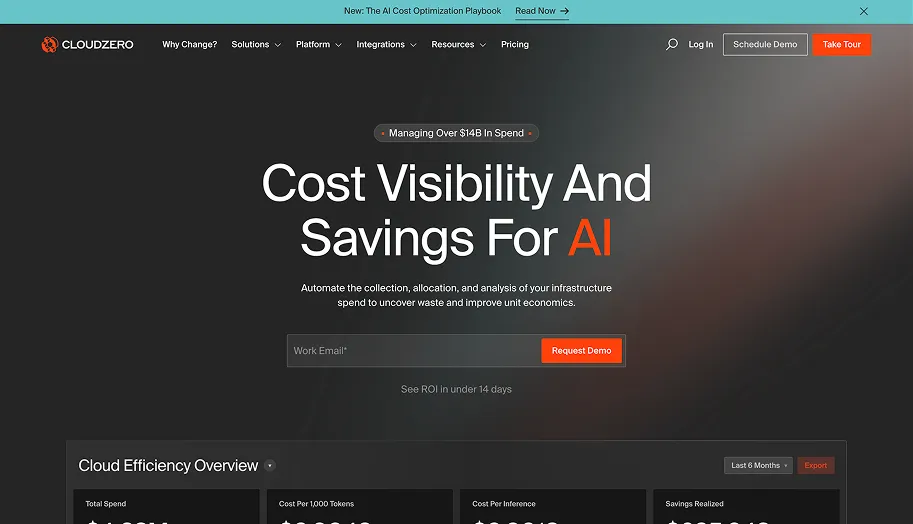
CloudZero is a real-time cloud cost intelligence platform that provides deep visibility into how cloud resources are consumed across teams, products, and features.
It enables organizations to optimize cloud spend by tracking costs at a granular level, supporting precise cost allocation and early anomaly detection.
Key Features:
Real-Time Cloud Cost Visibility: Tracks cloud costs in real time, with detailed allocation across teams, products, and services.
Automated Cost Anomaly Detection: Uses machine learning to identify and alert teams to unexpected spending spikes.
Cost Optimization Recommendations: Provides automated insights into potential cost savings based on usage patterns.
Granular Cost Tracking: Breaks down costs by product, feature, or customer to reveal the true cost of cloud services.
Best For: Engineering teams that require granular cost visibility and want to align cloud spending with customer or product features, especially organizations seeking clear, actionable insights to optimize cloud costs.
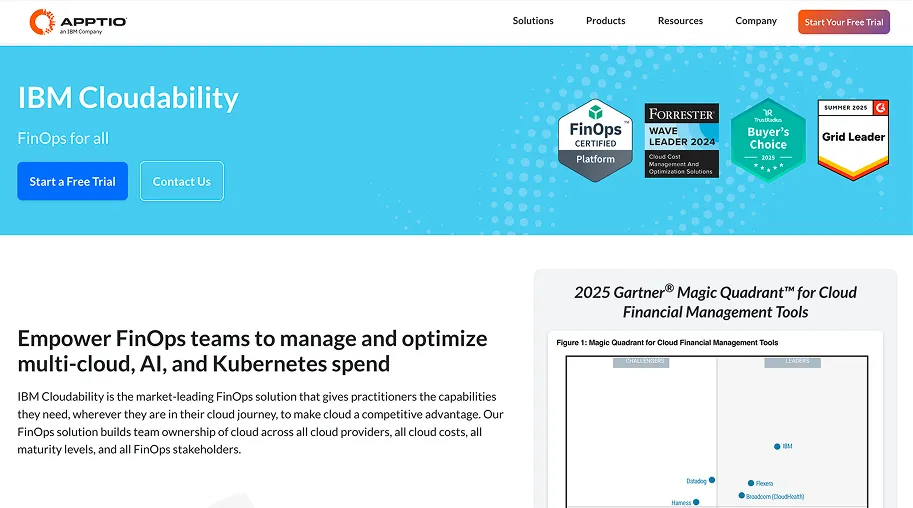
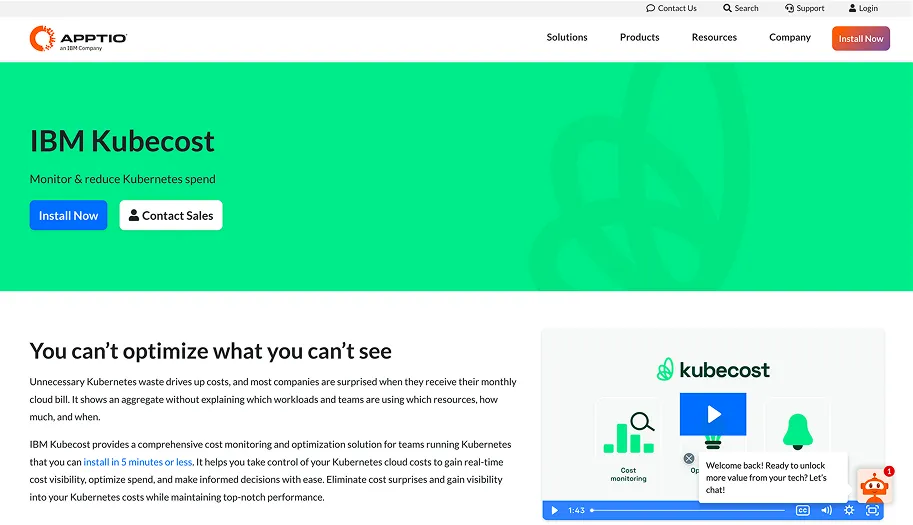
Cloudability by IBM Apptio is a cloud cost-optimization platform that provides centralized visibility into multi-cloud spending. It helps organizations track, allocate, and optimize cloud costs across AWS, Azure, Google Cloud, and other providers.
Key Features:
Cross-Cloud Cost Visibility: Consolidates cost data from AWS, Azure, and Google Cloud into a single view for better decision-making.
Cost Allocation and Reporting: Flexible tagging and customizable reporting to track costs by department, project, or team.
Forecasting and Budgeting: Tools to predict future cloud spending and set spending limits to reduce the risk of overruns.
Cost Optimization Recommendations: Actionable insights to reduce waste, optimize resource usage, and lower overall cloud costs.
Best For: Large enterprises that need comprehensive cost management, forecasting, and budgeting across multi-cloud environments, supported by advanced reporting and optimization capabilities.
VMware CloudHealth is a cloud management platform that helps organizations optimize and govern cloud spending across multiple environments.
It provides cross-cloud visibility into costs across AWS, Azure, Google Cloud, and on-prem infrastructure, while also enabling policy-driven governance and financial accountability across teams.
Key Features:
Cross-Cloud Cost Management: A unified view of cloud costs across AWS, Azure, GCP, and on-prem environments.
Governance and Compliance: Enforces cloud governance policies and supports compliance with financial and security standards.
Cost Forecasting and Optimization: Uses historical data to forecast future costs and recommend optimization strategies.
Cost Allocation and Chargeback: Supports detailed cost allocation and chargeback models for teams, departments, or projects.
Best For: Large organizations that require strong governance, compliance controls, and financial oversight across complex multi-cloud environments.
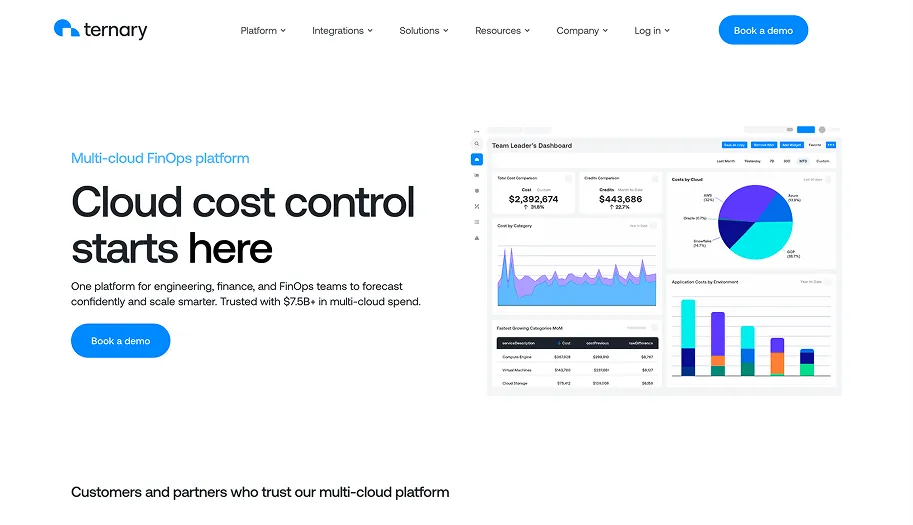
Ternary is a cloud cost intelligence platform that delivers granular visibility into cloud usage and spending patterns.
It helps organizations track costs in real time and identify optimization opportunities, supporting more informed decisions and improved financial efficiency.
Key Features:
Real-Time Cloud Cost Monitoring: Continuous monitoring of cloud costs with up-to-date insights.
Cost Allocation and Reporting: Detailed cost tracking across AWS, Azure, and GCP to improve transparency.
Automated Optimization Recommendations: Actionable insights to reduce waste and optimize resource usage.
Cost Forecasting: Predicts future cloud costs to support better planning and budgeting.
Best For: Organizations that need real-time cost visibility and optimization insights, with a focus on reducing inefficiencies across multi-cloud environments.
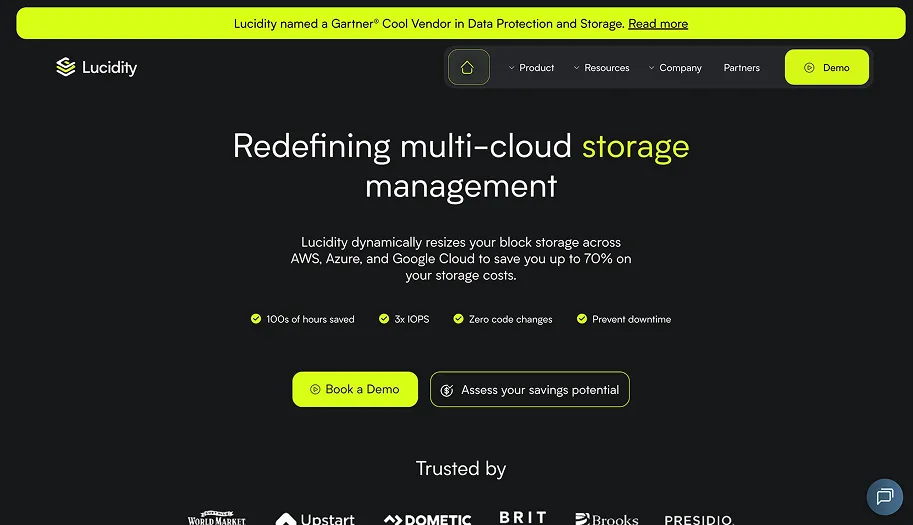
Lucidity is a cloud cost optimization tool that delivers detailed visibility into storage costs across multi-cloud environments. It helps organizations monitor storage usage, optimize storage tiers, and reduce unnecessary spend.
Key Features:
Storage Cost Optimization: Tracks and optimizes cloud storage costs, particularly for AWS S3 and Azure Blob Storage.
Granular Cost Allocation: Allocates storage costs by department, project, or service to improve accountability.
Data Lifecycle Management: Automatically moves data to lower-cost storage tiers based on access patterns.
Customizable Reporting: Provides tailored reports to identify storage usage trends and cost-saving opportunities.
Best For: Organizations prioritizing storage cost optimization and seeking deeper visibility into multi-cloud storage usage.
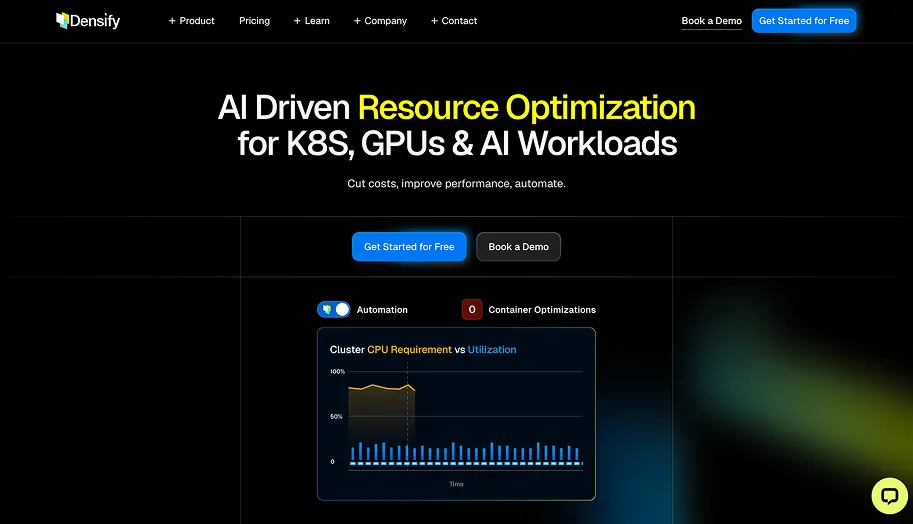
Densify is an AI-powered cloud optimization platform that helps organizations optimize cloud resources and reduce costs. It analyzes usage patterns and delivers recommendations across compute, storage, and networking resources.
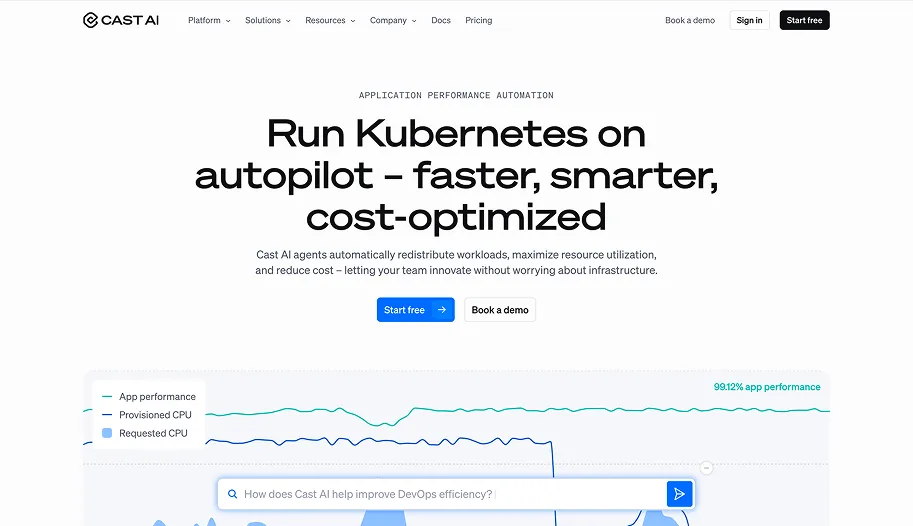
Cast.ai is an AI-powered cloud optimization platform built specifically for Kubernetes and containerized workloads. It automates scaling, rightsizing, and optimization of Kubernetes clusters across AWS, Azure, and GCP.
Harness is a cloud cost management and continuous optimization platform that provides real-time visibility into cloud spending throughout the software development lifecycle. It helps teams monitor, allocate, and optimize costs as applications are delivered.
Key Features:
Continuous Cost Optimization: Automates cloud resource optimization within CI/CD pipelines.
Real-Time Cost Visibility: Delivers up-to-date cost insights to support data-driven decisions.
Automated Cost Allocation: Automatically allocates costs by team or department for better accountability.
DevOps Tool Integration: Integrates with CI/CD tools to align cost optimization with deployment workflows.
Best For: DevOps and engineering teams that want to integrate cloud cost management directly into their CI/CD pipelines and continuous optimization practices.
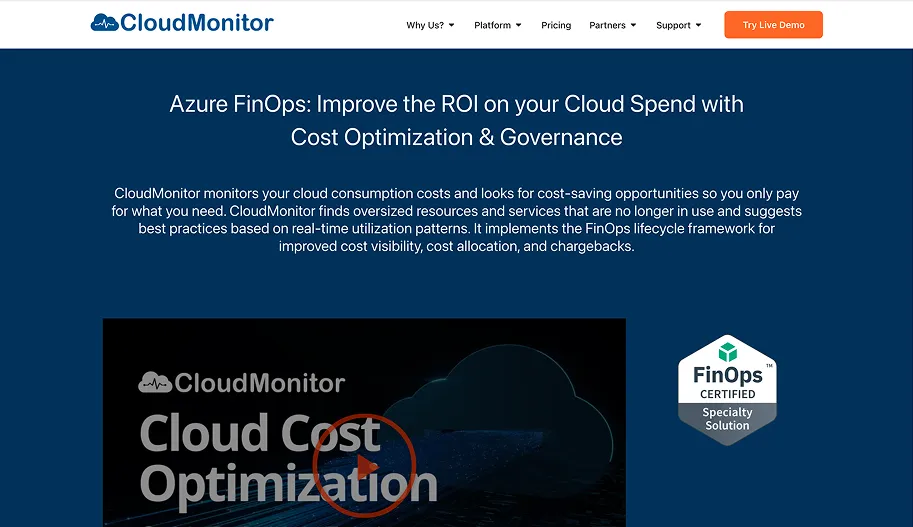
CloudMonitor offers real-time monitoring of cloud costs across AWS, Azure, and Google Cloud, helping organizations track spending, manage budgets, and maintain financial accountability.
It provides visibility into cloud usage patterns and supports proactive cost control through alerts and reporting.
Key Features:
Real-Time Monitoring: Continuously tracks cloud usage and costs to provide an up-to-date view of cloud spend.
Customizable Cost Reports: Delivers flexible reports tailored to specific services, projects, or teams.
Automated Alerts: Notifies teams when cloud costs exceed defined budgets or thresholds.
Cross-Cloud Integration: Supports AWS, Azure, and GCP for consistent monitoring across all cloud platforms.
Best For: Organizations that require real-time cost monitoring and customizable reporting to manage multi-cloud spending effectively.
Tracks Kubernetes costs with real-time optimization insights.
CloudMonitor
Real-time cloud cost tracking.
Monitors cloud costs with customizable alerts and reports.
After reviewing the top tools, it’s helpful to examine strategies to optimize multi-cloud costs effectively.
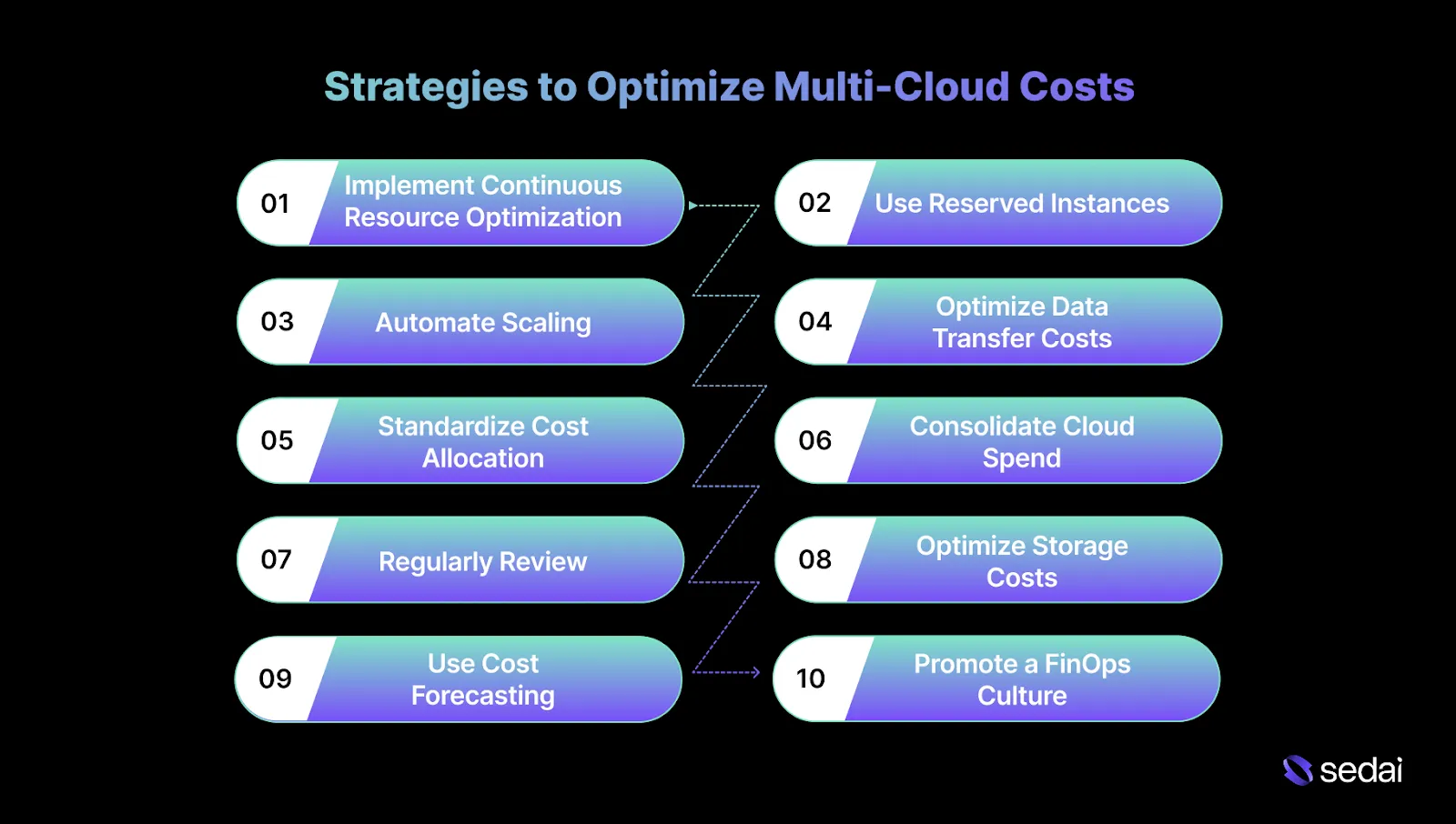
10 Best Strategies to Optimize Multi-Cloud Costs
Optimizing multi-cloud costs is essential for senior engineers to maintain control over cloud spend while supporting performance and scalability. Applying the right strategies helps teams reduce waste and improve cost efficiency across multiple cloud platforms.
1.Implement Continuous Resource Optimization
Continuous resource optimization ensures that cloud resources remain aligned with actual workload demand as usage changes over time. Instead of relying on static assumptions, automated optimization adapts capacity dynamically to prevent underutilization, reduce waste, and control costs without sacrificing performance.
2.Use Reserved Instances and Savings Plans
Reserved Instances and Savings Plans are effective cost-saving mechanisms for workloads with predictable usage patterns. By committing to long-term usage, organizations can significantly reduce costs compared to on-demand pricing while maintaining stable performance for steady workloads.
3.Automate Scaling and Workload Placement
Automated scaling and intelligent workload placement help ensure resources are allocated where they deliver the most value. By dynamically adjusting capacity and distributing workloads based on demand, cost, and availability, teams can avoid idle resources while maintaining reliability across cloud environments.
4.Optimize Data Transfer Costs
Data transfer between cloud providers can quickly become a major cost driver. Optimizing data movement through thoughtful architecture and efficient networking reduces unnecessary transfers, lowers egress costs, and improves overall system efficiency for data-intensive workloads.
5.Standardize Cost Allocation and Tagging
Consistent cost allocation and tagging provide clear visibility into cloud spending across teams, projects, and services. Standardization improves accountability, enables accurate reporting, and helps organizations understand where and why cloud costs are incurred.
6.Consolidate Cloud Spend for Volume Discounts
Consolidating cloud spend across teams or business units increases purchasing power with cloud providers. This approach unlocks volume-based discounts, simplifies procurement, and helps organizations achieve better cost efficiency across multi-cloud environments.
7.Regularly Review and Adjust Cloud Commitments
Cloud commitments such as Reserved Instances and Savings Plans must evolve with workload changes. Regular reviews ensure commitments remain aligned with actual usage, preventing underutilization and maximizing long-term savings.
8.Optimize Storage Costs Across Clouds
Storage usage tends to grow quietly over time, making continuous optimization essential. By aligning storage tiers with access patterns and removing inefficiencies, organizations can control costs while preserving data availability and performance.
9.Use Cost Forecasting and Budgeting Tools
Cost forecasting and budgeting tools provide visibility into future cloud spending and help teams plan proactively. Accurate forecasts support better financial decisions, prevent budget overruns, and improve control across multiple cloud providers.
10.Promote a FinOps Culture
A strong FinOps culture ensures cloud cost responsibility is shared across engineering, finance, and operations. By aligning teams around common goals, increasing transparency, and encouraging accountability, organizations can achieve sustainable cost optimization without slowing innovation.
Tip: Align engineering, finance, and operations to share responsibility and accountability for cloud costs.
Effective multi-cloud cost management is an ongoing effort that goes beyond understanding pricing models. It requires continuously aligning workloads across cloud platforms and refining optimization strategies to ensure resources are used efficiently and costs remain predictable.
As multi-cloud environments grow in scale and complexity, relying on manual oversight becomes impractical. Automation becomes essential to maintain control without increasing operational overhead. This is where autonomous optimization platforms likeSedai play a big role.
By analyzing real-time usage patterns, forecasting resource demand, and automating scaling and rightsizing decisions, Sedai helps teams balance performance, reliability, and cost efficiency across AWS, Azure, and Google Cloud.
Multi-cloud cost visibility is just the starting point. Book a demo to see how Sedai takes the next step — continuous autonomous optimization across all your cloud environments.
FAQs
Q1. How do I ensure my multi-cloud cost management strategy scales with business growth?
A1. Build cost management into your operating model. Continuously monitor usage trends, revisit budgets, and change policies as workloads grow. Predictive forecasting tools help anticipate demand, plan capacity, and prevent cost surprises before scale introduces inefficiencies.
Q2. What key metrics should I track to effectively manage multi-cloud costs?
A2. You can focus on metrics that connect spend to usage and value:
Cost per service or workload
Resource utilization rates
Cost anomalies and sudden spikes
Reserved and savings plan utilization
Q3. Can multi-cloud cost management tools integrate with DevOps and CI/CD workflows?
A3. Yes, most modern cost management tools integrate directly into CI/CD pipelines and DevOps tooling. This allows cost visibility and optimization to happen alongside deployments, enabling real-time rightsizing as applications scale and infrastructure changes.
Q4. How do multi-cloud cost management tools improve team collaboration?
A4. Cost allocation through tagging, chargeback, and shared dashboards creates transparency across engineering, finance, and product teams. When everyone sees how decisions impact spend, teams can collaborate more effectively on optimization and stay aligned with budget goals.
Q5. How do I handle unexpected cost spikes in a multi-cloud environment?
A5. Use automated alerts and anomaly detection to catch spikes early. Combine this with autoscaling policies and regular optimization cycles to reduce risk. Predictive budgeting and trend analysis further help prevent recurring cost surprises as workloads change.