What is the Sedai Autonomous Cloud Management Platform?
Sedai is an autonomous cloud platform that proactively manages production environments for Site Reliability Engineers (SREs) and DevOps teams. It uses AI/ML to optimize cloud resources, improve availability, performance, and reduce costs, all without manual intervention. Learn more.
How does Sedai's autonomous approach differ from traditional cloud management tools?
Unlike traditional tools that rely on manual thresholds and runbooks, Sedai acts as an autonomous co-pilot, detecting potential issues early and independently optimizing for availability, performance, and cost. It eliminates repetitive toil work for SREs, allowing them to focus on innovation. Details here.
What are the main components of the Sedai platform?
Sedai's platform includes a Discovery engine for agentless environment detection, a Decision engine powered by AI/ML for analysis and optimization, and proactive action modules for autonomous remediation and optimization. It also features unified visibility and Smart SLOs for reliability management.
How does Sedai discover and prioritize cloud resources?
Sedai's Discovery engine automatically detects your entire cloud environment and prioritizes data from all connected monitoring tools. It provides a unified view of cloud providers, cluster managers, APMs, ITSM tickets, and real-time traffic data, making setup quick and easy.
What is the role of AI/ML in Sedai's platform?
Sedai applies advanced machine learning to traffic and monitoring data, analyzing resource dependencies and production trends. Its AI/ML-driven Decision engine identifies symptoms of potential issues and opportunities for optimization, ensuring safe and effective autonomous actions.
Can Sedai operate in agentless mode?
Yes, Sedai uses an agentless approach for setup. Users can securely share access for Sedai to collect data, simplifying onboarding and reducing operational overhead.
What types of actions does Sedai perform autonomously?
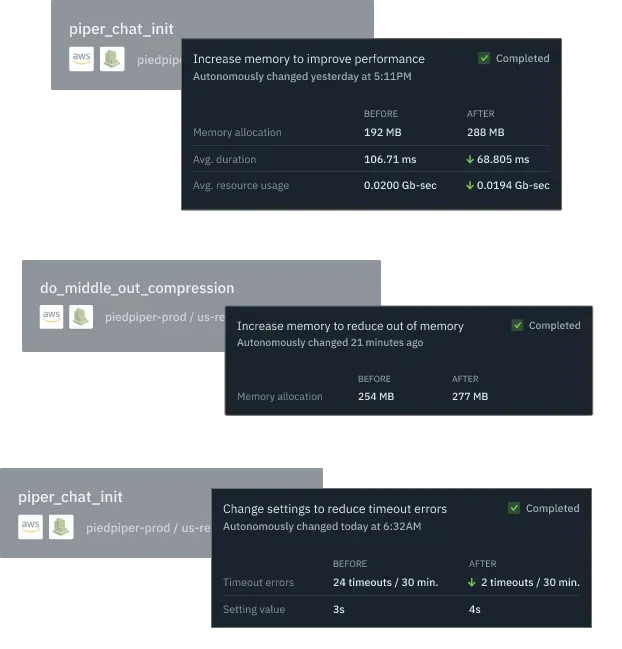
Sedai autonomously performs optimization (balancing performance and cost), availability (early detection and remediation of issues), and performance interventions (preventing SLO breaches). Actions can also be switched to manual mode for review by SREs.
How does Sedai support human-in-the-loop feedback?
Sedai is designed for key human-in-the-loop feedback. While it acts autonomously, it provides developer and SRE insights, smart scorecards, and trend analysis to help teams understand and adapt recommendations for continuous improvement.
What is Sedai's approach to Smart SLOs?
Sedai uses trend analysis to automatically define target Service Level Objective (SLO) baselines for all resources, helping teams meet reliability and latency goals while reducing operational toil. Learn more about Smart SLOs.
How does Sedai help with release management and quality?
Sedai provides release intelligence by autonomously identifying deployments and configuration changes, analyzing performance over time, and offering smart scorecards and trend analysis to improve code quality and deployment outcomes.
Features & Capabilities
What features does Sedai offer for cloud optimization?
Yes, Sedai integrates with major cloud platforms including AWS, Google Cloud, Microsoft Azure, IBM Cloud, and Oracle Cloud, providing unified visibility and optimization across multi-cloud environments. See all integrations.
What integrations does Sedai offer?
Sedai integrates with cloud platforms (AWS, Azure, Google Cloud, IBM Cloud, Oracle Cloud), notification providers (Slack, Teams, Webhook, Email), ITSMs (BMC, Jira, ServiceNow), monitoring/APM tools (AppDynamics, CloudWatch, DataDog, Dynatrace, New Relic, Prometheus), IaC/CI-CD tools (GitHub, GitLab, Bitbucket, Terraform), Kubernetes autoscalers, and data/streaming platforms (Google Dataflow, Databricks, Amazon RDS). Full list here.
How does Sedai optimize for both performance and cost?
Sedai uses machine learning to analyze monitoring data and find workload and infrastructure configurations that deliver performance improvements while setting a cost cap on additional resources. This ensures a balance between performance gains and cost efficiency. Learn more.
What is autonomous concurrency and how does Sedai use it?
Sedai eliminates cold starts with ML-based provisioned concurrency and warmups informed by traffic seasonality, which is especially beneficial for latency-sensitive industries. This feature helps maintain high availability and fast response times.
Does Sedai provide real-time execution of optimizations?
Yes, Sedai actively reduces costs and improves performance in real time, without manual intervention. This sets it apart from tools that only provide visibility or recommendations.
What technical documentation is available for Sedai?
Sedai offers extensive technical documentation, including a Getting Started Guide, Dataflow Optimization Documentation, and detailed integration instructions. Access the documentation at docs.sedai.io.
Is Sedai SOC 2 certified?
Yes, Sedai is SOC 2 certified, demonstrating adherence to stringent security and compliance standards. More on Sedai's security.
Use Cases & Benefits
Who can benefit from using Sedai?
Sedai is designed for Site Reliability Engineers, Platform Engineers, DevOps teams, Engineering Leaders, CTOs, and Architects. It is suitable for organizations of all sizes across industries such as cybersecurity, SaaS, financial services, e-commerce, and more. Company details.
What core problems does Sedai solve?
Sedai addresses high cloud costs, application latency, availability challenges, operational inefficiencies, and release quality issues. It helps reduce costs, improve performance, enhance uptime, and streamline operations. See KnowBe4's results.
What business impact can customers expect from Sedai?
Customers can expect up to 50% cost savings (KnowBe4), 77% reduction in AWS Lambda latency (Belcorp), 762% ROI, a 3-month payback period, and time to first value in 14 days. Sedai also delivers productivity gains and improved availability. Solution briefs.
What pain points does Sedai address for cloud teams?
Sedai helps with cloud cost optimization, application performance, availability improvement, operational productivity, and release quality. It reduces manual toil, improves uptime, and streamlines cloud management. Customer stories.
What industries are represented in Sedai's case studies?
Sedai's case studies cover cybersecurity, information technology, information services, financial services, SaaS, supply chain solutions, insurance software, scientific research, e-commerce, and online travel. Explore case studies.
Can you share some customer success stories with Sedai?
Yes. KnowBe4 achieved up to 50% cost savings, Palo Alto Networks saved $3.5 million, Belcorp reduced AWS Lambda latency by 77%, and Campspot achieved a 34% reduction. See more customer stories.
Who are some of Sedai's customers?
Notable customers include Palo Alto Networks, HP, Experian, KnowBe4, Capital One, Flex, Guidewire, Oak Ridge National Laboratory, and Freshworks. See all customers.
Implementation & Support
How long does it take to implement Sedai?
Sedai's plug-and-play implementation takes just 5 minutes for general setup and 15 minutes for specific use cases like AWS Lambda. This ensures minimal disruption and rapid time to value. Get started.
What resources are needed to get started with Sedai?
You'll need cloud access (via IAM), a monitoring source, and for Kubernetes clusters, integration via Sedai's Smart Agent. Security team assistance may be required to provide access. Documentation.
What onboarding support does Sedai provide?
Sedai offers live onboarding assistance, comprehensive documentation, a Slack community for real-time support, and the option to schedule onboarding calls for personalized help. Book a call.
How easy is it to use Sedai?
Sedai is designed for ease of use, with quick setup, plug-and-play implementation, detailed guides, and a supportive community. Customers report setup times as low as 5-15 minutes and value the onboarding resources. Read more.
Where can I find Sedai's technical documentation?
All technical documentation, including getting started guides and integration instructions, is available at docs.sedai.io.
Competition & Comparison
How does Sedai compare to other cloud optimization tools?
Sedai offers 100% autonomous optimization, real-time execution, and comprehensive platform support (AWS, Azure, GCP), whereas competitors like StormForge and nOps provide recommendations but require manual intervention. Sedai also features proactive issue resolution and release intelligence. Comparison details.
What makes Sedai unique compared to competitors?
Sedai's key differentiators include 100% autonomous execution, AI-driven insights, proactive issue resolution, release intelligence, and optimization across multiple platforms. It reduces manual toil and delivers measurable business impact. See the comparison.
Why should a customer choose Sedai over alternatives?
Customers should choose Sedai for its autonomous optimization, comprehensive platform support, AI-driven insights, proactive issue resolution, and proven ROI. It is suitable for enterprises, DevOps teams, cloud engineers, and SMBs. Learn more.
What advantages does Sedai offer for different user segments?
Enterprises benefit from cost savings and compliance, DevOps teams gain productivity, cloud engineers reduce manual work, and SMBs enjoy quick setup and flexible pricing. Segment advantages.
KO THE CLOUD TO ENTER OUR GIVEAWAYKO THE CLOUD TO ENTER OUR GIVEAWAY
Announcing Availability of Autonomous Cloud Management Platform
Benjamin Thomas
CTO
March 14, 2022
Featured
I’m excited to announce the availability of the Sedai Autonomous Cloud Management Platform. We welcome you to sign up for a free Sedai account and experience the future of site reliability engineering — autonomous.
Today, we also announced an $18M investment in Sedai which will help us expand our platform support and grow the Sedai community.
A Better Way for SREs
In today’s cloud, the shift from legacy monolithic applications to a microservice-based architecture is critical in order to better deliver more efficient, flexible, and positive customer experiences. However, effectively managing hundreds or thousands of microservices comes with its own set of challenges.
Production environments are increasingly complex and require SREs to constantly monitor an ever-growing number of resources while continually maintaining high levels of availability. For SREs today, automated runbooks and manual thresholds will not be able to keep up with their growing pressure to scale. At Sedai, we believe an SRE's time is better spent on innovation.
If your team is constantly rewriting rules to keep up with workload changes, there is a better way. Book a demo to see what autonomous cloud management looks like in production.
Autonomous and Toil-Free
Sedai is an autonomous co-pilot for SREs that proactively manages production environments on their behalf. For SREs, this means they no longer have to spend hours on toil-related work.
Instead, Sedai detects potential issues at the earliest onset of symptoms and independently acts to optimize for availability, performance and cost. Sedai's context-aware, AI-based autonomous cloud platform is reshaping how teams manage platform reliability by helping them effortlessly achieve 5 9s application availability and improve cloud efficiency by more than 30 percent.
An Autonomous SRE Autopilot
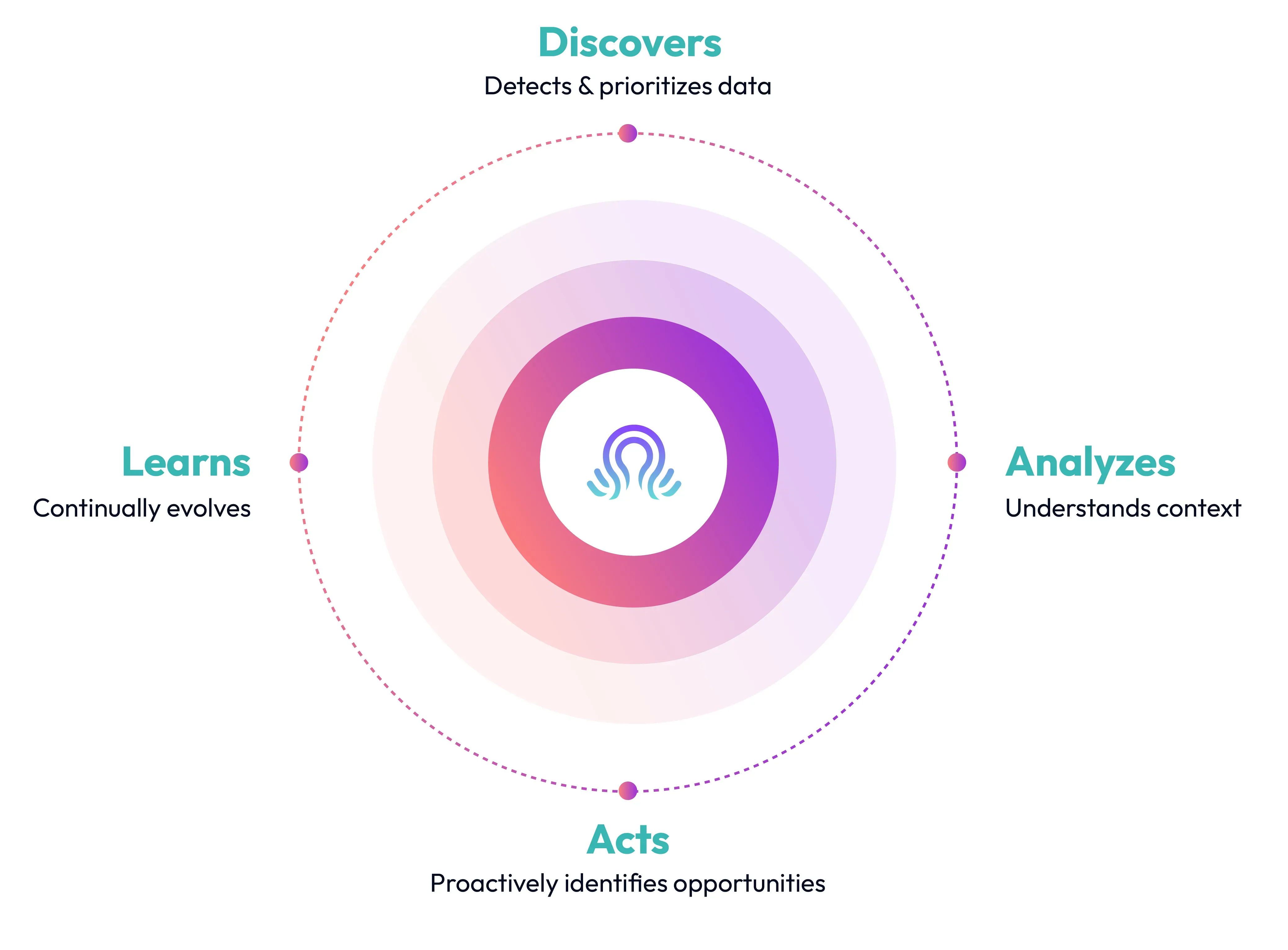
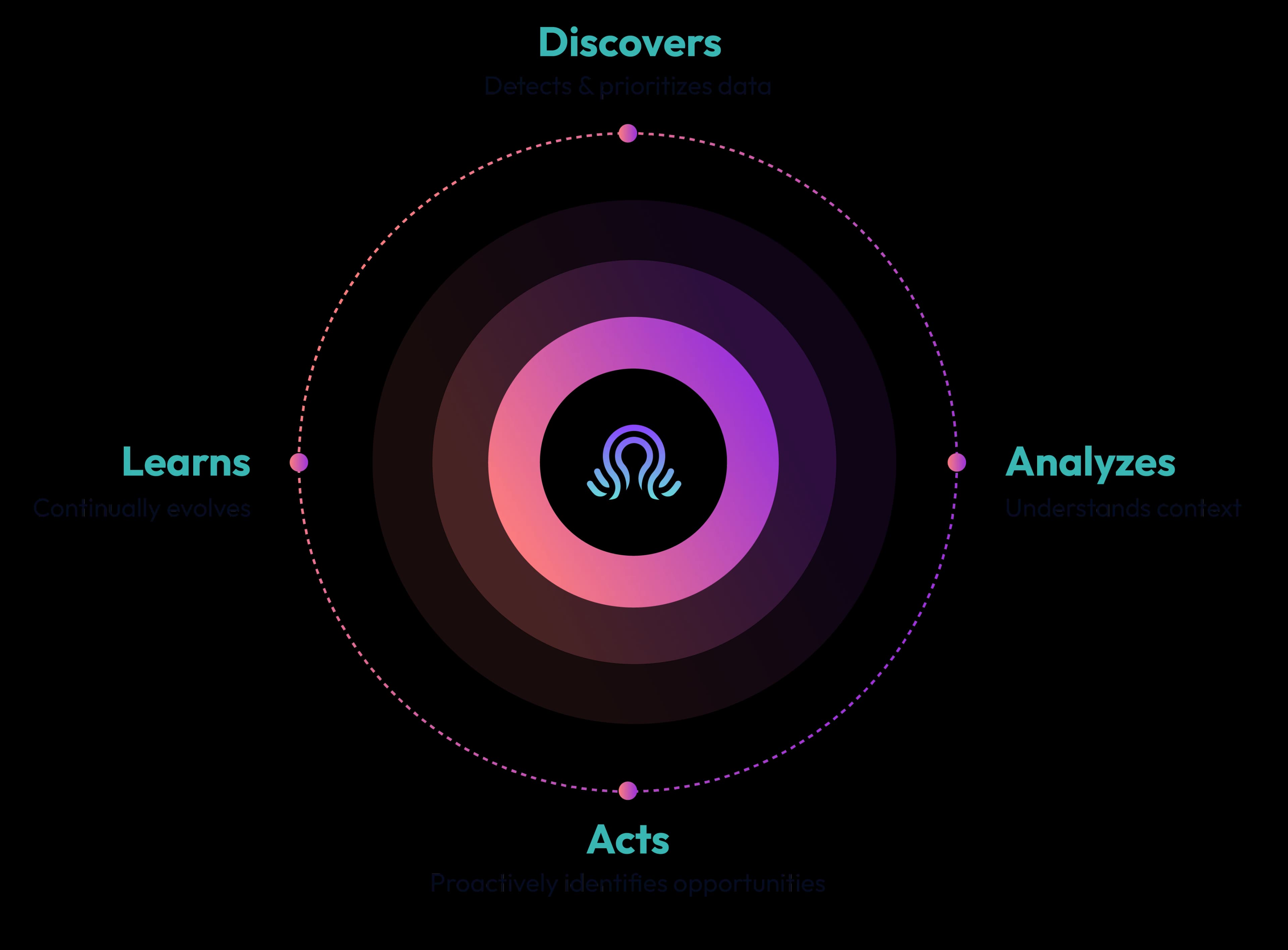
As an autonomous system, Sedai is intelligent enough to configure itself for an effortless setup and doesn’t require manual thresholds. The platform seamlessly connects to your cloud and monitoring data, automatically discovers your resources, and intelligently learns and analyzes performance metrics. Sedai continuously learns from managing your production environments through proactive actions and insights—all without human intervention.
Ready to experience autonomous cloud management?
Book a Sedai demo to automate cloud optimization, improve performance, and reduce infrastructure costs.
Sedai Intelligently Discovers Your Cloud Environment
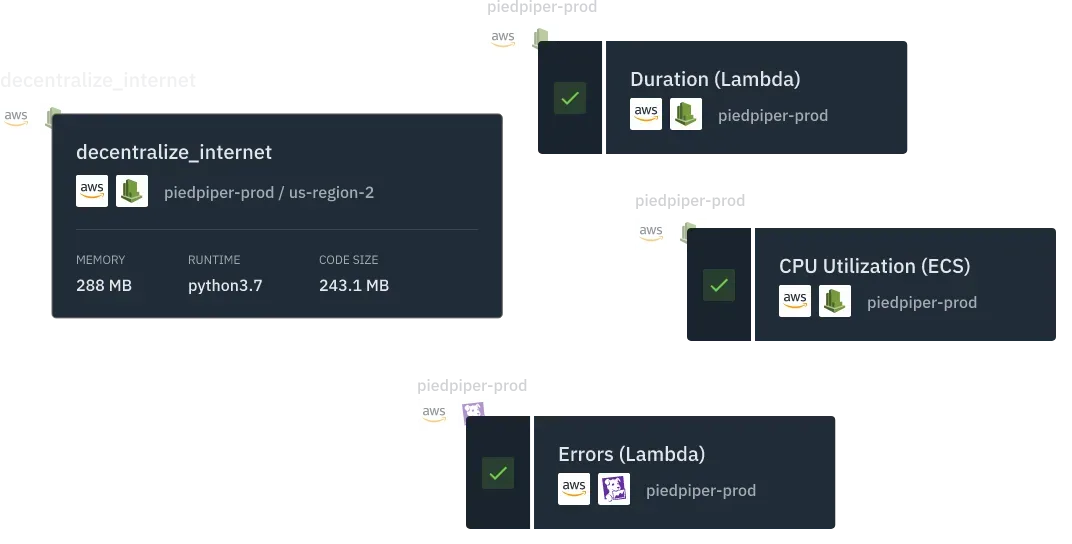
The Sedai Discovery engine automatically detects your entire cloud environment, and intelligently prioritizes your data for you. It provides a unified view of your cloud providers, cluster managers, APMs, monitoring metrics, ITSM change tickets, and real-time traffic data.
The Discovery engine is designed to make setup quick and easy so you can immediately benefit from an intelligent autopilot. Some of the key capabilities of the Discovery engine include:
Agentless approach: To get set up, simply choose how you want to share secure access for Sedai to collect your data for you.
Automatic metric priority: Not only does Sedai select the most important metrics, it also intelligently prioritizes metrics from all connected monitoring tools.
Unified visibility: Simplify how you manage multiple clouds with a comprehensive view of all applications and serverless functions.
Advanced AI/ML Model for Decision and Analysis
Sedai’s Decision engine applies advanced machine learning to traffic and monitoring data and combines it with a deep understanding of resource dependencies. Through expert analysis, Sedai constantly analyzes production trends for symptoms of potential issues as well as opportunities to improve cloud operations.
The Decision engine augments an SRE’s ability to manage microservices at scale through comprehensive deep analysis of all of your production environments. It understands exactly what’s going on in your cloud and intelligently compares scenarios to clearly identify the best and safest path forward to effectively manage day-to-day operations. As the core intelligence to the Sedai platform, some of the key capabilities of the Decision engine include:
Context-aware: The platform synthesizes the complexity of your cloud to intelligently decipher traffic patterns, resource dependencies, and metric performance.
Safety: Sedai performs extensive safety checks to determine if, when, and how it can potentially intervene so that any action is guaranteed to not do any harm.
Core intelligence: With AI/ML, Sedai applies predictive analytics to identify opportunities to prevent issues and improve performance.
Sedai generates actions once the platform determines it can autonomously, safely, and effectively act in production on an SRE’s behalf. Each action is carefully vetted by the system to prevent issues, enhance availability, reduce risk, and improve cloud costs.
By proactively acting, Sedai helps SREs eliminate the repetitive and mundane daily toil work. We believe that an SRE’s time should be spent focusing on higher order tasks and innovative work instead.
Proactive Actions are designed to be autonomous, but can also be switched to manual mode for an SRE to review. These actions primarily address:
Optimization: Sedai assesses resource configurations to find the equilibrium for improved performance and reduced cloud costs (you can also customize how Sedai manages resources by prioritizing one over the other).
Availability: The platform reacts to potential issues before they impact your customers through early detection at the onset of symptoms.
Performance: Sedai will proactively intervene if a resource is on track to breach its error budget or SLO.
Continuous Learning and Insights for Developers and SREs
Sedai is intelligent enough to identify when it can proactively act on an SRE’s behalf, but the platform is also designed for key human-in-the-loop feedback. With developer and SRE Insights, Sedai provides at-a-glance understanding to help teams enhance how they run in production by revealing code inefficiencies.
Engineering teams that now have access to autonomous cloud management can stop treating optimization as a backlog item and start treating it as a continuous background capability. Book a demo to see how Sedai makes that shift in your environment.
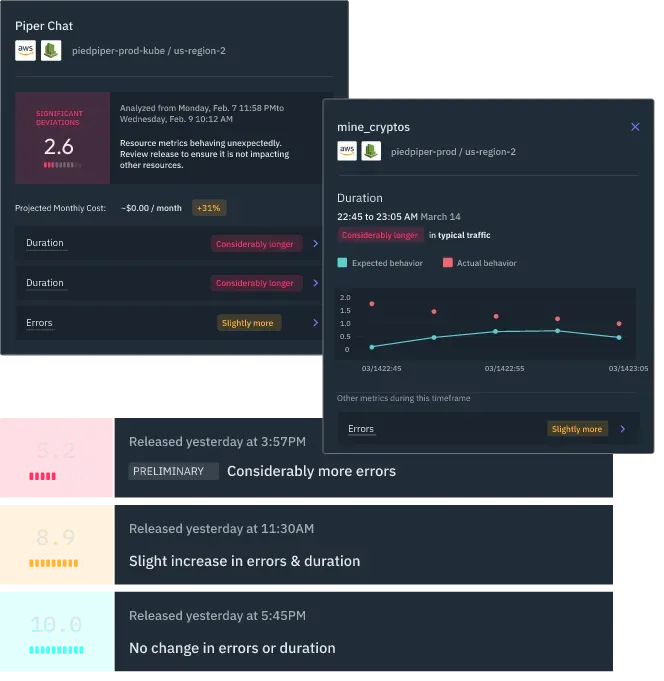
With release intelligence, Sedai autonomously identifies deployments and configuration changes and uses AI/ML to analyze performance over time. Insights empower teams to see beyond the release and adapt Sedai’s recommendations to improve how they code through:
Smart scorecards: Sedai detects and grades a release’s metric deviation in varying traffic levels to show how performance changed.
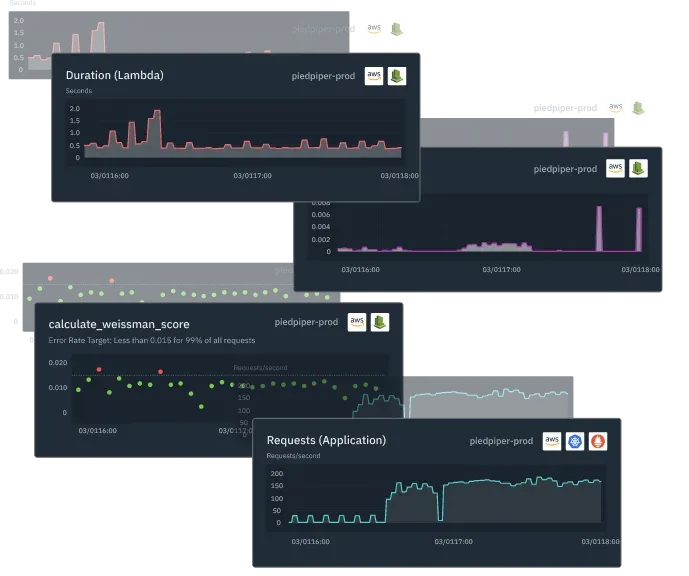
Trend analysis: The platform compares releases’ saturation, duration, and error metrics so that you can understand how code has evolved between releases.
Configuration changes: Sedai sees how code changes between releases and recommends configuration changes to optimize performance.
The Future of Site Reliability is Autonomous
At Sedai we are leading the movement to autonomous and a world where an SRE never even receives an alert but uptime and latency are fully optimized. Having an intelligent SRE autopilot will soon be a must have, not a nice to have, allowing SREs to focus on innovation and sustainable systems.
We invite you to join us in the movement to autonomous. Join our Slack community and let’s SRE smarter! More ways to connect with Sedai
.webp%3Fv%3D2026-04-09T18%253A41%253A05.143Z&w=3840&q=75)