What is Sedai and how does it support cloud governance?
Sedai is an autonomous cloud management platform that optimizes cloud operations for cost, performance, and availability. It plays a key role in cloud governance by automating resource rightsizing, policy enforcement, and continuous optimization across AWS, Azure, Google Cloud, and Kubernetes environments. Sedai uses machine learning to ensure resources stay aligned with governance objectives, reducing manual oversight and increasing efficiency. Source
What are the main features of Sedai's cloud governance solution?
Sedai offers autonomous cloud resource rightsizing, predictive autoscaling, cost-aware purchasing optimization, autonomous anomaly detection and remediation, comprehensive cost attribution, multi-cloud and multi-region optimization, continuous behavior model adaptation, and performance and reliability monitoring. These features help organizations maintain governance standards, optimize costs, and ensure compliance across complex cloud environments. Source
How does Sedai use AI and machine learning in cloud governance?
Sedai leverages AI and machine learning to automate policy enforcement, detect cost inefficiencies, and proactively identify performance bottlenecks. Its AI-driven optimization enables cloud environments to adapt in real time, ensuring compliance, performance, and cost objectives are consistently met. Source
What cloud environments does Sedai support?
Sedai supports AWS, Azure, Google Cloud, and Kubernetes environments, providing consistent optimization and governance across multi-cloud and hybrid setups. Source
How does Sedai help with cost optimization in the cloud?
Sedai reduces cloud costs by up to 50% through autonomous optimization, rightsizing workloads, and eliminating waste. It identifies the most cost-efficient mix of on-demand, reserved, and spot instances, and provides detailed cost attribution for better decision-making. Source
What is autonomous anomaly detection and remediation in Sedai?
Sedai automatically detects issues such as memory leaks, resource saturation, or elevated error rates and applies corrective actions in real time. This proactive remediation helps maintain service stability and reduces downtime with minimal manual effort. Source
How does Sedai ensure continuous alignment with business and governance goals?
Sedai continuously adapts its optimization models based on evolving workload behavior, ensuring that cloud resources remain aligned with business requirements and governance objectives over time. Source
What are the measurable business impacts of using Sedai?
Sedai delivers over 30% reduced cloud costs, up to 75% improved application performance, 70% fewer failed customer interactions, and 6X greater engineering productivity. It manages over $3 billion in cloud spend for clients like Palo Alto Networks. Source
Who is Sedai best suited for?
Sedai is ideal for senior engineers managing large multi-cloud, cloud-native, and Kubernetes environments who need continuous cost and performance optimization with minimal manual effort. Source
Use Cases & Implementation
How does Sedai help with multi-cloud and hybrid cloud governance?
Sedai provides consistent optimization and governance across multiple cloud providers and regions, helping organizations maintain governance standards in complex, distributed environments. Source
How does Sedai support compliance and security in cloud environments?
Sedai enforces governance policies, automates compliance checks, and provides real-time monitoring for vulnerabilities and policy violations. It helps organizations maintain consistent security and compliance across all cloud platforms. Source
How does Sedai automate policy enforcement in the cloud?
Sedai automates policy enforcement by continuously monitoring cloud resources and applying governance standards in real time. This reduces human error, strengthens compliance, and optimizes resource utilization. Source
How does Sedai handle cost attribution and reporting?
Sedai provides detailed visibility into cloud costs across services, regions, and individual resources, enabling engineering teams to enforce cost governance standards and make informed optimization decisions. Source
What is the typical implementation process for Sedai?
Sedai offers a plug-and-play implementation that takes just 5 minutes for general use cases and up to 15 minutes for specific scenarios like AWS Lambda. The platform connects securely to cloud accounts using IAM, with no need for complex installations or agents. Source
What onboarding and support resources does Sedai provide?
Sedai provides personalized onboarding sessions, a dedicated Customer Success Manager for enterprise customers, detailed documentation, a community Slack channel, and email/phone support. A 30-day free trial is also available. Source
What technical documentation is available for Sedai?
Sedai offers detailed technical documentation covering features, setup, and usage. Access it at https://docs.sedai.io/get-started. Additional resources, including case studies and datasheets, are available at https://sedai.io/resources.
Security, Compliance & Integrations
What security and compliance certifications does Sedai have?
Sedai is SOC 2 certified, demonstrating adherence to stringent security requirements and industry standards for data protection and compliance. For more details, visit the Sedai Security page.
What integrations does Sedai support?
Sedai integrates with monitoring and APM tools (Cloudwatch, Prometheus, Datadog, Azure Monitor), Kubernetes autoscalers (HPA/VPA, Karpenter), IaC & CI/CD tools (GitLab, GitHub, Bitbucket, Terraform), ITSM (ServiceNow, Jira), notification tools (Slack, Microsoft Teams), and various runbook automation platforms. Source
Customer Success & Industry Use Cases
Can you share specific customer success stories with Sedai?
Yes. KnowBe4 achieved up to 50% cost savings and saved $1.2 million on AWS bills. Palo Alto Networks saved $3.5 million, reduced Kubernetes costs by 46%, and saved 7,500 engineering hours. Belcorp reduced AWS Lambda latency by 77%. KnowBe4 Case Study, Palo Alto Networks Case Study
What industries does Sedai serve?
Sedai serves industries including cybersecurity (Palo Alto Networks), IT (HP), financial services (Experian, CapitalOne Bank), security awareness training (KnowBe4), travel and hospitality (Expedia), healthcare (GSK), car rental (Avis), retail and e-commerce (Belcorp), SaaS (Freshworks), and digital commerce (Campspot). Source
Who are some of Sedai's notable customers?
Notable customers include Palo Alto Networks, HP, Experian, KnowBe4, Expedia, CapitalOne Bank, GSK, and Avis. These companies trust Sedai to optimize their cloud environments and improve operational efficiency. Source
What feedback have customers given about Sedai's ease of use?
Customers highlight Sedai's quick setup (5–15 minutes), agentless integration, personalized onboarding, and comprehensive support resources. The 30-day free trial and plug-and-play implementation are especially valued for ease of adoption. Source
Competition & Differentiation
How does Sedai compare to other cloud governance tools?
Sedai stands out with 100% autonomous optimization, proactive issue resolution, application-aware intelligence, and full-stack cloud coverage. Unlike competitors that rely on static rules or manual adjustments, Sedai operates autonomously and optimizes based on real application behavior. Source
What unique features differentiate Sedai from competitors?
Unique features include autonomous optimization, proactive issue resolution, application-aware intelligence, release intelligence, and a quick plug-and-play setup. Sedai also offers full-stack coverage across compute, storage, and data for AWS, Azure, GCP, and Kubernetes. Source
What advantages does Sedai offer for different user segments?
Platform engineers benefit from reduced toil and improved IaC consistency; IT/Cloud Ops teams see lower ticket volumes and safer automation; technology leaders gain measurable ROI and reduced cloud spend; FinOps teams get actionable savings and multi-cloud simplicity; SREs experience fewer alerts and less manual toil. Source
Pain Points & Problem Solving
What common pain points does Sedai address for cloud teams?
What core problems does Sedai solve for cloud operations?
Sedai solves cost inefficiencies, operational toil, performance and latency issues, lack of proactive issue resolution, complexity in multi-cloud/hybrid environments, and misaligned priorities between engineering and FinOps. Source
Best Practices & Frameworks
What are best practices for cloud governance with Sedai?
Best practices include centralizing governance across multi-cloud environments, enforcing consistent resource tagging, conducting regular governance reviews, and providing ongoing training for engineering teams. Sedai's automation and real-time optimization support these practices. Source
How does Sedai help prevent policy drift and configuration issues?
Sedai continuously monitors and enforces policies in real time, preventing policy drift and ensuring consistent configuration across all cloud resources. Source
Additional Information
Where can I find more resources and case studies about Sedai?
Visit https://www.sedai.io/resources for solution briefs, case studies, datasheets, and strategic guides on Sedai's platform and customer success stories.
How can I try Sedai before committing?
Sedai offers a 30-day free trial, allowing you to experience the platform's value firsthand without any financial commitment. Sign up here.
Lists 23 top cloud governance tools for 2026 that deliver visibility, enforce policies, and automate compliance.
Explains what cloud governance is and how it reduces manual effort, misconfigurations, and security/cost risk at scale.
Covers governance tooling across AWS, Azure, and GCP, including ManageEngine, IBM Turbonomic, and Sedai.
Maps each tool to the governance challenge and engineering team it best fits.
Cloud governance tools help simplify the management of security, compliance, and costs in complex cloud environments. With features like automated policy enforcement and real-time monitoring, these tools address challenges like misconfigurations, security risks, and cost overruns. By integrating with major cloud providers and utilizing centralized dashboards, tools like Sedai enable engineers to maintain consistent governance across multi-cloud environments. Continuous optimization and automated anomaly detection further ensure resources stay aligned with business objectives, reducing manual oversight and increasing efficiency.
As cloud environments grow, managing security, compliance, and costs becomes increasingly difficult. Limited visibility can lead to misconfigurations, security gaps, and unexpected expenses, creating operational and financial risks.
Most cost visibility tools show you the problem. Book a demo to see how Sedai fixes it, taking autonomous action based on your actual workload behavior.
Research shows 41% of IT teams struggle with visibility across multi-cloud environments, making it harder to enforce policies and optimize resources.
Cloud governance tools tackle these challenges by automating policies, providing real-time monitoring, and offering cost controls, enabling secure, compliant, and efficient cloud operations with minimal manual effort.
In this blog, you’ll explore the leading cloud governance tools and discover actionable strategies to improve security, compliance, and cost management across your cloud environments.
What Is Cloud Governance?
Cloud governance defines the policies, processes, and controls for managing cloud environments securely, cost-effectively, and in line with business and regulatory requirements.
As environments scale across multi-cloud or hybrid setups, maintaining consistent security, compliance, and cost control becomes difficult without automation. Limited visibility and configuration drift increase risk and make manual governance ineffective.
Cloud governance tools solve this by automating policy enforcement, improving cost controls, and ensuring continuous compliance with real-time visibility, enabling efficient governance at scale with minimal manual effort.
Understanding cloud governance provides the context needed to evaluate the top tools for managing it.
Cost visibility and automated management for improved financial efficiency.
23 Cloud Governance Tools Worth Checking Out
Effective cloud governance relies on tools that offer clear visibility, enforce policies, and automate compliance across complex cloud environments. Choosing the right tools helps reduce manual effort, prevent misconfigurations, and maintain consistent security and cost control.
Below are the top tools that address real governance challenges at scale.
1. Sedai
Sedai is a cloud optimization platform that plays a key role in cloud governance by autonomously managing cost, performance, and resource efficiency across AWS, Azure, Google Cloud, and other cloud environments.
Using machine learning (ML) and artificial intelligence (AI), Sedai continuously optimizes cloud resources to ensure they stay aligned with governance objectives such as cost control, performance reliability, and operational efficiency.
It continuously tunes cloud resources based on real-time workload behavior, helping organizations stay within budget and performance targets. This reduces the need for manual intervention and allows you to focus on higher-value work, such as system design and product innovation, rather than day-to-day resource management.
Sedai's autonomous approach is independently validated by analysts: GigaOm named Sedai a Leader and Outperformer in its 2026 Radar for Kubernetes Resource Management, where it ranked #1 in Key Features with a 4.5-star average.
Key Features:
Autonomous Cloud Resource Rightsizing: Sedai continuously evaluates services across AWS, Azure, and Google Cloud, automatically adjusting compute, memory, instance types, and capacity to match real workload demand. This ensures resources are neither over-provisioned nor undersized.
Predictive Autoscaling: By analyzing historical and real-time usage patterns, Sedai predicts demand spikes and proactively scales resources. This minimizes excess capacity while maintaining application performance during traffic fluctuations.
Cost-Aware Purchasing Optimization: Sedai identifies the most cost-efficient mix of on-demand, reserved, and spot instances. This enables organizations to optimize cloud spend without sacrificing reliability, while staying aligned with cost governance policies.
Autonomous Anomaly Detection and Remediation: The platform automatically detects issues such as memory leaks, resource saturation, or elevated error rates and applies corrective actions in real time. This proactive remediation helps maintain service stability with minimal manual effort.
Comprehensive Cost Attribution: Sedai provides detailed visibility into cloud costs across services, regions, and individual resources. This level of insight enables engineering teams to enforce cost governance standards and make informed optimization decisions.
Multi-Cloud and Multi-Region Optimization: Sedai supports consistent optimization across multiple cloud providers and regions, helping organizations maintain governance standards in complex, distributed cloud environments.
Continuous Behavior Model Adaptation: As workloads evolve, Sedai continuously updates its optimization models to reflect changing usage patterns. This ensures cloud resources remain aligned with business requirements and governance goals over time.
Performance and Reliability Monitoring: Sedai monitors key performance metrics such as latency, error rates, and resource utilization, ensuring that optimization decisions remain aligned with performance and reliability objectives.
Here’s how Sedai delivers value:
Metric
Key Details
30%+ Reduced Cloud Costs
Sedai reduces cloud costs by optimizing resources based on real-time usage data.
75% Improved App Performance
By adjusting resource allocations, Sedai improves latency, throughput, and overall user experience.
70% Fewer Failed Customer Interactions (FCIs)
Proactive issue detection and remediation ensure services remain available and reduce downtime.
6X Greater Productivity
Automating cloud optimizations frees up engineering teams to focus on high-priority tasks.
$3B+ Cloud Spend Managed
Sedai manages over $3 billion in cloud spend, driving optimization and savings for clients like Palo Alto Networks.
Best For: Sedai is ideal for senior engineers managing large multi-cloud, cloud-native, and Kubernetes environments who need continuous cost and performance optimization with minimal manual effort.
If you’re looking to estimate how much you could save on cloud costs with Sedai, try our ROI calculator to improve performance with automated optimization across multi-cloud environments.
Twingate is a modern access management solution that supports cloud governance by enforcing secure, controlled access to cloud applications.
It enables zero-trust access without exposing infrastructure to the public internet, ensuring governance policies around access control are consistently enforced.
Key Features:
Zero-trust access for cloud applications
Secure private connections for remote users
Role-based access controls
Real-time monitoring of access activity
Best For: Organizations that need a secure, scalable approach to governing access to cloud applications.
AWS Control Tower simplifies the setup and governance of multi-account AWS environments. It offers an automated way to enforce security policies, compliance requirements, and AWS best practices across an organization’s accounts.
By providing centralized governance with preconfigured guardrails, AWS Control Tower ensures all accounts are deployed and managed consistently according to defined cloud governance standards.
Key Features:
Automated AWS account provisioning with predefined guardrails
Built-in security and compliance controls for consistent governance
Centralized dashboard for visibility and governance management
Integration with AWS Organizations for managing multiple accounts
Best For: Organizations that need an automated, centralized solution to govern multi-account AWS environments using predefined security and compliance best practices.
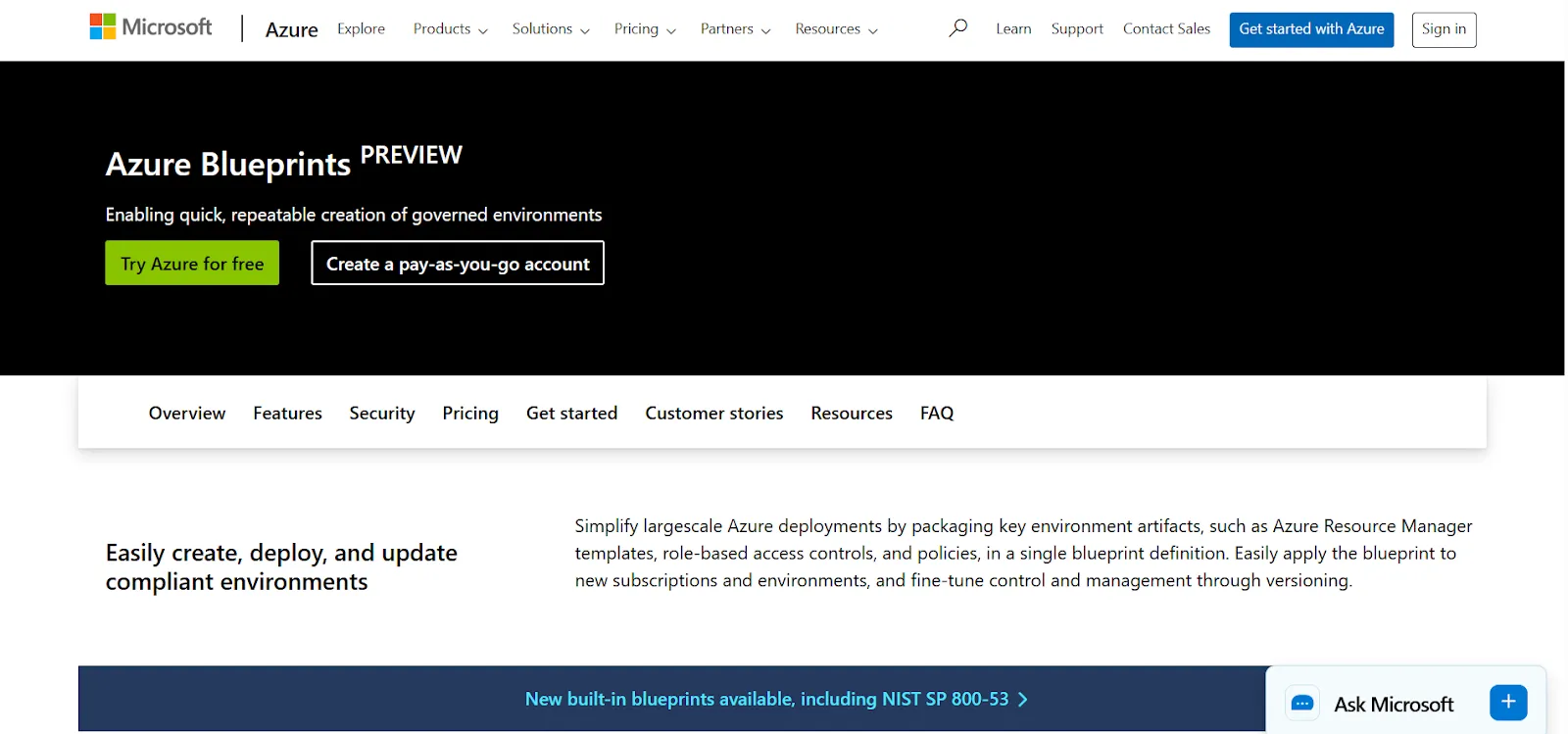
Azure Policy and Azure Blueprints play a key role in enforcing governance across Azure environments.
Azure Policy allows teams to define and enforce compliance and resource-use rules, while Azure Blueprints enable the deployment of governed environments using standardized templates.
Key Features:
Policy creation and enforcement for resource configurations
Blueprint templates for deploying repeatable, compliant environments
Real-time visibility into policy violations
Integration with Azure DevOps for governance enforcement in CI/CD workflows
Best For: Organizations operating in Azure that need to automate compliance and apply governance policies consistently across projects and departments.
Google Cloud Asset Inventory delivers complete visibility into cloud assets across an organization, including configurations, dependencies, and compliance status.
It enables detailed tracking and management of Google Cloud resources, helping teams enforce governance policies and meet industry standards while maintaining a unified view of their cloud environment.
Key Features:
Centralized inventory of Google Cloud resources across projects
Real-time tracking of configurations and compliance status
Integration with Google Cloud Security Command Center
Historical asset data and audit trails for compliance tracking
Best For: Enterprises using Google Cloud that require a centralized, real-time solution for tracking cloud assets to support governance and compliance initiatives.
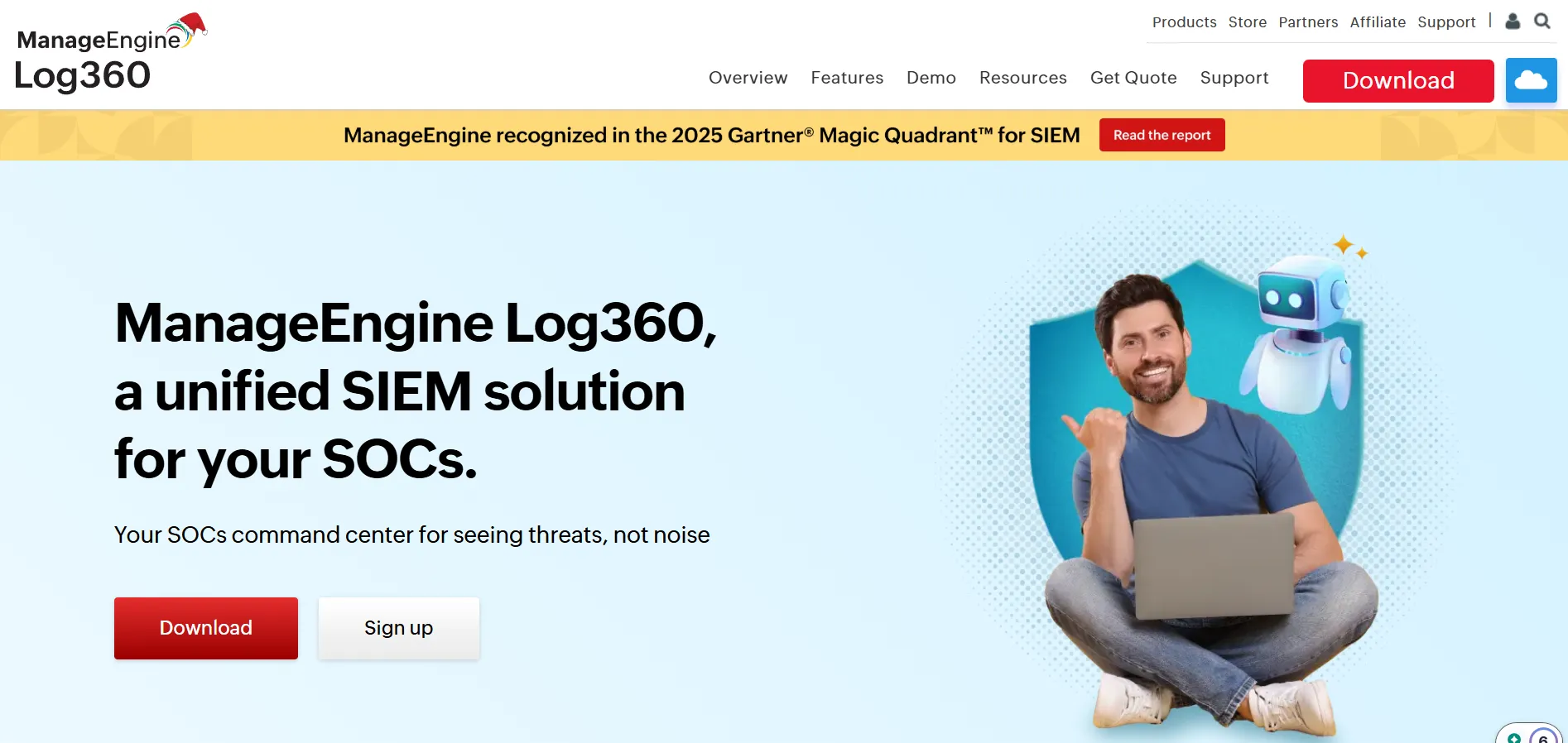
ManageEngine Log360 is a cloud-based SIEM solution that supports governance through security monitoring, threat detection, and compliance management.
It provides real-time insight into security events and user activity, helping organizations enforce cloud security policies while meeting regulatory requirements.
Key Features:
Real-time log collection and cloud security monitoring
Automated threat detection and incident response
Compliance auditing for standards such as HIPAA, GDPR, and PCI-DSS
Detailed analytics and reporting on security and policy violations
Best For: Organizations that need continuous monitoring and auditing to govern cloud security and maintain compliance with industry standards.
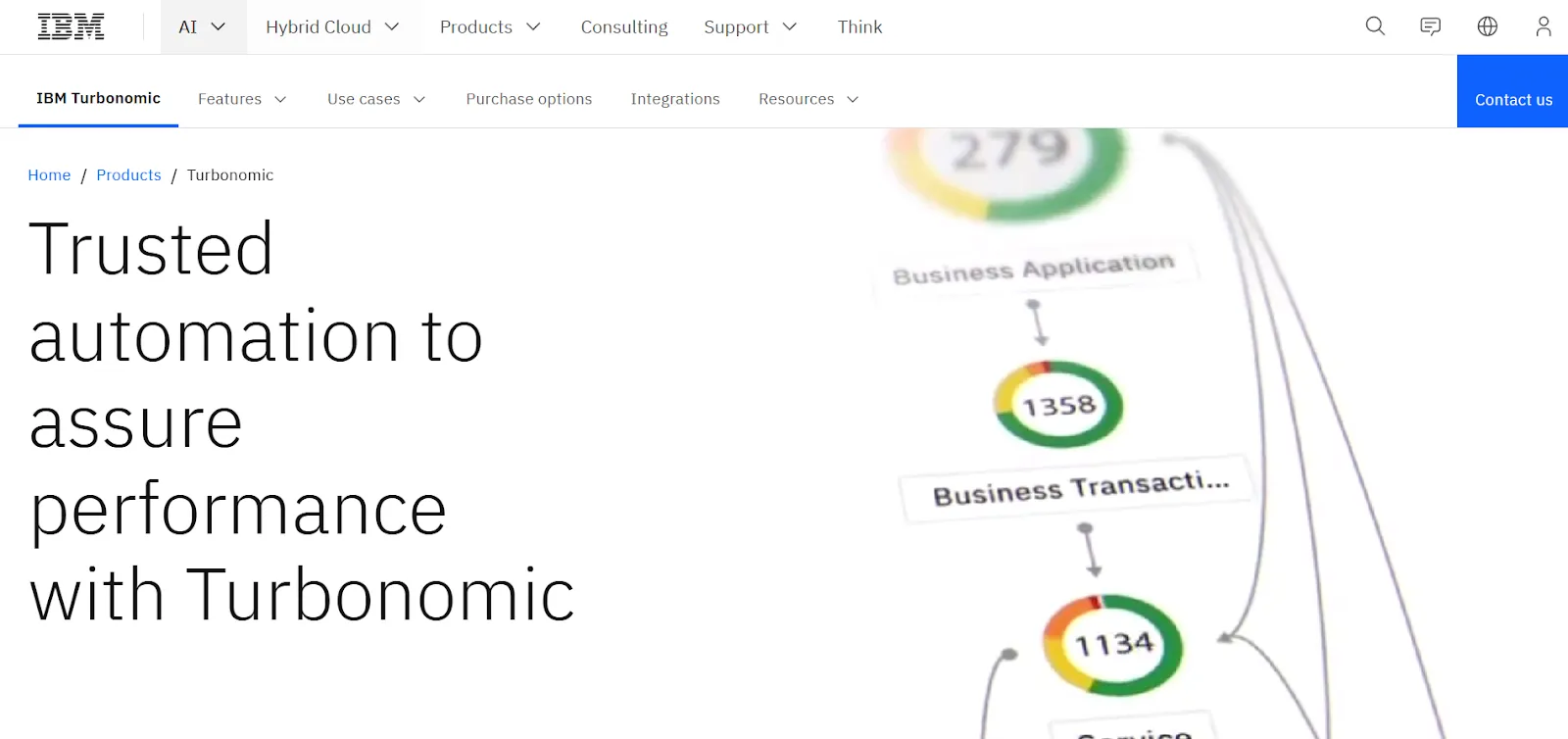
IBM Turbonomic is an AI-driven platform that automates resource management and cost governance in cloud environments. It continuously analyzes workload demand and automatically rightsizes resources in real time.
This ensures performance requirements are met while enforcing cost and resource governance policies.
Key Features:
AI-driven real-time optimization of cloud resources
Automated rightsizing based on workload performance needs
Continuous monitoring of resource usage and cost metrics
Policy-based controls for governance and resource allocation
Best For: Enterprises managing hybrid or multi-cloud environments that want to automate resource optimization and enforce cost governance without impacting performance.
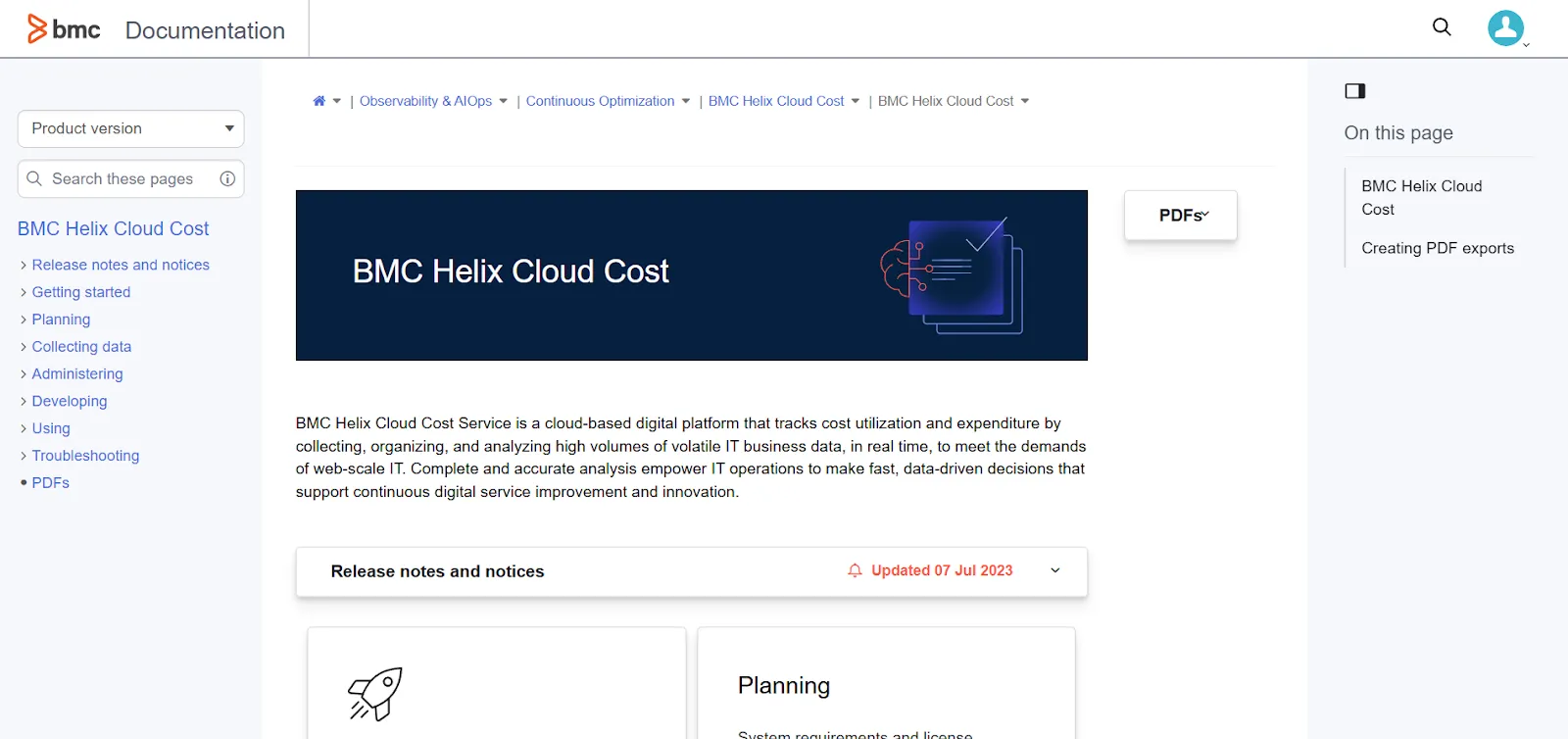
BMC Helix Cloud Cost helps organizations maintain governance over cloud spending while optimizing costs.
It provides detailed cost visibility, forecasting, and actionable insights, allowing teams to align cloud usage with governance policies and financial objectives.
Key Features:
Real-time cost tracking across multi-cloud environments
Cost allocation and forecasting aligned with business goals
Automated alerts for budget anomalies and governance violations
Optimization recommendations based on usage patterns
Best For: Senior engineers and cloud architects who need centralized control and visibility over cloud costs to support governance and financial accountability.
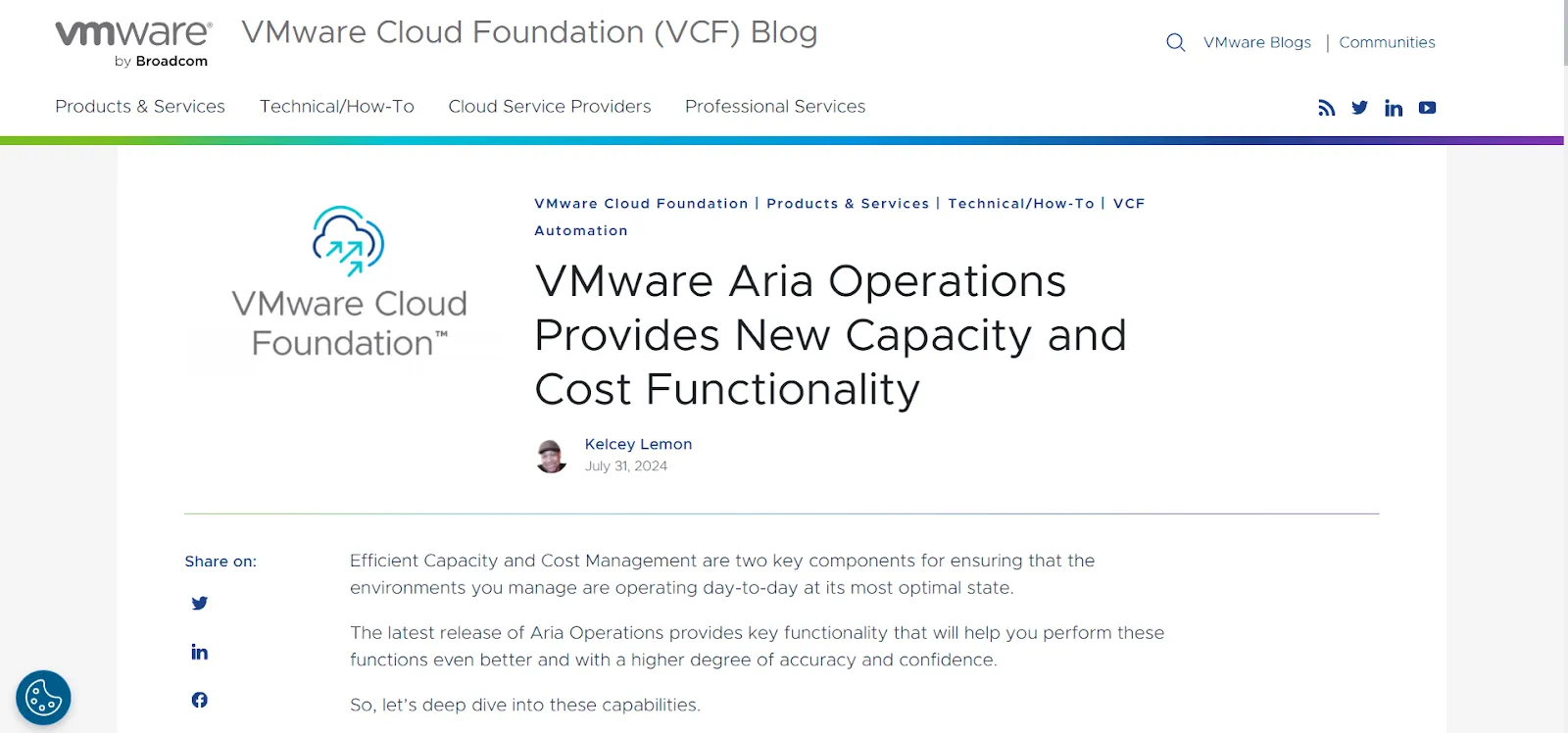
VMware Aria Cost provides visibility into cloud spending while ensuring resources are governed according to organizational policies.
It enables cost tracking and allocation across teams, projects, and departments, helping organizations align cloud investments with business priorities.
Key Features:
Detailed cost allocation and tracking across cloud platforms
Automated alerts for budget thresholds and anomalies
Comprehensive reporting for cost visibility and forecasting
Integration with VMware cloud services
Best For: Engineering teams managing VMware-based environments that need strong cost visibility and governance controls.
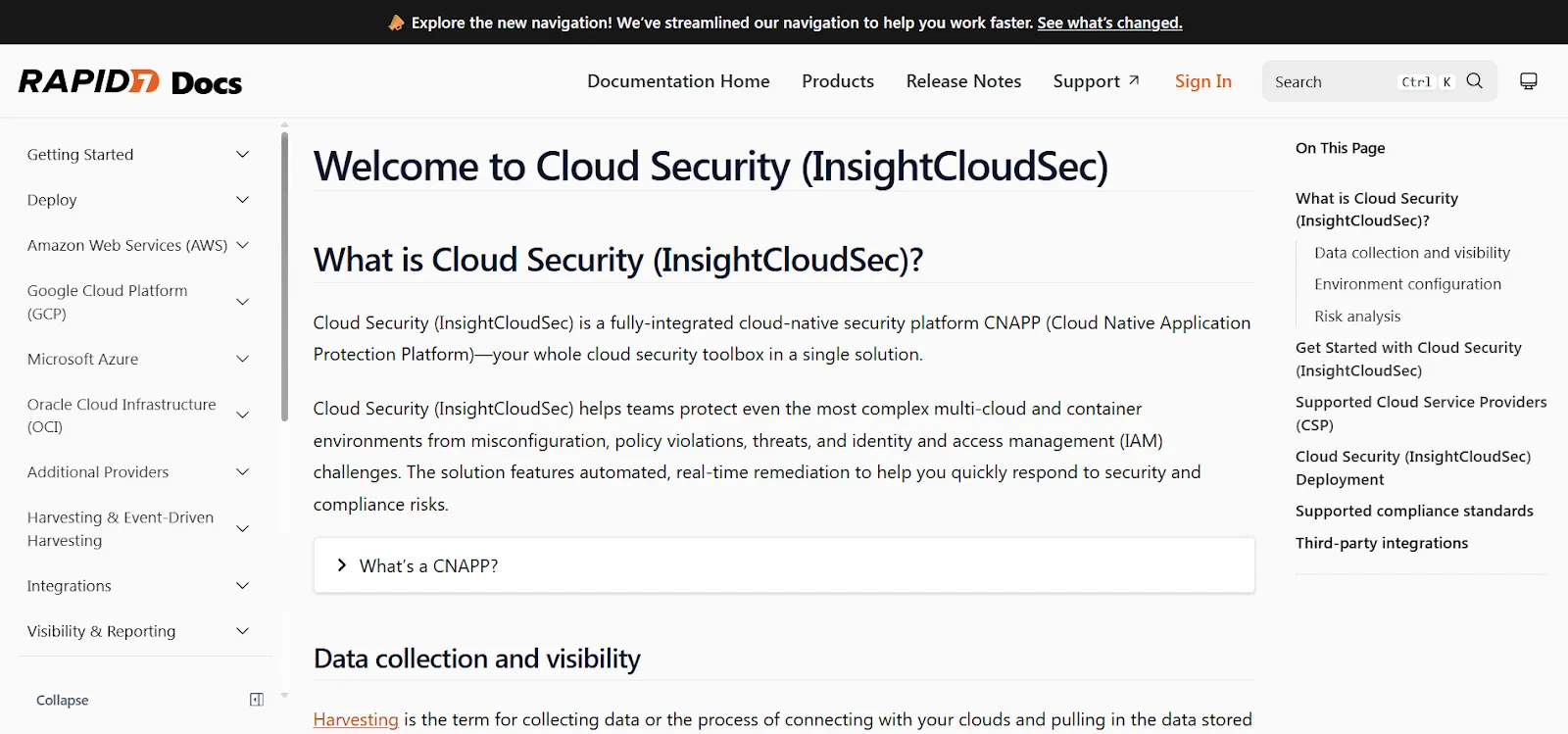
InsightCloudSec is a cloud security and governance platform focused on delivering visibility and continuous compliance across cloud environments. It uses real-time monitoring to identify and mitigate risks, helping organizations consistently enforce security and governance policies.
This makes it particularly valuable for senior engineers responsible for securing and governing complex multi-cloud infrastructures.
Key Features:
Continuous security and compliance monitoring across cloud platforms
Automated policy enforcement to maintain governance in real time
Risk mitigation supported by detailed alerts and actionable security insights
Integration with major cloud providers, including AWS, Azure, and Google Cloud
Best For: Security and compliance teams that require comprehensive governance tools to secure multi-cloud environments while meeting regulatory and industry compliance requirements.
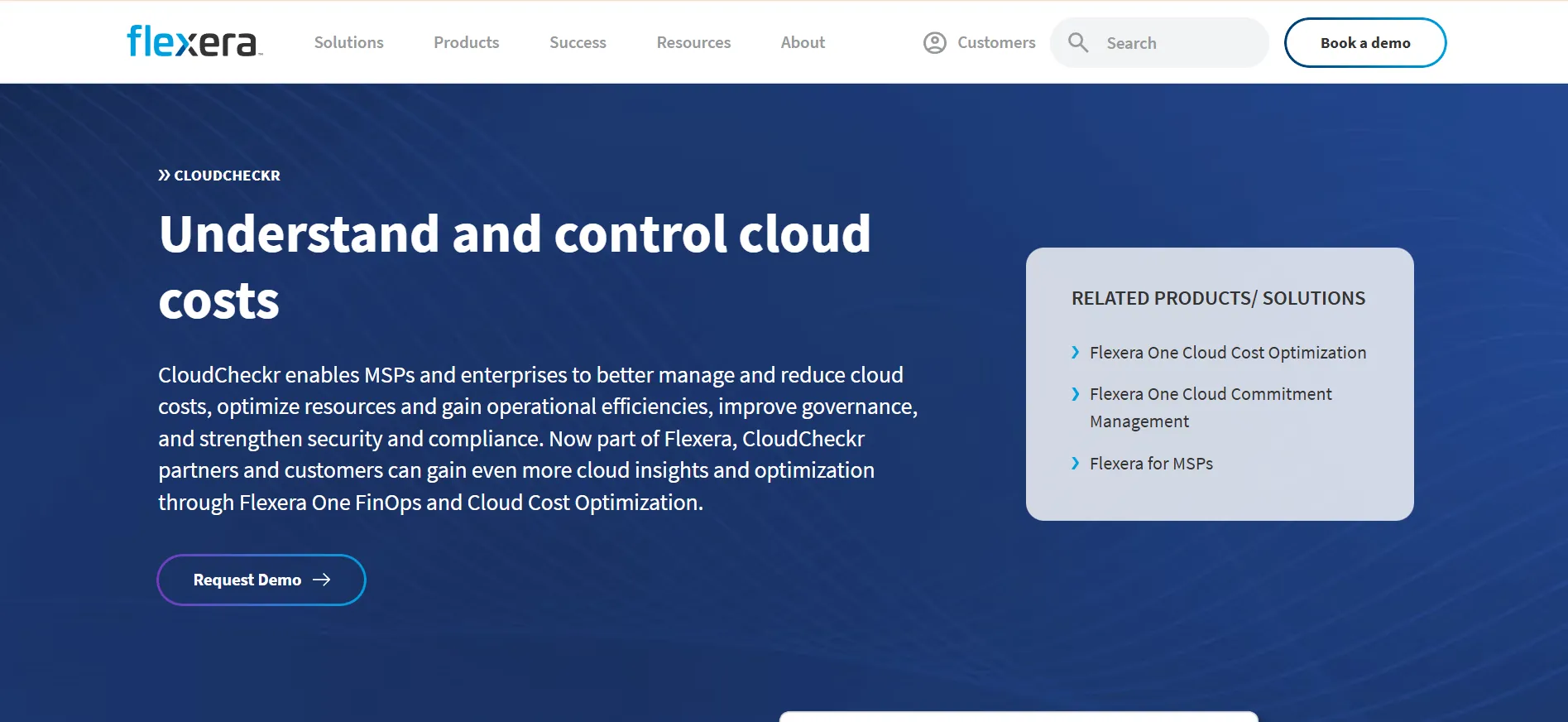
CloudCheckr is a cloud management platform that emphasizes cost optimization, security, compliance, and governance.
It provides in-depth insights into cloud infrastructure, allowing organizations to maintain visibility into resource usage and ensure governance policies are consistently followed.
Its strong reporting and budgeting capabilities make it a practical solution for managing cloud cost governance at scale.
Key Features:
Detailed cost breakdowns and budgeting for cloud resources
Compliance monitoring with built-in frameworks such as HIPAA and PCI-DSS
Automated policy enforcement with alerts for cost and usage anomalies
Resource usage and security insights to strengthen governance controls
Best For: Organizations seeking a comprehensive platform to govern cloud costs, security, and compliance while balancing optimization with policy adherence.
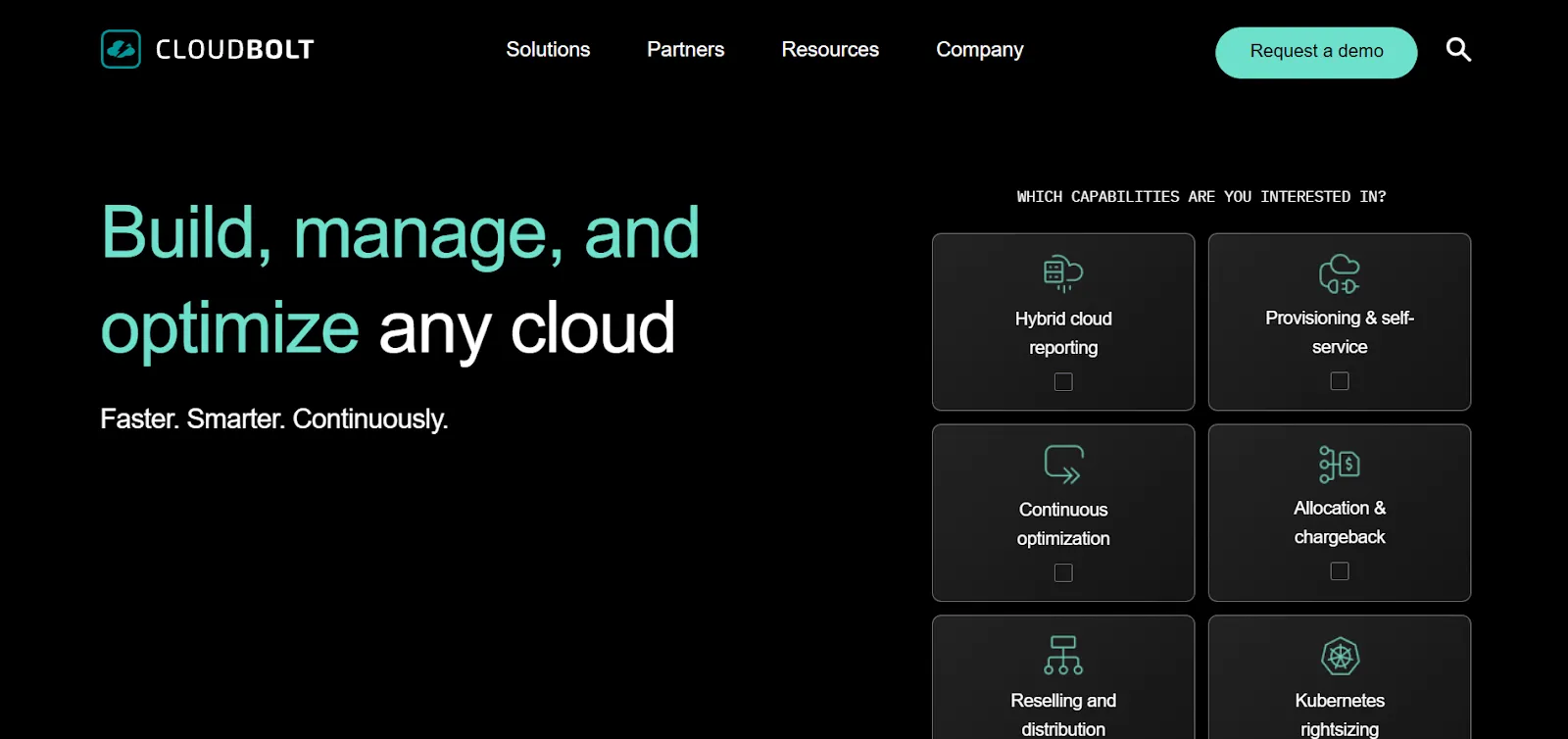
CloudBolt is a multi-cloud management platform that simplifies governance by delivering visibility, optimization, and control across cloud resources.
It enables senior engineers to manage hybrid and multi-cloud environments more efficiently, enforce governance policies, and automate workflows for cost optimization and compliance.
CloudBolt integrates with major cloud providers to offer a unified governance approach.
Key Features:
Multi-cloud cost management and optimization capabilities
Centralized governance for managing resources across platforms
Automated enforcement of governance policies with reporting
Real-time visibility into costs and forecasting
Best For: Enterprises operating hybrid or multi-cloud environments that need a centralized platform to enforce governance, optimize costs, and maintain compliance.
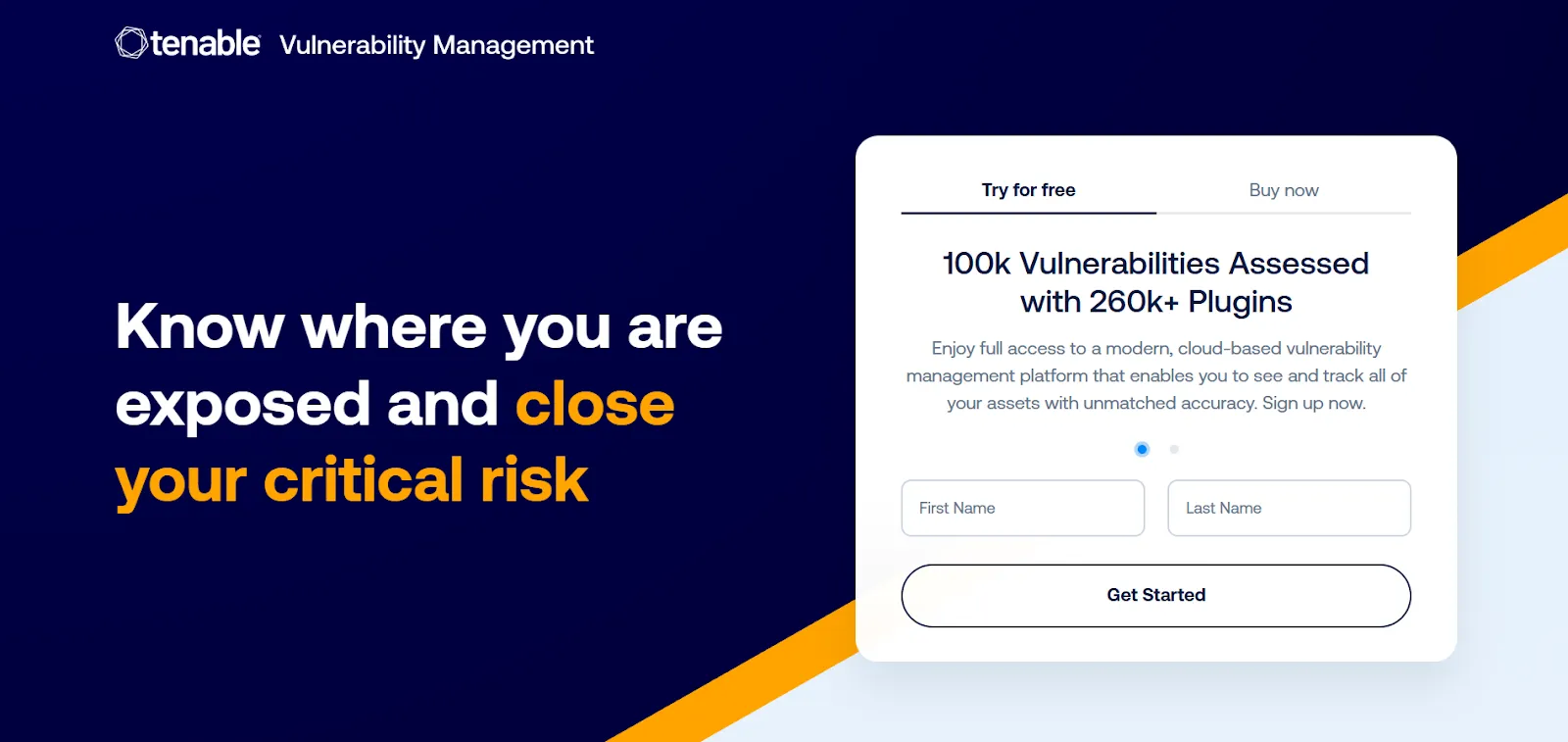
Tenable is a cybersecurity platform that supports cloud governance through vulnerability management and continuous security monitoring.
It helps organizations maintain control over cloud environments by identifying vulnerabilities, assessing risks, and automating compliance checks.
With real-time visibility into security posture, Tenable supports governance frameworks focused on security and risk management.
Key Features:
Continuous vulnerability scanning and risk assessment
Automated security policy enforcement and compliance reporting
Real-time alerts for security incidents and potential breaches
Integration with cloud security and compliance frameworks
Best For: Organizations looking to strengthen cloud security governance by continuously detecting vulnerabilities and maintaining compliance with security policies.
Kyndryl is a hybrid cloud management and governance platform designed to help enterprises optimize cloud infrastructure while maintaining security and compliance.
It delivers governance, security management, and resource optimization capabilities across hybrid environments. Its monitoring and automated policy enforcement features make it well-suited for large organizations managing complex cloud ecosystems.
Key Features:
Centralized governance across hybrid and multi-cloud environments
Advanced security and compliance management capabilities
Automated cost control and resource optimization
Real-time monitoring of performance and compliance metrics
Best For: Enterprises operating in hybrid or multi-cloud environments that require advanced governance, security, and optimization tools to maintain compliance and operational efficiency.
CloudHealth by VMware is a well-established cloud management platform that helps organizations govern costs, security, and compliance across multi-cloud environments.
It offers detailed insights into cloud spending and usage, enabling senior engineers to enforce governance policies consistently while scaling cloud operations effectively.
Key Features:
Multi-cloud cost management and optimization
Real-time compliance monitoring and reporting
Automated governance policy enforcement and security checks
Advanced analytics and cost allocation for improved decision-making
Best For: Enterprises operating across multiple cloud providers that need a comprehensive governance platform to manage costs, security, and compliance at scale.
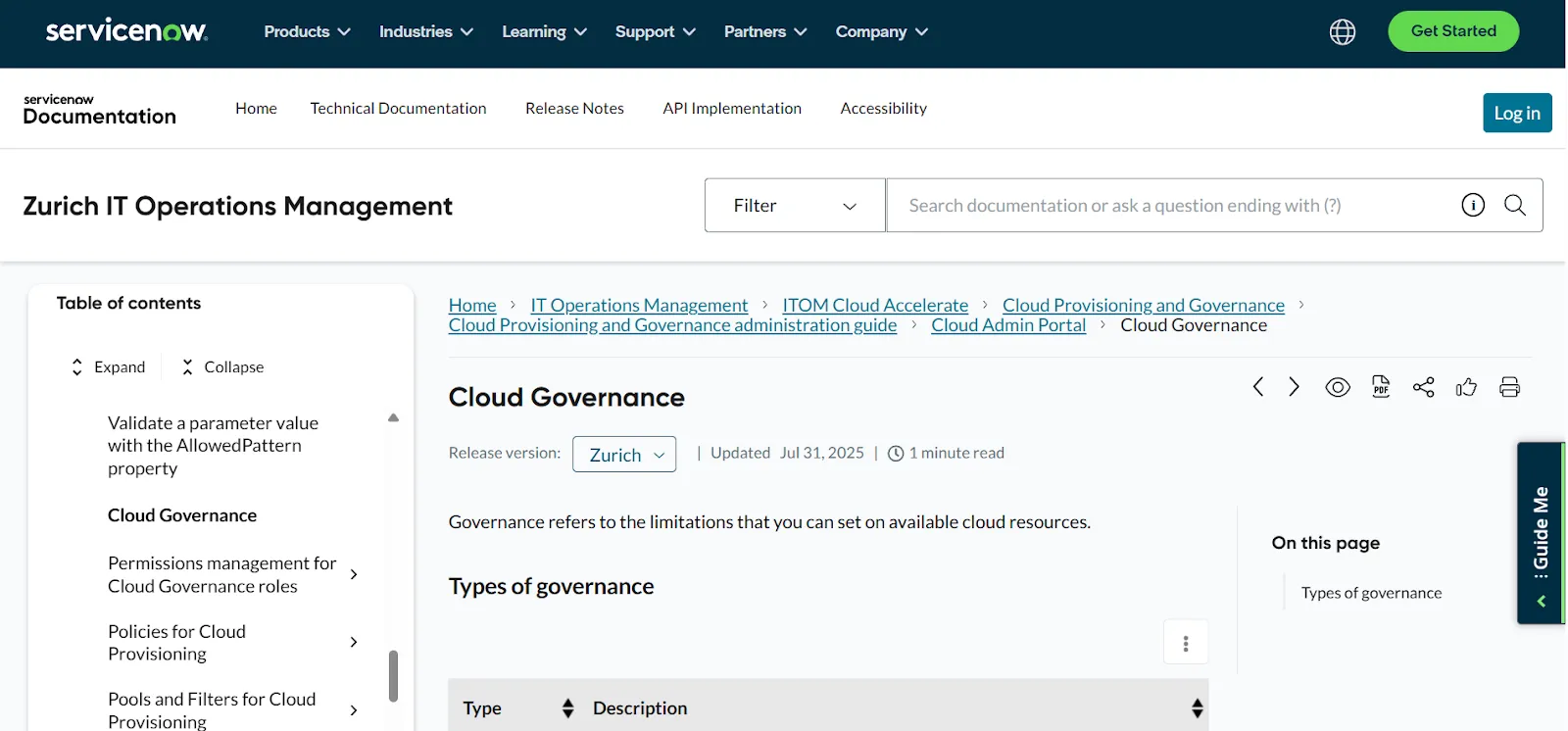
ServiceNow Cloud Governance provides an integrated solution for managing and governing cloud resources across environments. It enables organizations to automate policy enforcement, manage compliance, and maintain security in real time.
Through structured workflows and governance models, ServiceNow helps teams maintain visibility and control over cloud infrastructure.
Key Features:
Automated policy enforcement across cloud platforms
Real-time compliance and governance monitoring
Centralized reporting for cloud usage, security, and costs
Integration with other ServiceNow modules for unified governance
Best For: Organizations seeking an enterprise-grade cloud governance solution that integrates seamlessly with existing IT and service management tools.
eG Innovations is a cloud and infrastructure monitoring platform that supports governance by providing real-time performance insights, resource optimization data, and compliance visibility.
It helps organizations ensure cloud systems operate efficiently while adhering to governance standards, reducing performance risks and unnecessary costs.
Key Features:
End-to-end monitoring of cloud resources and applications
Real-time performance analysis and optimization
Resource and cost management across cloud environments
Compliance tracking and reporting to support governance
Best For: Enterprises that require strong performance monitoring and optimization capabilities to ensure cloud resources remain aligned with governance policies.
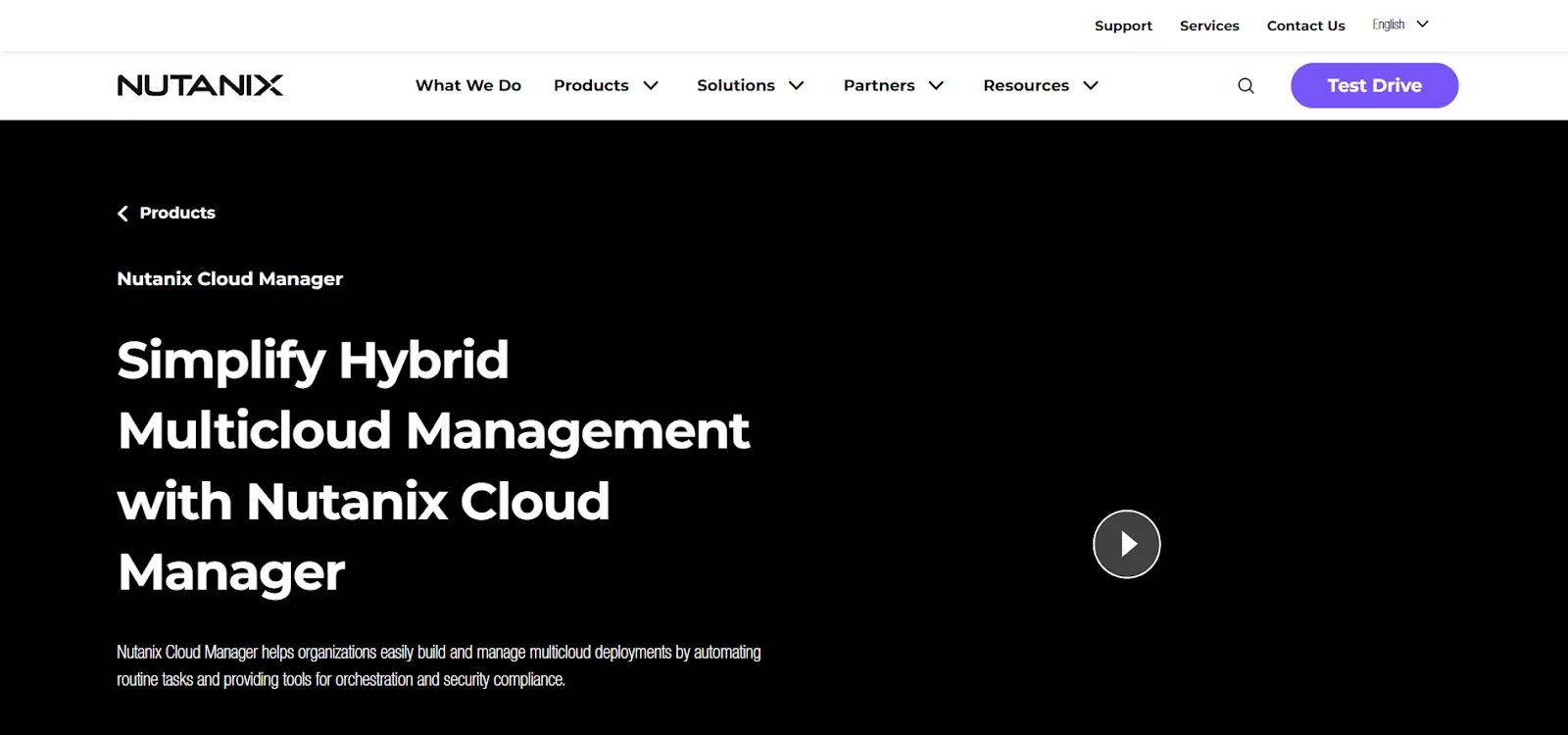
Nutanix Cloud Manager delivers centralized governance and management for hybrid cloud environments.
It enables organizations to automate governance policies, optimize infrastructure, and maintain security and compliance across both cloud and on-premises resources. Nutanix simplifies cloud operations while ensuring consistent governance.
Key Features:
Unified management of hybrid and multi-cloud environments
Automated enforcement of governance policies
Real-time visibility into usage, security, and compliance
Cost optimization and resource management features
Best For: Enterprises managing hybrid cloud environments that need a unified platform to enforce governance, optimize resources, and maintain compliance across their cloud infrastructure.
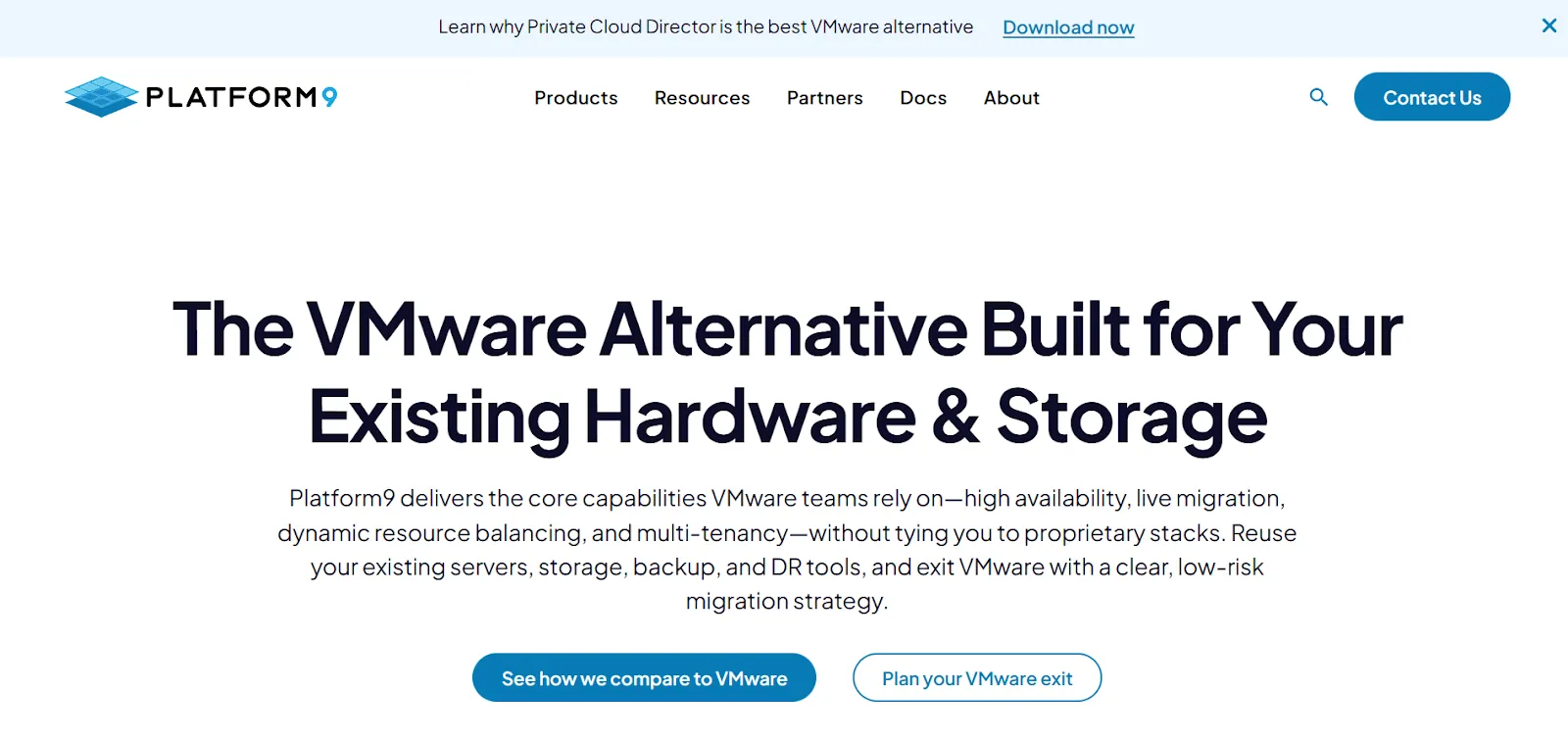
Platform9 is a cloud management platform built to simplify the management and automation of hybrid cloud environments.
It reduces the operational complexity associated with running hybrid cloud environments by abstracting infrastructure management tasks. This allows organizations to scale without maintaining a large in-house operations team.
Key Features:
Hybrid cloud management with a strong emphasis on Kubernetes and virtual machine orchestration
Automated scaling and resource provisioning to support dynamic cloud workloads
Cost optimization capabilities tailored for hybrid infrastructure environments
Monitoring and management tools that help improve performance and resource utilization across cloud platforms
Best For: Organizations aiming to automate and simplify hybrid cloud management, particularly those focused on reducing operational complexity and optimizing infrastructure resources.
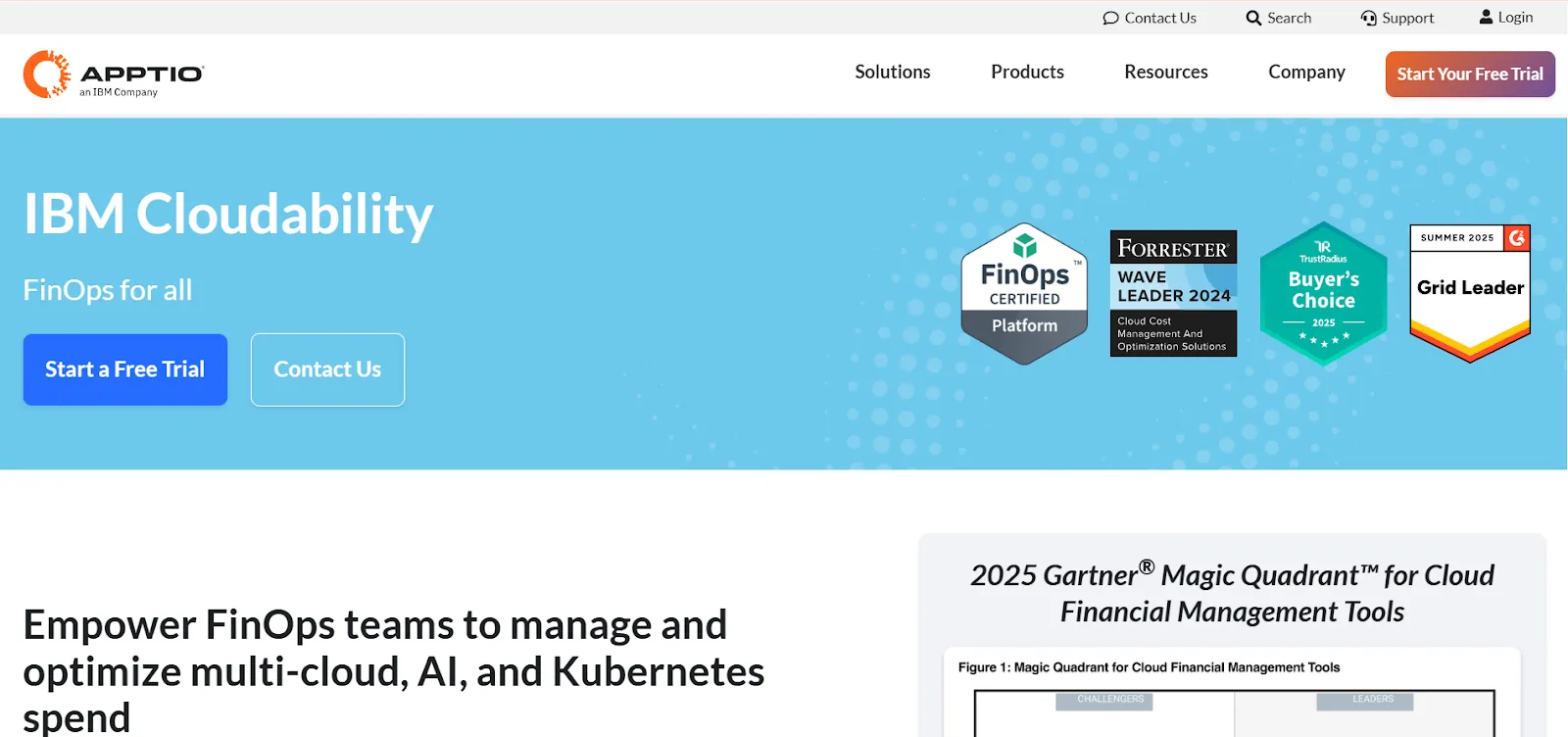
Cloudability, now part of Apptio, is a cloud financial management platform that delivers strong cost governance, optimization, and financial visibility across cloud environments.
It enables organizations to manage cloud spending using a flexible, policy-driven approach that supports financial accountability and control.
Cloudability allows teams to enforce governance rules around cloud costs, track usage in detail, allocate expenses accurately, and ensure cloud investments align with business objectives.
Key Features:
Comprehensive cost visibility with detailed reporting and analytics across multi-cloud environments
Policy-based controls for cloud spending, including budget enforcement and proactive alerts
Resource optimization and rightsizing recommendations driven by usage patterns
Integration with AWS, Azure, and Google Cloud to deliver a unified cost management experience
Best For: Enterprises that prioritize cloud cost management and financial governance, and need strong visibility, accountability, and policy-driven controls across multiple cloud platforms.
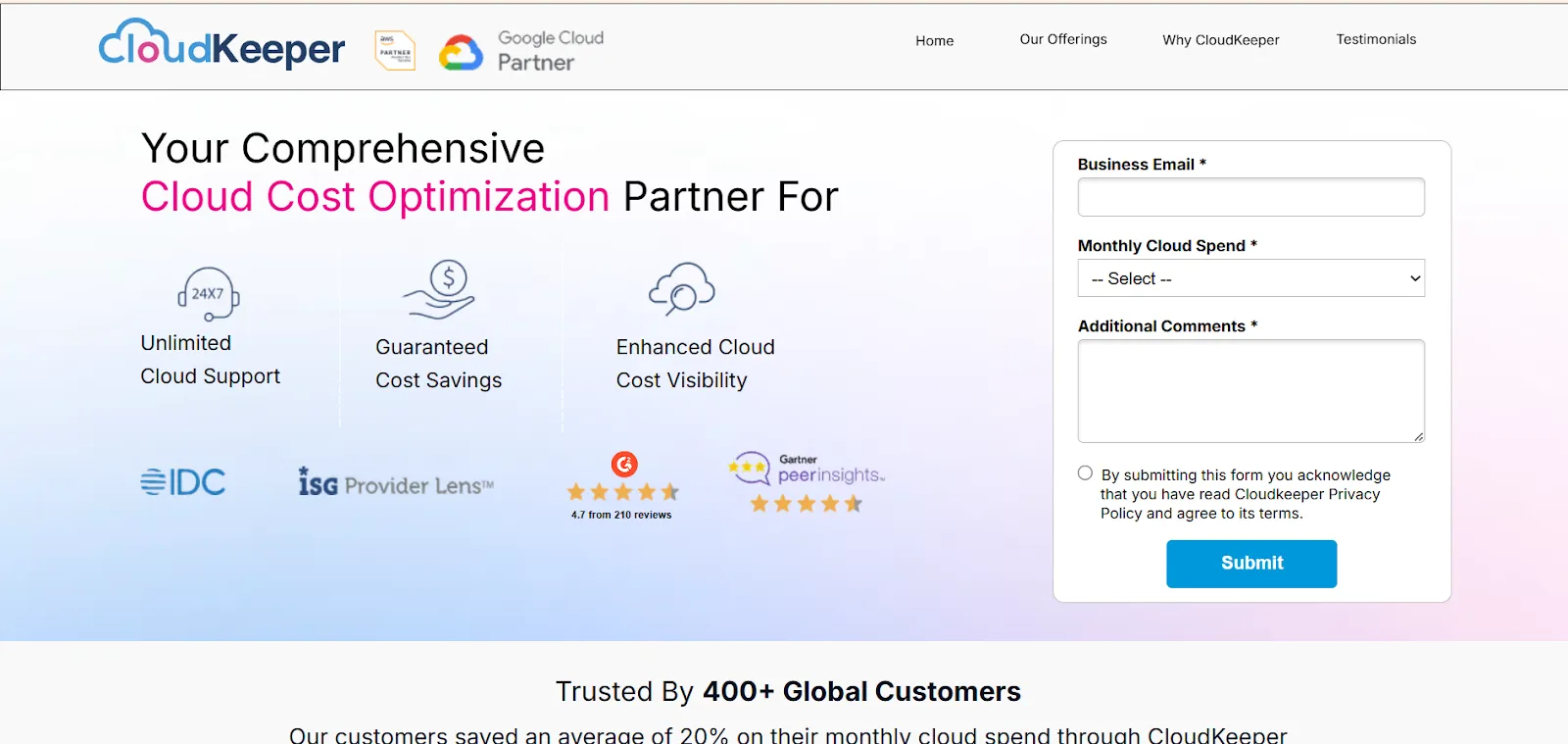
CloudKeeper is a cloud cost optimization and FinOps-focused platform that helps organizations gain control over cloud spending, improve resource efficiency, and increase financial visibility.
It integrates with major cloud providers such as AWS and Google Cloud to promote best practices in cloud cost management, combining analytics, automation, and insights to drive more informed spending decisions.
Key Features:
Real-time cost visibility and optimization across supported cloud platforms
Automated insights and actions to optimize cloud commitments, such as Reserved Instances and Savings Plans
Cost allocation and reporting tools that support transparency and accountability in cloud spending
Integration with cloud service providers to enable seamless and continuous cost management
Best For: Organizations focused on FinOps and cloud cost optimization that want to improve spending efficiency and resource utilization without the need for comprehensive governance policy enforcement across cloud environments.
Knowing which cloud governance tools are available helps guide the decision on choosing the best one for your needs.
Cloud Governance Gets Harder as Environments Scale
See how Sedai complements cloud governance initiatives by autonomously optimizing resources, enforcing operational efficiency, and reducing cloud waste while maintaining performance and reliability.
How to Choose the Best Cloud Governance Tool?
Selecting the right cloud governance tool is crucial for simplifying operations, maintaining security, and optimizing costs. Focus on tools with features and capabilities that directly tackle the challenges of managing large, complex cloud environments.
Criteria
Description
Integration
Ensure seamless integration with cloud providers and existing tools.
Automation
Look for automated policy enforcement, cost management, and compliance checks.
Real-Time Monitoring
Choose tools with real-time visibility and alerts for resource usage and security.
Scalability
Ensure the tool can scale with your cloud environment and handle multi-cloud setups.
Cost Optimization
Support for cost tracking, rightsizing, and stopping unused resources automatically.
Compliance & Security
Built-in compliance management and security features like encryption and access control.
Reporting & Auditing
Comprehensive reporting and auditing capabilities for resource tracking and compliance.
User-Friendliness & Support
Easy-to-use interface with strong documentation and vendor support.
Understanding how to choose the right cloud governance tool provides a good foundation for exploring the frameworks that guide effective governance.
Cloud Governance Frameworks Explained
Cloud governance frameworks provide a structured approach to managing cloud environments by ensuring that policies for cost control, security, and compliance are consistently applied across all resources.
A cloud governance model typically includes five core principles and policy areas that help ensure effective cloud management:
1. Data Security
These policies protect sensitive data from unauthorized access and ensure it is handled in line with regulatory requirements such as GDPR or HIPAA across the cloud environment.
2. Threat Detection
Real-time monitoring and alerting tools are used to identify potential security threats as they occur. This may include detecting misconfigurations, such as an S3 bucket with overly permissive access, or identifying outdated operating systems on compute resources, enabling teams to respond before issues escalate.
3. Risk Management
This principle focuses on evaluating identified vulnerabilities and threats to determine their potential impact. Cloud risk management tools can automatically prioritize risks by severity, enabling teams to address the most critical issues affecting cloud operations first.
4. Cost Management
The ease of provisioning cloud resources can quickly lead to uncontrolled spending. Governance frameworks introduce mechanisms to monitor usage and enforce cost controls, such as identifying idle resources, stopping unused services, or flagging abnormal spending patterns.
5. Change Management
Changes to cloud resources need to be governed to prevent unauthorized modifications and reduce configuration drift. A governance framework ensures that updates follow predefined approval workflows, maintain audit trails, and support ongoing compliance.
Understanding cloud governance frameworks makes it easier to set up governance in your own cloud environment.
How to Set Up Cloud Governance in Your Cloud Environment?
Setting up cloud governance is essential for maintaining control, security, and cost efficiency across cloud infrastructure. This involves establishing a clear structure, selecting the right tools, and automating governance wherever possible so it scales alongside the environment.
Here’s a practical approach to implementing cloud governance effectively:
1. Define Your Governance Objectives
Set clear goals: Identify specific priorities such as cost control, security enforcement, compliance requirements, and operational efficiency.
Align with business objectives: Ensure governance initiatives support broader organizational goals, whether that is reducing cloud spend, improving reliability, or meeting regulatory obligations.
2. Choose a Governance Framework
Select a framework based on your cloud provider: Use the AWS Well-Architected Framework for AWS environments, the Azure Cloud Adoption Framework for Azure, or the Google Cloud Governance Framework for GCP.
Tailor the framework: Adapt the chosen framework to fit your organization’s architecture, including multi-cloud or hybrid cloud setups.
3. Implement Policy Automation
Infrastructure as Code (IaC): Use tools such as AWS CloudFormation, Azure Resource Manager (ARM), or Terraform to define, deploy, and enforce governance policies consistently.
Automate compliance checks: Use services like AWS Config and Azure Policy to continuously evaluate cloud resources against defined governance standards.
4. Enforce Access Control and Security Policies
Role-Based Access Control (RBAC): Implement strict IAM policies that grant access based on job roles, ensuring only authorized users can modify critical infrastructure.
Security best practices: Enforce encryption, multi-factor authentication, and secure access patterns. Tools such as AWS IAM, Azure Active Directory, and Google Cloud IAM help manage access securely.
5. Implement Continuous Monitoring and Auditing
Logging and monitoring: Use AWS CloudWatch, Azure Monitor, or Google Cloud Operations Suite to track usage, detect security events, and monitor performance in real time.
Automated auditing: Enable continuous compliance auditing with tools like AWS Config and Azure Security Center to ensure governance policies are consistently enforced.
6. Cost Management and Optimization
Budgeting and cost tracking: Set up cost monitoring, alerts, and reports using AWS Budgets, Azure Cost Management, or Google Cloud Billing to avoid unexpected spend.
Rightsize resources: Apply automated scaling and optimization policies to adjust resources based on demand, reducing over-provisioning and idle usage.
Optimize reserved capacity: Review long-term workloads and use reserved instances or savings plans to lower costs where applicable.
7. Change Management and Version Control
Control infrastructure changes: Track and version infrastructure updates using Terraform or AWS CloudFormation to ensure changes are authorized, tested, and traceable.
CI/CD for infrastructure: Use tools like Jenkins, GitLab CI, or Azure DevOps to automate infrastructure deployments, ensuring changes follow review and approval workflows.
8. Document Governance Policies and Procedures
Clear documentation: Maintain accessible documentation covering governance policies, roles, and operational processes. This helps teams understand how to provision, manage, and optimize cloud resources correctly.
Team enablement: Provide training on governance tools, security standards, and cost optimization practices to ensure consistent policy adoption.
9. Regular Reviews and Adjustments
Continuous improvement: Cloud governance evolves over time. Regularly review policies, assess usage patterns, and update controls based on operational needs or regulatory changes.
Audit and refine: Conduct periodic audits to evaluate compliance and resource usage, then refine governance rules and automation based on findings.
Once cloud governance is set up, it’s important to be aware of the common challenges teams may face.
Common Cloud Governance Challenges Teams Face
Cloud governance presents several challenges, especially for teams managing large, complex, or multi-cloud environments. You often face the following hurdles when implementing and maintaining cloud governance:
Challenge
Solution
Lack of Visibility
Use centralized monitoring and automated tagging to track all resources.
Inconsistent Security Policies
Automate security policies, enforce RBAC, and ensure consistent configuration.
Cost Overruns
Set up cost alerts, automate rightsizing, and monitor usage closely.
Compliance Complexity
Automate compliance checks and enforce policies through regular audits.
Access Control
Implement role-based access and regularly review permissions.
Scaling Governance
Use IaC to automate provisioning and monitor compliance at scale.
Multi-Cloud Complexity
Implement unified governance across clouds for security, costs, and compliance.
Policy Drift
Continuously monitor and enforce policies in real time to prevent drift.
Knowing the common challenges in cloud governance helps highlight the best practices for keeping it running smoothly.
Best Practices to Keep Cloud Governance Running Smoothly
Maintaining effective cloud governance requires a strategic approach that blends automation, visibility, and continuous improvement. Following best practices helps ensure your cloud resources stay secure, cost-efficient, and compliant, all while minimizing the need for manual oversight.
1. Centralize Governance Across Multi-Cloud Environments
For organizations operating across multiple cloud providers, it is essential to establish a unified governance strategy. Platforms such as CloudHealth or CloudBolt help manage policies, security, and costs across AWS, Azure, and Google Cloud.
Centralized dashboards provide visibility into resources, spending, and compliance, enabling consistent governance across all environments.
2. Enforce Consistent Resource Tagging
Automated resource tagging improves tracking, cost allocation, and security management at scale. Tools like AWS Tag Editor and Azure Resource Graph help enforce tagging standards across large environments.
Clearly defined tagging conventions make it easier to track ownership, usage, and compliance throughout the cloud lifecycle.
3. Conduct Regular Governance Reviews
Cloud governance should be reviewed regularly to ensure continued alignment with business objectives and regulatory requirements. As environments evolve, governance tools and processes should be reassessed to confirm they remain effective. Updates should be made to address changes in infrastructure, usage patterns, or emerging risks.
4. Educate and Train Teams
Ongoing training ensures engineering teams understand governance tools, security best practices, and cost optimization strategies. Well-informed teams manage cloud resources more efficiently and consistently.
Governance policies should be clearly documented, and new team members should be onboarded with these standards from the outset.
Final Thoughts
Effective cloud governance is critical for managing increasingly complex environments while ensuring security, compliance, and cost efficiency.
As cloud operations scale, manual processes quickly become insufficient. High-performing teams use automated, intelligent tools that continuously optimize resources, enforce policies, and provide real-time visibility to maintain control at scale.
This is where platforms like Sedai make a difference. By autonomously managing cost, performance, and compliance across multiple cloud environments, Sedai enables engineering teams to maintain governance without constant manual intervention.
Its predictive capabilities and real-time optimization ensure that cloud resources are used efficiently, reducing overspend and improving operational predictability.
Governance tools flag what's wrong. Book a demo to see how Sedai goes further — acting on those findings autonomously so your team isn't managing a backlog of manual fixes.
FAQs
1. What role does AI play in cloud governance?
AI plays a growing role in strengthening cloud governance by automating policy enforcement, detecting cost inefficiencies, and proactively identifying potential performance bottlenecks. AI-driven optimization enables cloud environments to adapt continuously in real time, ensuring compliance, performance, and cost objectives are consistently met.
2. How can cloud governance tools improve security in multi-cloud environments?
Cloud governance tools enhance security in multi-cloud environments by delivering centralized visibility and automated enforcement of security policies across all cloud platforms. They help maintain consistent configurations, enable real-time monitoring for vulnerabilities, and support automated compliance audits.
3. How can cloud governance tools assist in managing hybrid cloud environments?
In hybrid cloud environments, governance tools provide a unified framework for managing both on-premises infrastructure and cloud resources. They help enforce consistent policies, track and control costs, and maintain compliance across public and private environments.
4. What is the impact of automated policy enforcement on cloud operations?
Automated policy enforcement ensures that cloud resources consistently adhere to predefined governance standards without relying on manual oversight. This improves operational efficiency by reducing human error, strengthening security compliance, and continuously optimizing resource utilization.
5. How do cloud governance tools handle compliance with industry-specific regulations?
Cloud governance tools support compliance by integrating established regulatory frameworks such as HIPAA, GDPR, and PCI-DSS directly into policy enforcement mechanisms. They provide continuous monitoring, detailed audit trails, and automated compliance checks to ensure cloud resources remain aligned with regulatory requirements.